
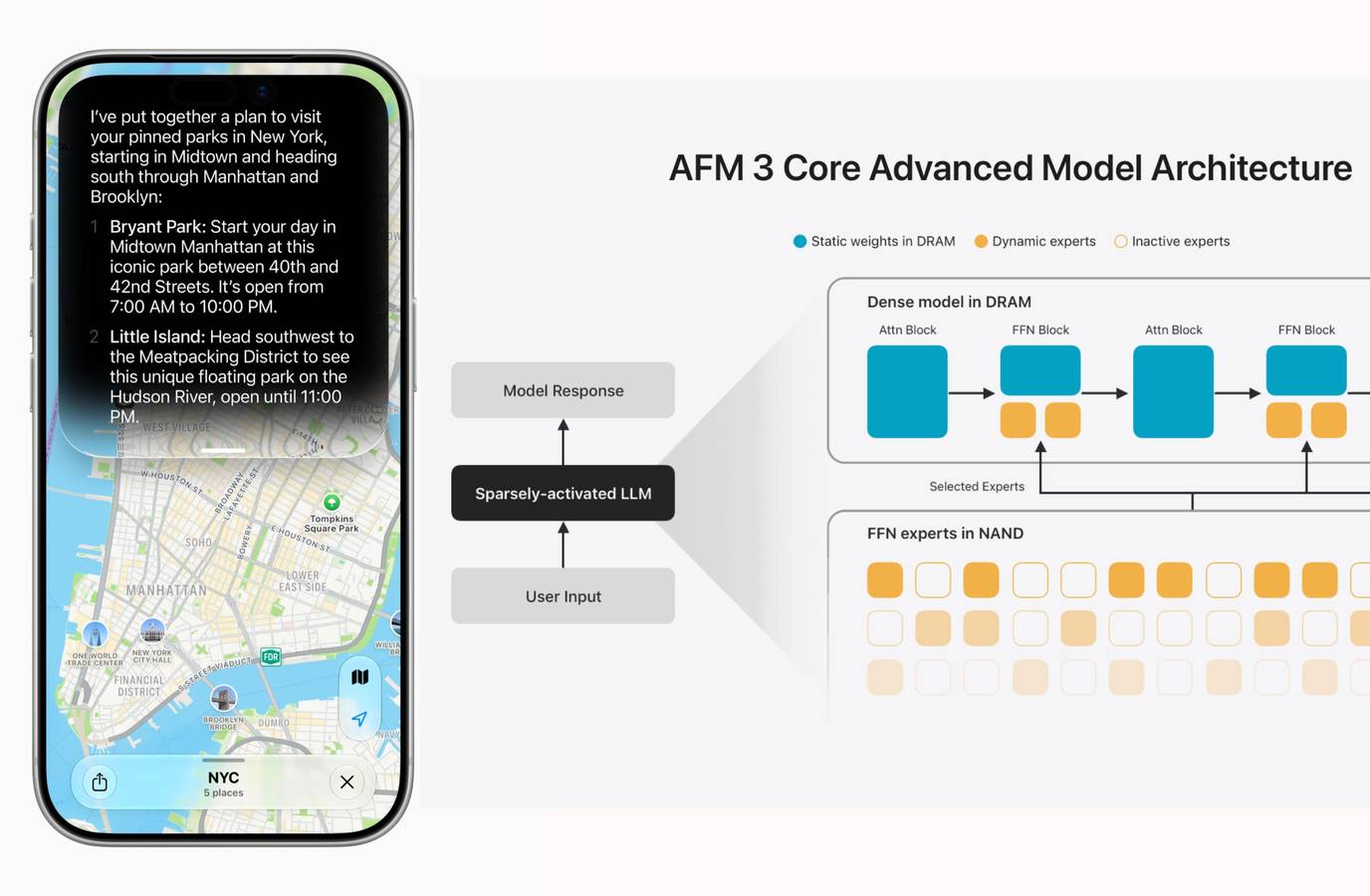
The Worldwide Developer Conference (WWDC) keynote for 2026 marked a pivotal moment for Apple as it revealed its refreshed artificial intelligence (AI) strategy. The new Apple Intelligence suite, which includes the revamped Siri AI, is built atop the company's own Apple Foundation models. These models are designed to provide a deeper understanding of user needs and preferences while maintaining Apple's commitment to data privacy and security.
At the core of Apple's AI architecture is the use of custom-made models, including the AFM 3 Core and AFM 3 Core Advanced, which are designed to work seamlessly with the Apple Intelligence suite. These models are specifically tailored for Apple's needs and are not based on Google's Gemini models. Instead, they utilize a sparse architecture that activates only the necessary parameters for each request, reducing the risk of data breaches and ensuring a more efficient use of resources.
Apple's AI strategy diverges from Google's approach, which relies on large language models running in server infrastructure. In contrast, Apple's system uses on-device models that compute locally, depending on the task, and only invokes the Private Cloud Compute when necessary. This approach ensures that user data remains private and secure, with no requests or accompanying data stored or accessible to anyone, including Apple.
The new Siri AI app is a prime example of Apple's integrated conversational tool, which is deeply embedded in the user experience. It uses the Apple Foundation models to provide a profoundly more capable Siri, allowing users to access their personal context and take action on that information in a seamless and secure manner.