Supreme Court questions Centre, calls for 'facts' over MDR for UPI transactions over ₹2,000 | Business News
The court questions the legal basis for the implementation while clarifying that person-to-person transfers remain free. | Business News
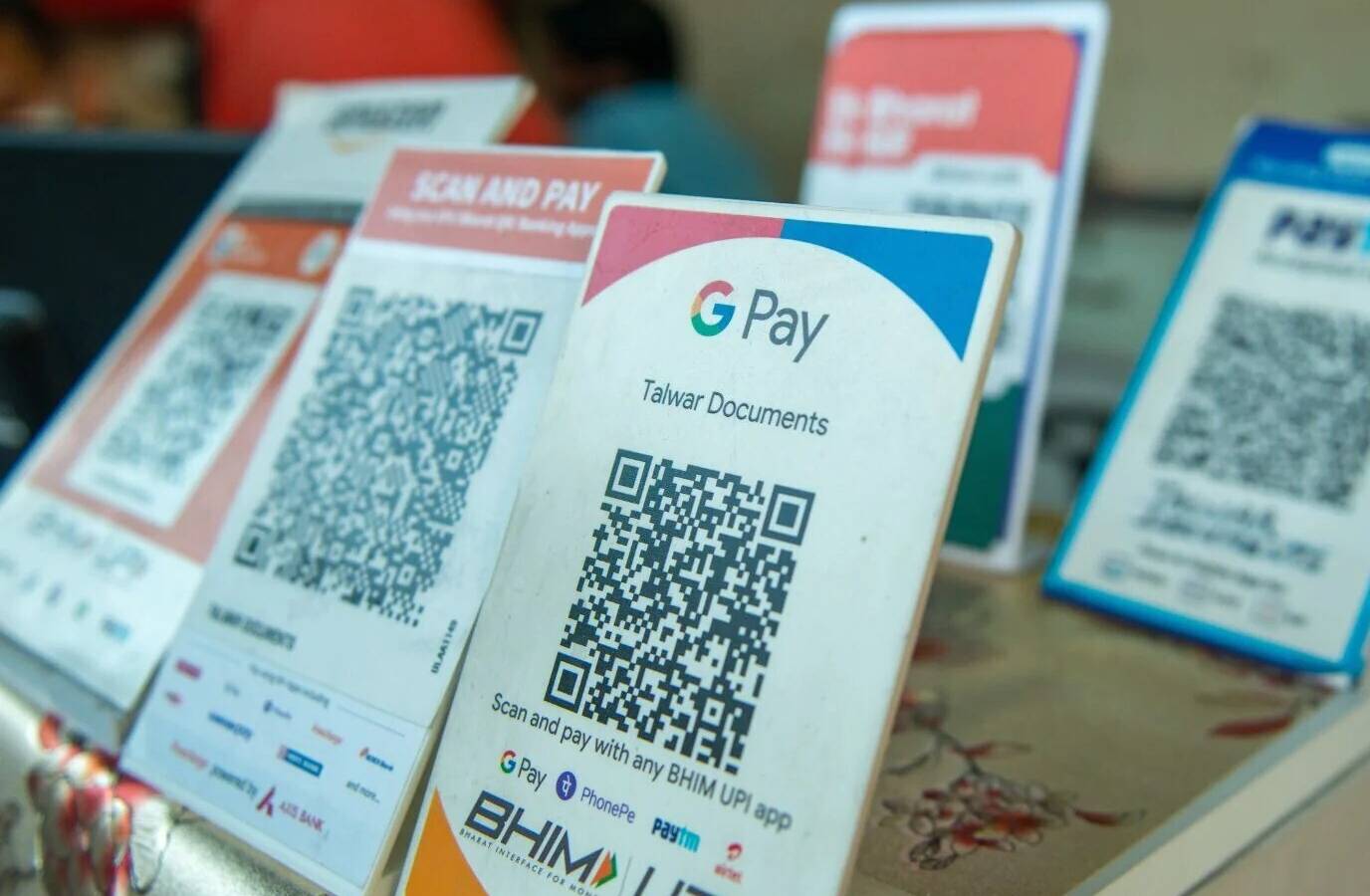
The Supreme Court on Monday sought the response of the Centre on a petition challenging the government’s decision to introduce a Merchant Discount Rate (MDR) on Unified Payments Interface (UPI) person-to-merchant transactions over ₹2,000.Hearing a public interest litigation (PIL) filed by advocate Anjan Datta, a bench headed by Chief Justice of India (CJI) Surya Kant said, “This is less of a legal and more of a technical issue. We need you (Centre) to state the facts on a short affidavit.”The bench, also comprising justices Joymalya Bagchi and V Mohana, said that it would only like to see the legal source of implementing this charge. It said, “What is the executive scope of imposing this charge? If it is a fee, it cannot be by way of an executive fiat. If not, then what is it?”The petition filed and argued by Datta, along with advocate Ashutosh Dubey, challenged the September 14 Ministry of Finance notification proposing the MDR charge, which will take effect from October 15. It also challenged the constitutional validity of the legislative amendment that enabled the notification.Also Read | Supreme Court refuses to stay MDR on UPI payments, but questions Centre over move: 'What is it?'Under the proposed framework, the Centre plans a 0.4% MDR on UPI payments of over ₹2000 made to merchants. This charge will be capped at ₹300 for transactions above ₹75,000. The Centre had clarified that the decision will not impact person-to-person UPI transfers that will continue to remain free, regardless of the transaction amount.Though Datta sought a stay of the notification, the court refused to pass any order in this regard, claiming that the issue involves economic policy.Appearing for Centre, additional solicitor general (ASG) N Venkataraman said, “The decision is yet to come into effect on October 15. At the outset, I would clarify that 96% persons using the UPI payment gateway are exempted. Even among the 4% covered by this decision, essential services are capped.”As per the notification, payments above ₹2,000 in sectors such as railways, telecom, insurance, fuel and agricultural inputs will attract a flat MDR of ₹5 per transaction. Also, an MDR of 0.02%, capped at ₹300 per transaction, will be charged on capital-market transactions (mutual funds, securities, stockbrokers and dealers).Also Read | Mobile phone retailers to protest against UPI MDR charges on October 2“Not one rupee from this will go to the government. It is a settlement fee among the two players – bank and the service provider which the National Payments Corporation of India (NPCI) facilitates,” the ASG said.The court said that once the response comes, it will be better placed to examine in whose hands it amounts to be an “income”. Also seeking responses from the NPCI and the Reserve Bank of India (RBI) on the petition, the court said, “We are not on the coverage under the policy but the source of this legal incident. We will examine, when it is a charge under the Income Tax Act, in whose hands does it amount to be an income.”Datta said that in 2019, the Centre issued a notification removing MDR on person-to-merchant UPI transactions with effect from January 1, 2020. Thus UPI transactions and RuPay debit-card transactions were statutorily protected from any direct or indirect charge, by operation of the then Section 10A of the Payment and Settlement Systems Act, 2007 read with Section 269SU of the Income-tax Act, 1961.The petition further stated that in August, the Taxation and Other Laws (Amendment) Act, 2026 was passed by Parliament that subsequently received Presidential assent.Also Read | New UPI rules: What to know about person-to-person payments, monthly quotaThe said Act amended Section 10A of the Payment and Settlement Systems Act (PSS Act), 2007 so as to confer upon the Centre the power to decide, by notification, which ‘prescribed electronic modes’ of payment would be entitled to “no-charge” protection.Exercising power under section 10A of the 2007 Act, the Centre issued the September 14 notification specifying only two categories of electronic payment as exempt from “no charge protection”, namely debit card transactions powered by RuPay without any monetary ceiling, and UPI transactions up to ₹2,000.