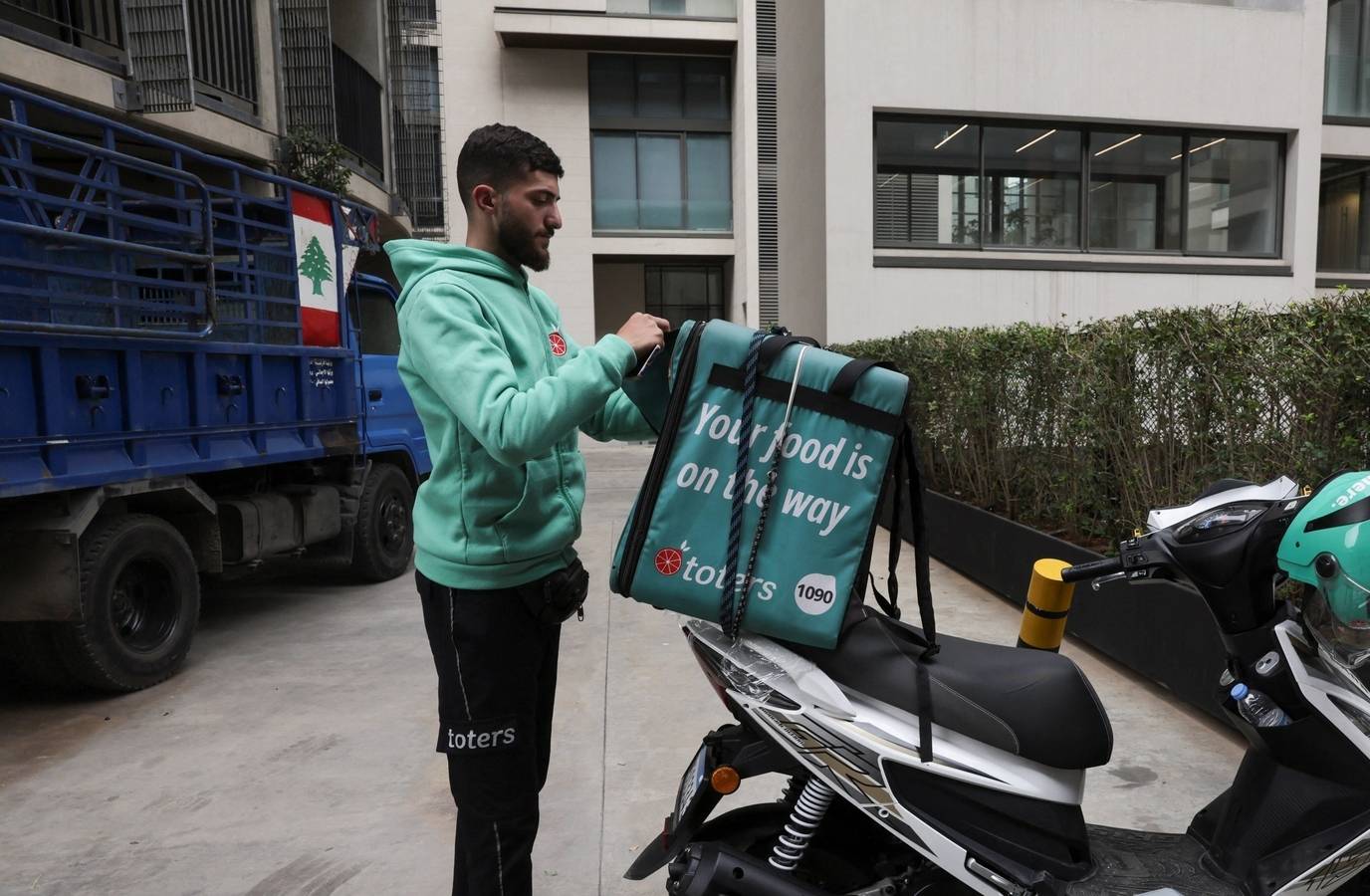
Lebanese food courier Hamza Hareb now keeps his distance if he spots a car with tinted windows while on a delivery run in Beirut. Hezbollah is rumoured to use such cars, and Hareb wants to steer clear of any Israeli strikes targeting the armed group.
Israel has expanded its air campaign to new parts of Beirut in recent days, hitting apartments and downing entire buildings in strikes it says are targeting Hezbollah, which pulled Lebanon into the regional war on March 2 by firing into Israeli territory.
As residents of the capital stay home in fear, they are ordering delivery for dinner - and drivers like Hareb are navigating a maze of risks to make it happen.
"Of course, we are afraid. That is ever-present," said Hareb, one of 3,000 couriers in Beirut who work for Toters, among Lebanon's most popular delivery apps.
Like most gig workers, Toters drivers are paid per delivery. For many, the job is an economic lifeline in the heavily indebted country, which is suffering from years of economic crisis and political instability following a financial collapse in 2019.
"You don't know when the strikes will come, so we have adapted to everything," Hareb said.
Israel sometimes issues evacuation warnings before striking, telling residents to leave the area. But three of Wednesday's four strikes on Beirut came without notice.
"Right now they're increasingly striking without warning, and of course this is instilling a sense of fear among us (since) we spend most of our time out in the street," Hareb told Reuters.
Toters' director of operations Roland Ghanem said the company did not deliver to neighbourhoods that fall within Israel's evacuation orders and has barred drivers from using risky roads near possible targets.
"These drivers navigate into uncertainty… just to make sure that others can still have access to food and basic needs," Ghanem said.
Working in a war, Israeli strikes have killed nearly 1,000 people and displaced another million across Lebanon, according to Lebanese authorities.