Eliminating carbon-dioxide emissions from steelmaking, which account for 8% of anthropogenic greenhouse-gas emissions, is a wonderful idea. Two firms, Electra and Boston Metal, and a third, Hertha, are trying to liberate iron from its ore using electricity instead of chemicals.
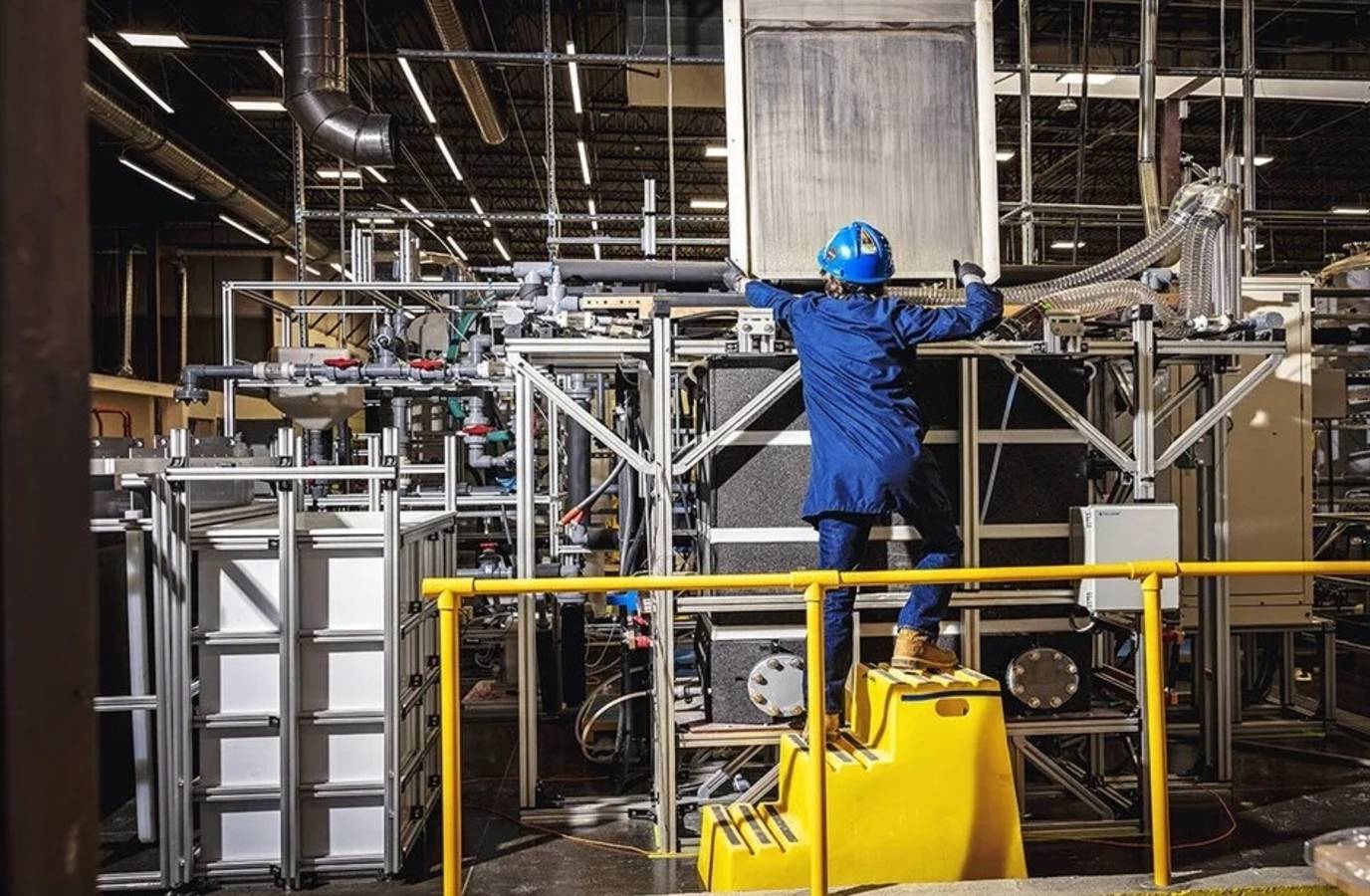
Electra, based in Boulder, Colorado, has developed an electrowinning approach to process copper ores. The company has proved its process works and is now scaling up from a laboratory prototype to industrial production.
Boston Metal, a firm in Woburn, Massachusetts, is struggling to scale up its process, which employs electrolysis at high temperatures. The firm's boss, Tadeu Carneiro, had hoped to collaborate with a steel company, but that idea is now on ice after a critical equipment failure.
Hertha, the most recent and arguably the brashest of the green-steel trio, has devised a chemical-reduction process that heats up pure methane to break apart into hydrogen and carbon. The company's laboratory prototype is already turning out several hundred tonnes of iron a year.
Both Electra's and Hertha's approaches look like more promising paths to green steelmaking than the one chosen by established firms, such as ArcelorMittal and Thyssenkrupp, of employing expensive electrolytically generated hydrogen as the reducing agent.