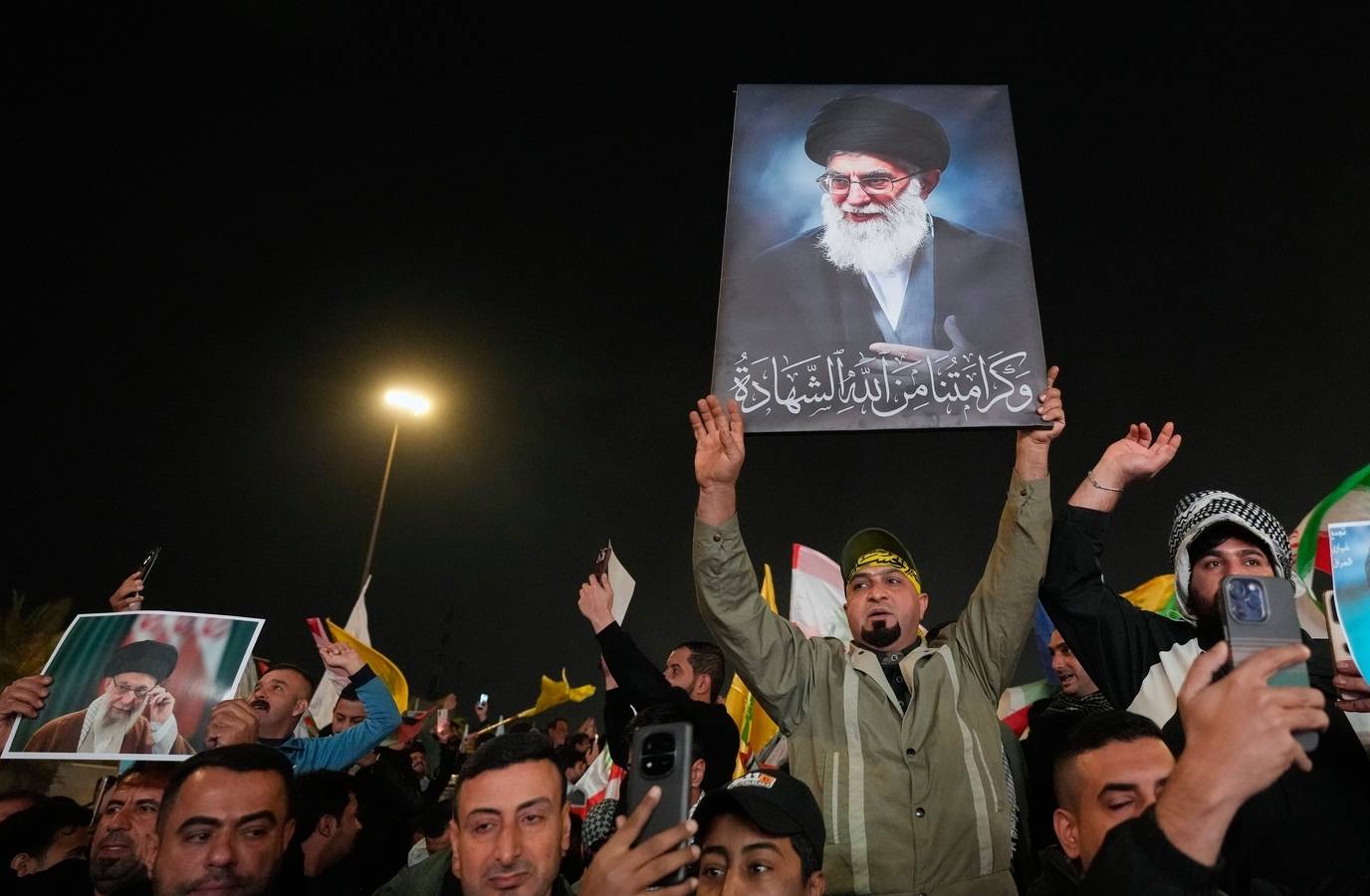
The killing of Iran's Supreme Leader Ali Khamenei has sparked a power struggle among the country's top officials. Power is carefully distributed among councils, commanders, clerics, and civilians, with some elected and others appointed. Here's a rundown of the key players in the Islamic Republic.
Ali Larijani, the Secretary of the Supreme National Security Council, is a conservative insider with ties to the military. His brother Sadeq Larijani, a cleric, could also be a contender for the supreme leader job.
Masoud Pezeshkian, the President, is a reformist who has limited influence. Gholam-Hossein Mohseni-Ejei, the Chief Justice, is a hardline conservative who has been sanctioned for human rights abuses.
Alireza Arafi, a member of the interim leadership council, is a loyalist aligned with Khamenei. Mojtaba Khamenei, the supreme leader's son, is a strong contender to succeed him. Hassan Khomeini, the grandson of the Islamic Republic's founder, is another hereditary option.
Mohammed Bagher Qalibaf, the Parliament Speaker, is a conservative with ties to the military. Ahmad Vahidi, the Commander of the IRGC, is a veteran of the Guards who has been sanctioned for his role in suppressing protests.
Abbas Araghchi, the Foreign Minister, is a moderate technocrat who has pushed for talks with the US. Ali Movahedi-Kermani, the Head of the Assembly of Experts, is a hardliner who chairs the clerical body responsible for appointing and overseeing the supreme leader.