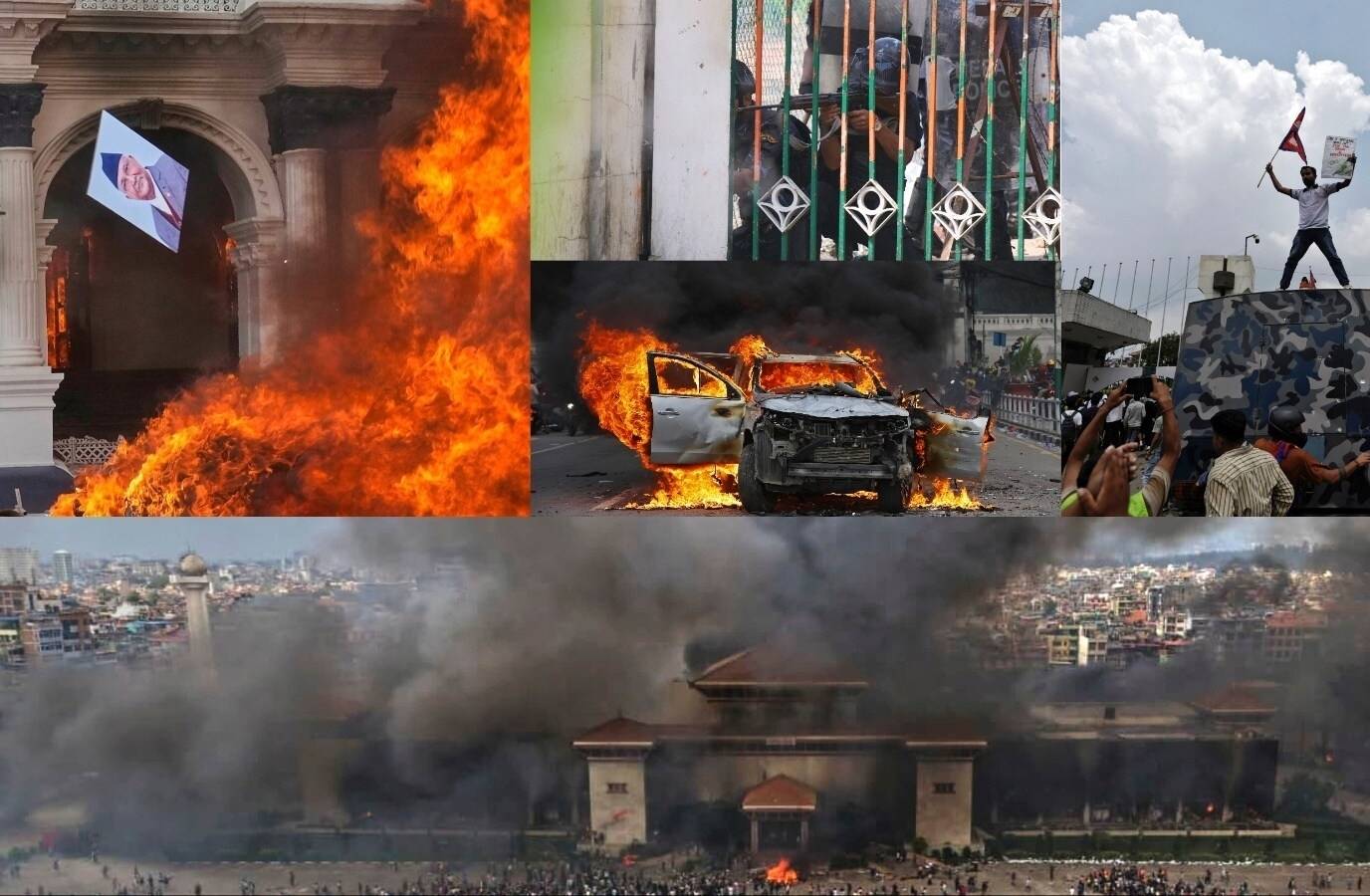
Nepal witnessed dramatic scenes unravel in its political circuit in 2025, anchored by the power of social media. The country's 275-member Parliament went to polls, recording a 60 per cent voter turnout, after the toppling of KP Oli's regime, which was triggered by a ban on social media platforms. The then-prime minister ordered the ban, but it led to his ouster.
The Gen Z movement, led by humanitarian and activist group Hami Nepal, called for the first 'Gen Z' protest on September 8. The peaceful protest quickly spiralled into chaos, with demonstrators marching toward government buildings and clashing with security forces. The violent protests prompted police forces to open fire, leaving at least 20 dead and several injured.
As the death toll from the violence continued to increase, the anger among the Gen Z movement also intensified. On September 9, protests widened and spread across Nepal, with demonstrators storming government buildings and setting them ablaze. The protests finally came to an end on September 10, and the damage to Nepal and its infrastructure became clear.
The Gen Z movement decided to pick Nepal's interim leader on Discord via an online poll, with former chief justice Sushila Karki gaining the maximum votes and emerging as the youths' choice. She was then called in by the President for discussions, which stretched late into the night and spilt over to the morning of September 12. To ensure that Gen Z's demands were met and a decision was reached on an interim prime minister, Sudan Gurung kept vigil at Shital Niwas, the President's office.
The nationwide curfew was finally lifted on September 13, as Nepal began a slow and steady return to normalcy. In the following days, the demands of the Gen Z movement were fulfilled one by one, including the dissolution of the Parliament and the announcement of the general election's schedule. The Election Commission of Nepal stated voting for the 275-member House of Representatives will take place on March 5, 2026.