
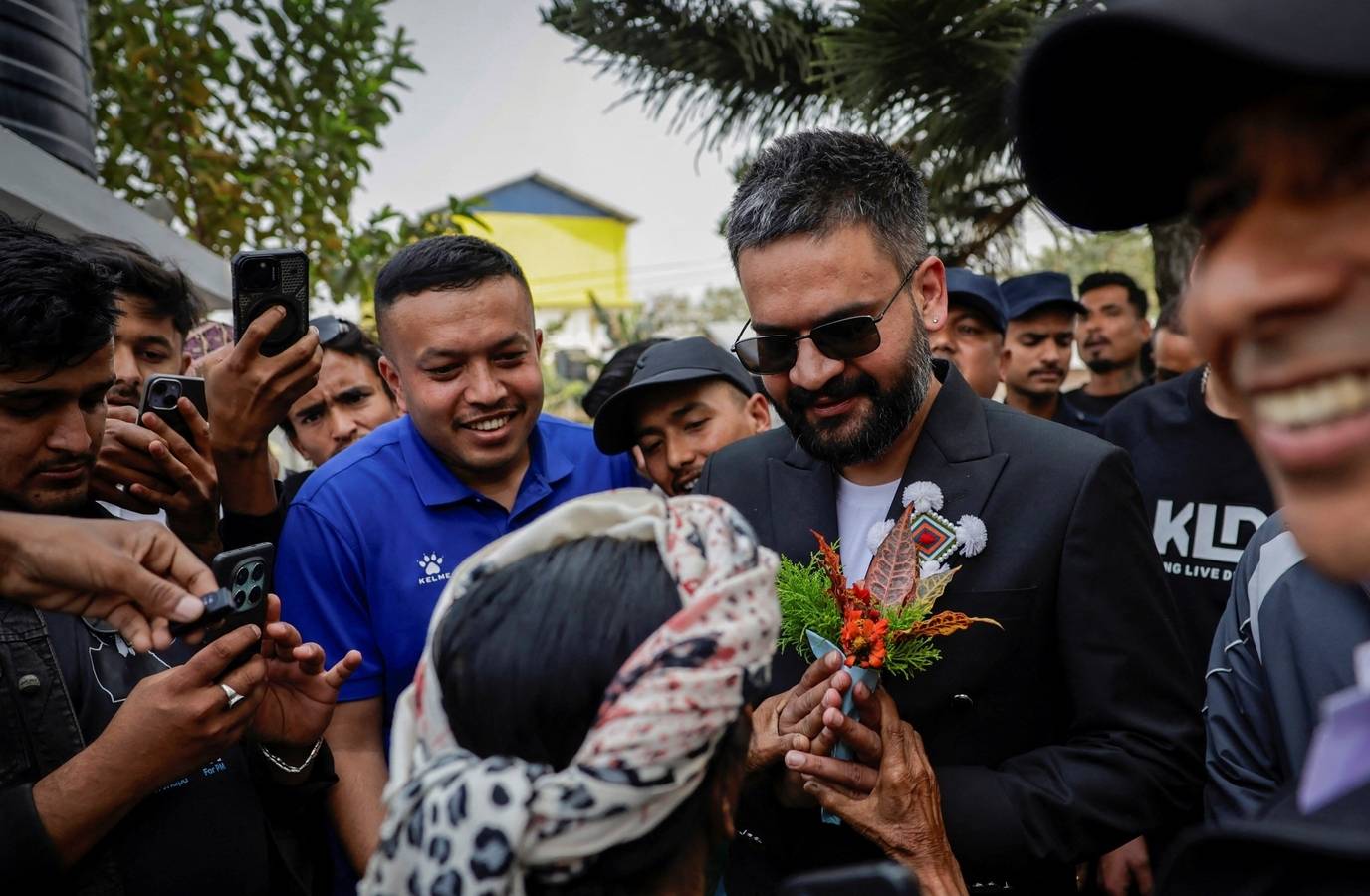
Nepal's national elections have emerged as a decisive shift away from the country's long-standing political status quo, with rapper-turned-politician Balen Shah's Rastriya Swatantra Party (RSP) leading the charge.
Shah's party has won 29 seats and is leading in 88 constituencies, with the RSP also leading Nepal's proportional representation vote with 57.2% of the ballots counted.
The election pits entrenched mainstream parties against a relatively new force that many believe could become the frontrunner, with some predicting a landslide victory for the RSP.
The Gen Z protests, which grew into large-scale demonstrations against corruption, unemployment, and poor governance, laid the groundwork for Shah's rise to prominence.
The RSP is fielding nine Gen Z candidates, a sharp contrast to Nepal's traditional parties, which have far fewer Gen Z candidates despite stronger political machinery.
Ahead of the vote, about 800,000 people left Kathmandu Valley to travel back to their hometowns to cast ballots, leading to packed highways and hours-long traffic jams.