Republicans Are Unleashing Their Fundraising Advantage Against the Democrats | World News
President Trump and his allies are pouring money into key races around the country to counter Democratic momentum ahead of the midterm elections. | World News
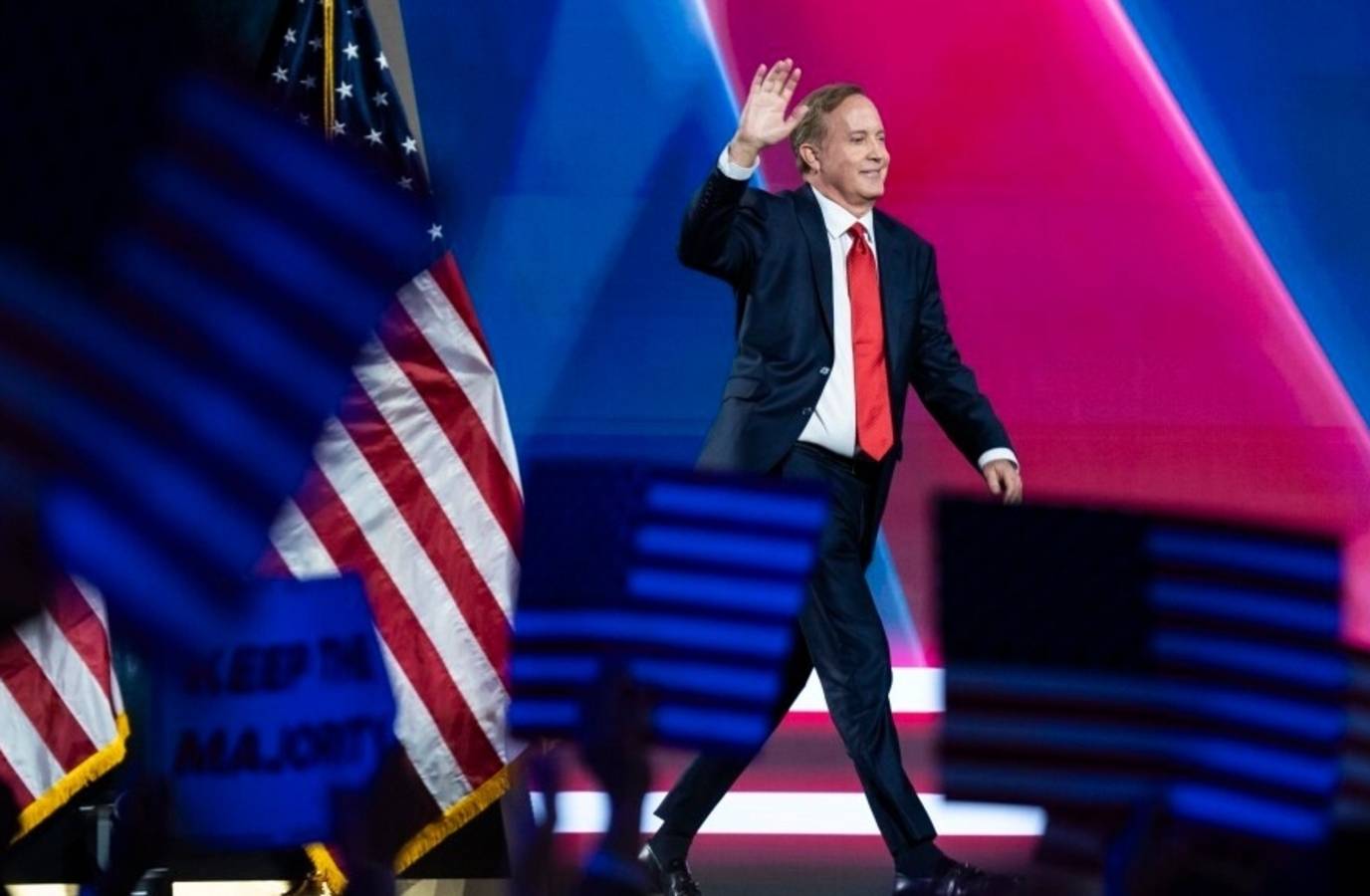
WASHINGTON—Republicans are pumping money into a series of Senate and House battleground states, unleashing one of their biggest advantages over Democrats as they seek to overcome electoral headwinds in the final weeks before midterm elections.Democratic candidates have mostly outpaced their Republican opponents in fundraising, but the GOP has maintained a significant lead among their network of super PACs and party committees—and are beginning to open the spending spigot in significant ways.Advertisers supporting Republicans across 10 key Senate races have spent more than $204 million in the first 18 days of September, according to AdImpact—$83 million more than those helping Democrats. It is a sharp turn upward from all of August, when the Republican spending advantage was about $9 million.The onslaught could help Republicans level the playing field as they seek to overcome President Trump’s unpopularity and voter discontent with economic malaise and climbing fuel prices. “I think we’re going to have enough money. I think if we have a bad result in the midterms, I don’t think we’ll be able to blame it on money,” said Sen. John Kennedy (R., La.), who has traveled extensively in support of GOP candidates, including planned stops this weekend in Kansas, Iowa and Nebraska.“You’ve got both sides basically saying the other side’s worse than me, and it’s hard to win an election like that. Thank God, I’m sorry for the country, but politically, thank God that the Hamas wing of the Democratic Party is in control. Otherwise, we’d be total lunch meat,” Kennedy said.Democrats hope that an expanded map of races into once-safe Republican districts will put Trump and his allies on the defensive and force difficult spending decisions in the final weeks, negating some of their fundraising advantage.“The hole that Donald Trump has dug for the Republicans and continues to dig every day is not something that can be made up with a few $100 million worth of feel-good ads,” said Sen. Elizabeth Warren (D., Mass.), saying that “people are angry” about the economy, the Iran war and corruption.The most dramatic uptick came in Texas, with $62 million in ads supporting Republican Ken Paxton so far this month compared with about $17 million behind Democratic candidate James Talarico. Republican-supported spending this month exceeded that for Democrats in every Senate race considered a tossup by the Cook Political Report, the first time that has happened in this election cycle. In House elections, Republican-aligned spending this month is ahead of Democrats in 15 of 21 races that Cook rates as a tossup, according to AdImpact. Spending in September, when most party primaries have completed, serves as a good early indicator of how the two parties may fare in head-to-head activity for the general election.Earlier this month, the Trump-aligned super PAC MAGA Inc. disclosed spending $10 million on streaming TV ads to back Paxton and oppose Talarico, its first multimillion-dollar spend of the election cycle. On Saturday, it reported spending $5 million more. The group currently has less than $1 million in ads booked through the election, according to AdImpact, but other GOP-aligned groups are readying large spends. They include $169 million reserved by the Senate Leadership Fund, $155 million by the Congressional Leadership Fund, and multimillion planned spending from two new super PACs aligned with MAGA Inc., No Going Back PAC and Safety and Affordability PAC.Senate Republicans have urged their colleagues to make a robust pitch on steps the administration and party have taken to address inflation. During a Senate luncheon last week, Sen. Susan Collins (R., Maine), spoke of the need to pitch voters on economic prescriptions beyond tax cuts, including permitting reform for affordable housing and energy projects.In Georgia and North Carolina, races considered leaning toward Democrats, ad-spending margins are tighter, and activity ramped up in August. Since then, spending supporting Sen. Jon Ossoff (D., Ga.) totaled $35 million compared with $26 million for his GOP opponent, Rep. Mike Collins. In North Carolina, ad spending favoring former Republican National Committee chairman Michael Whatley totals $33 million since August, ahead of $25 million for former Gov. Roy Cooper, a Democrat.Republicans had sought to make defeating Ossoff a top priority, but he has vastly outraised Collins, and polls show him with a comfortable lead in the battleground state. In North Carolina, Cooper has held a steady advantage against Whatley.If Republicans continue to trail in both of those races, it might mean the party will need to divert resources into other, more pressing states, including GOP-leaning Kansas, where Sen. Roger Marshall faces an upstart challenge from Democratic nominee Adam Hamilton, a minister; in Ohio, where GOP Sen. Jon Husted is attempting to fend off former Sen. Sherrod Brown, a Democrat; and in Alaska, where Republican Sen. Dan Sullivan faces a formidable challenge in former Rep. Mary Peltola, a Democrat.More than $78 million has been spent since August in Ohio supporting Husted, AdImpact data shows, ahead of $57 million for Brown. And in Maine, backers of Collins have spent about $41 million since August, more than the $29 million for her Democratic challenger, former state Senate president Troy Jackson. Collins’ defense remains a top priority for Republicans—the veteran senator is the lone GOP senator seeking re-election in a state carried by former Vice President Kamala Harris in 2024. Jackson only entered the race in August as a replacement for scandal-plagued Graham Platner, and has sought to catch-up quickly in fundraising.“I’m not deterred by that. I mean, we’re going to be outspent,” Jackson said, pointing to an outpouring of volunteers to his campaign. “People in the state are upset.” Collins, meanwhile, has targeted Jackson’s voting history in the state legislature, including on taxes and spending. “I don’t know that there is a tax that Troy has seen that he hasn’t liked,” Collins told reporters earlier this month.Senate Democrats in Washington also huddled last week with Abdul El-Sayed, the Democratic nominee in Michigan who hopes to succeed retiring Sen. Gary Peters (D., Mich.). Both Peters and Sen. Elissa Slotkin (D., Mich.) have pressed their colleagues to support El-Sayed’s campaign against former Rep. Mike Rogers (R., Mich.), who was narrowly defeated by Slotkin in 2024.Michigan remains among the most competitive Senate races in the nation, and a sharp increase in advertising this month on the GOP side raised spending since August to about $39 million for Rogers versus $35 million for El-Sayed.“Let’s all agree we have a broken and horrible Frankenstein of a campaign finance system, but when they’re swamping us with President Trump’s money, I’m going to rally other Democrats to try and gin up a response,” said Slotkin, whose 2024 Senate victory saw more than $200 million in the race.In ad reservations, which can change, Republicans are scheduled to outspend their Senate opponents in several states, including in Alaska, Iowa, Maine, Ohio and Texas. Democrats have reserved more advertising time in Georgia, according to AdImpact.Marc Short, a former Trump White House aide and adviser to former Vice President Mike Pence, said party fundraising is less important than it used to be because of the shifting media landscape. “There are so many other ways to get your message out,” Short said, adding: “Would you rather have the money than not? Yes. Is it a factor it used to be? No.”Write to Ken Thomas at [email protected] and Anthony DeBarros at [email protected]