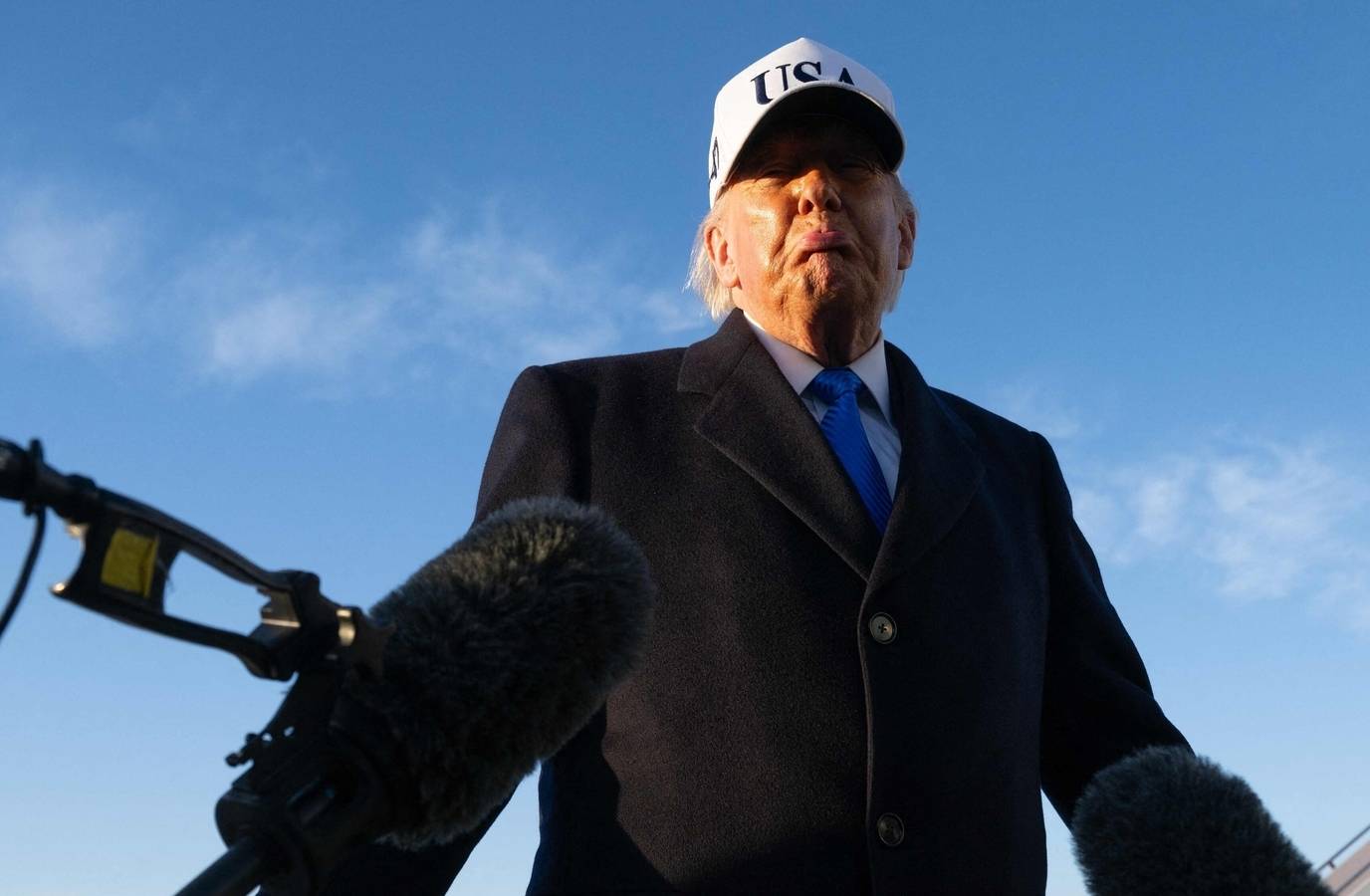
When Donald Trump announced Operation Epic Fury on his Truth Social account on February 28, he claimed it would be swift and decisive. More than two weeks on, the Strait of Hormuz remains effectively closed, particularly to US and Israel-linked shipping.
Trump's many stances on the Iran-controlled strait reveal a clear pattern of flip-flops throughout the ongoing US-Israeli war on Iran.
Claims in Week 1: Trump posted on Truth Social that the US had 'destroyed and sunk 9 Iranian Naval Ships' and demanded 'unconditional surrender'. Iran's President Masoud Pezeshkian told the US to take its demand 'to their grave'. Iranian forces struck US bases across the Persian Gulf, widening the war to the UAE, Saudi Arabia, and other oil-rich countries.
By March 9, Trump said the war would end 'very soon', but by March 11, he claimed 'we've won... in the first hour, it was over... We've already won in many ways, but we haven't won enough.'
The Strait of Hormuz has been the most prominent gap between Trump's claims and a more complicated reality, wherein Iran's relatively cheap drones and missiles have become a challenge for the US and Israel.
Iran dramatically slowed crucial shipping traffic through the strait almost immediately after it was attacked, raising oil prices that affected the world economy.
By March 2, it was closed. Iran said it did not intend to close it, but the operators of the ships were scared anyhow.
Trump at first claimed the strait was being kept open by US forces and said Iran must 'immediately' remove any mines out into the water.
He followed up with a similar threat three days later, but by March 14, Iran's foreign minister Abbas Araghchi clarified his country's position by saying the strait remained closed 'only to American, Israeli ships and tankers, and not to others'. Indian ships, for instance, passed through the strait around this time.
Trump then made a series of Truth Social posts declaring the US had 'destroyed 100% of Iran's Military capability', but in the very next post, he said Iran was still capable of sending 'a drone or two, drop a mine, or deliver a close range missile'.
Seeking help to open the waterway, Trump called on 'many countries' to send warships, naming China, France, Japan, South Korea, and the UK.
None of the named countries had as of Sunday, March 15, confirmed sending warships to open the strait. Trump's post from a week earlier had said the US won't need any help anyway.
US energy secretary Chris Wright had already told CNBC last week that the US was not ready to escort ships through the Strait of Hormuz.
US military leader General Dan Caine of the US Air Force, who is Chairman of the Joint Chiefs of Staff, said the waterway is a 'tactically complex environment'.