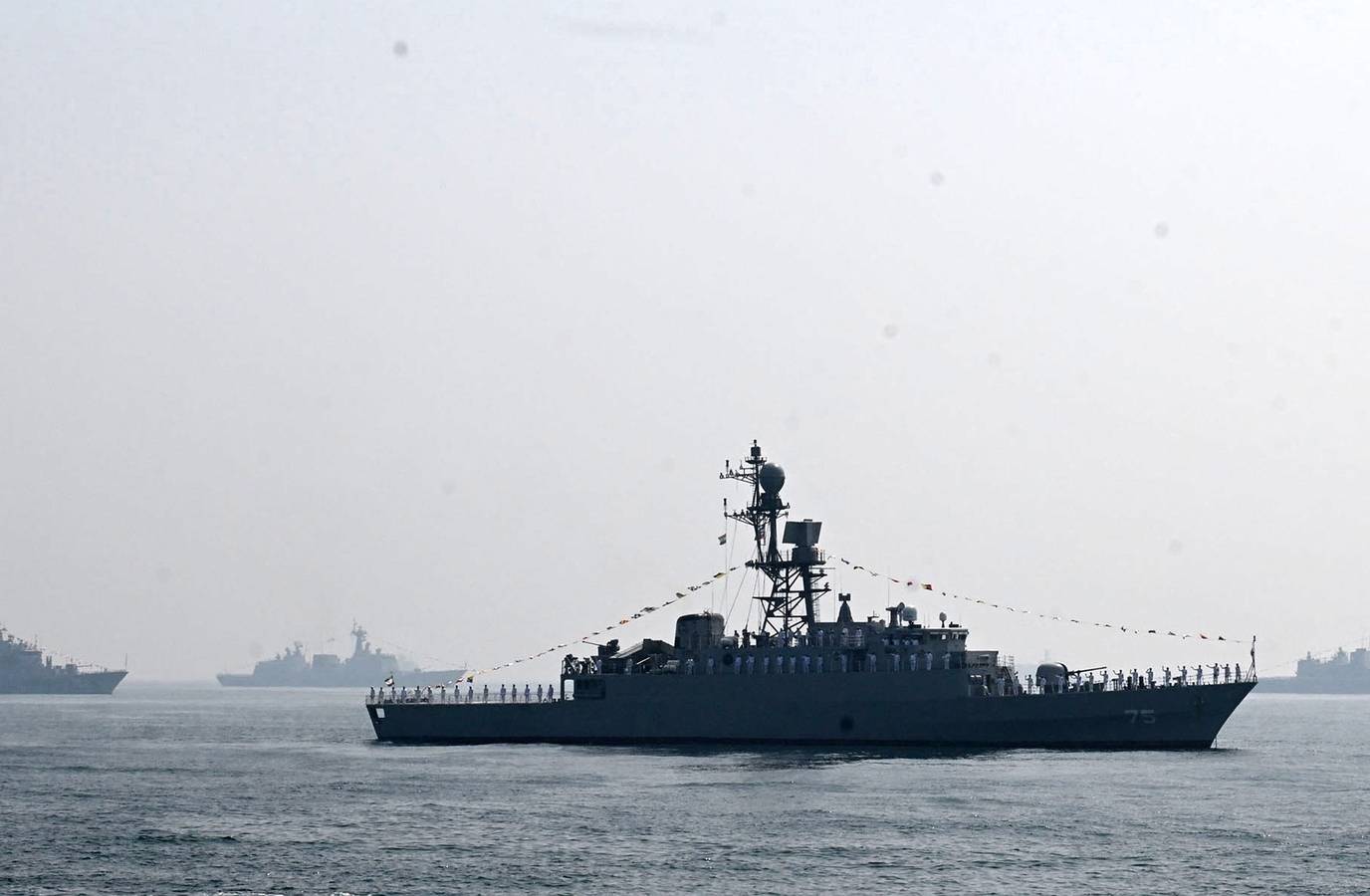
The US Navy's sinking of an Iranian warship, IRIS Dena, in the Indian Ocean has sparked a heated debate over the legality of naval warfare under the Geneva Convention.
At least 87 people were killed, and several remain missing at sea, after the US submarine torpedoed the Iranian frigate, which had a total of 180 people on board.
The Second Geneva Convention, adopted in 1949, lays down the foundation for countries and their mandates for conflicts at sea, including humane treatment and search for the shipwrecked.
However, the US Navy departed the area shortly after the attack, and it was the Sri Lankan Navy that responded to the distress call from the Iranian ship.
Legal experts have stated that the attack on IRIS Dena was not unlawful, but it could be argued that if the US is attacking Iran to eliminate an imminent threat, a warship far from Iran, and in Sri Lanka's economic zone, would not be a justified target unless it could be connected to threats raised by the current conflict.