What will happen to Christa Pike now? How case could proceed now that Tennessee death row inmate is awake and talking | Hindustan Times
Christa Pike has woken up and begun speaking from her hospital bed almost a week after her failed execution, her lawyers said. Here's what could happen next.
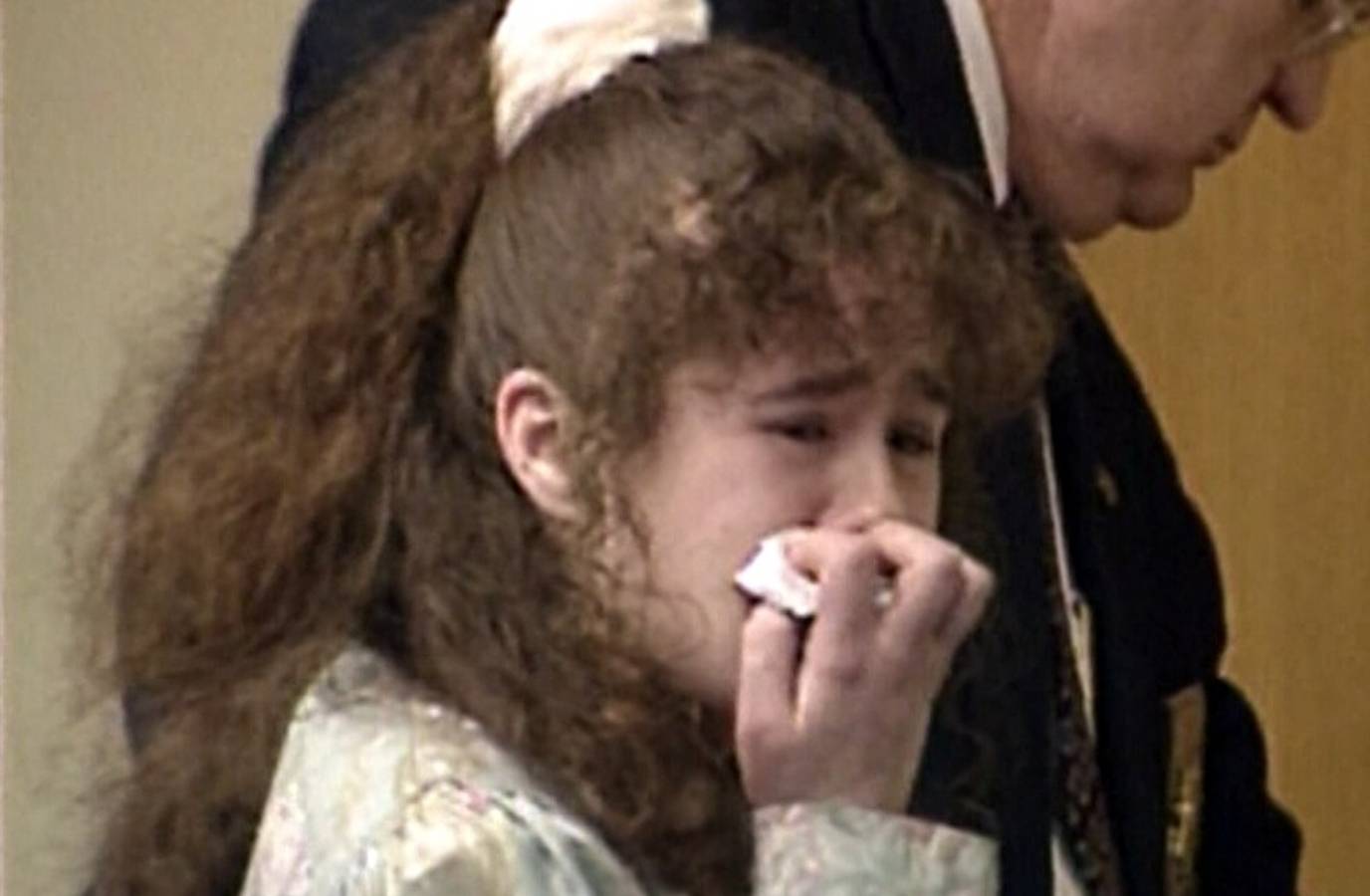
Christa Pike has woken up and begun speaking from her hospital bed almost a week after her failed execution in Tennessee, her lawyers said, per the BBC. Experts and her lawyers have said that the new development is "medically unprecedented"Pike was put on a ventilator after the failed execution attempt, with hospital staff working to save her life and clear the pentobarbital she was administered from her system. She received two doses of the drug in a failed attempt by the state of Tennessee to execute her on Wednesday, September 31.Pike’s attorneys said in a statement on Tuesday, October 6, that she remains handcuffed and shackled despite having sustained significant injuries to her arms after two injections of pentobarbital failed to kill her, NBC News reported. They previously stated in a court filing that they believed problems with intravenous lines caused the pentobarbital to flow into her body instead of her bloodstream.What will happen to Christa Pike now? After the failed execution attempt, Tennessee Governor Bill Lee ordered a third-party review of what went wrong. Dr Paul A Lucas, an associate professor at East Carolina University, said that the review would likely determine "what happens next,” per abc.net."If the investigation identifies problems with how the protocol was implemented the state may focus on correcting those procedures," he said. "If officials followed the protocol as written and the execution nevertheless failed, that could raise more fundamental questions about the protocol itself. Either way, I would expect the circumstances surrounding Ms Pike's failed execution to receive significant scrutiny before Tennessee resumes executions."Also Read | What is thrombocytosis? Christa Pike's blood-clotting condition that may have made lethal injection challengingAfter Pike’s botched execution attempt, Tennessee paused all executions for the rest of the year. The head of its Department of Corrections has resigned.Lucas said that he was "hesitant" to predict what the state would do next."There are still too many unresolved questions, beginning with Ms Pike's medical condition and the findings of the independent review," he said. "If the state does seek another execution, I would expect substantial litigation concerning whether another attempt can be carried out constitutionally given what occurred during the first one."Lucas said that the long-term ramifications could extend "beyond Tennessee"."A failed execution of this magnitude provides courts, policymakers, and other states with a real-world example through which to evaluate [lethal injection procedures]," he said. "At a time when public support for capital punishment has generally declined from its historical highs, an event like this may also intensify the [debate about] how the death penalty is administered. Legally … changes in public attitudes do not by themselves determine a particular execution method is unconstitutional."According to the Death Penalty Information Center's executive director Robin Maher, a second attempt was "uncharted territory"."The US Supreme Court has not decided whether a second execution attempt would violate the constitution since 1947," she told USA Today.Knoxville attorney T. Scott Jones, senior partner at Banks and Jones Attorneys, weighed in on the next steps before Pike regained consciousness. Jones said that litigation is expected to proceed in both state and federal court.Also Read | Carissa Hansen: Who is Christa Pike's biological mother and where is she now?“From a litigation standpoint, I suspect that we will start back through the state courts and the federal courts relative to this competence issue as to whether or not she, even if she does survive, at what cognitive state is she going to be?” Jones said. “So, we’re going to see both the state of Tennessee as well as her attorneys litigate that issue.”“And if, in fact, she is incompetent, the case law is pretty clear and it says that you can’t put her to death,” he continued.“They will likely pursue stuff on a dual avenue approach, both through the federal court system and the state court system,” Jones added. “I mean, at some point in time, the courts are going to have to make that decision with regards to her competence and also to whether or not that under the Eighth Amendment, this basically constitutes cruel and inhumane punishment.”Even if Pike does recover, the state will have to start over as her death warrant has expired, Jones said.Pike’s legal team has urged the Governor to give her life in prison after the botched execution."We continue to ask the Governor of Tennessee to commute Christa Pike's sentence to life imprisonment without the possibility of parole," they said.Giving Pike life in prison seemed to be "the most obvious recourse", Fordham Law School professor Deborah Denno told CNN."Maybe [that's] a decision that would go up to the United States Supreme Court," she said. "We certainly have seen a couple of instances of an inmate who has survived to be executed finally again.”"But that's highly problematic, and I can't imagine that happening in this kind of situation,” she added. "Even if somebody is for the death penalty and thinks certain people deserve it, what happened to Christa Pike was never supposed to take place."Pike, 50, was sentenced to death in 1996 in connection with the 1995 murder of 19-year-old Colleen Slemmer. Pike was 20 at the time.Pike and her then boyfriend, Tadaryl Shipp, murdered Slemmer at a job training camp in Knoxville, Tennessee. Shocking details about the case shocked the United States, including the fact that a pentagram had been carved into Slemmer’s chest.The Death Penalty Information Center states that the last execution of a woman in Tennessee was in 1820. This means Pike would have been the first woman to be executed in the state in more than 200 years.