2 MHA officials held for ‘seeking illegal gratification’ for FCRA registration | India News
The two were arrested on Monday after a tip-off by the Union ministry of home affairs (MHA) about the two men | India News
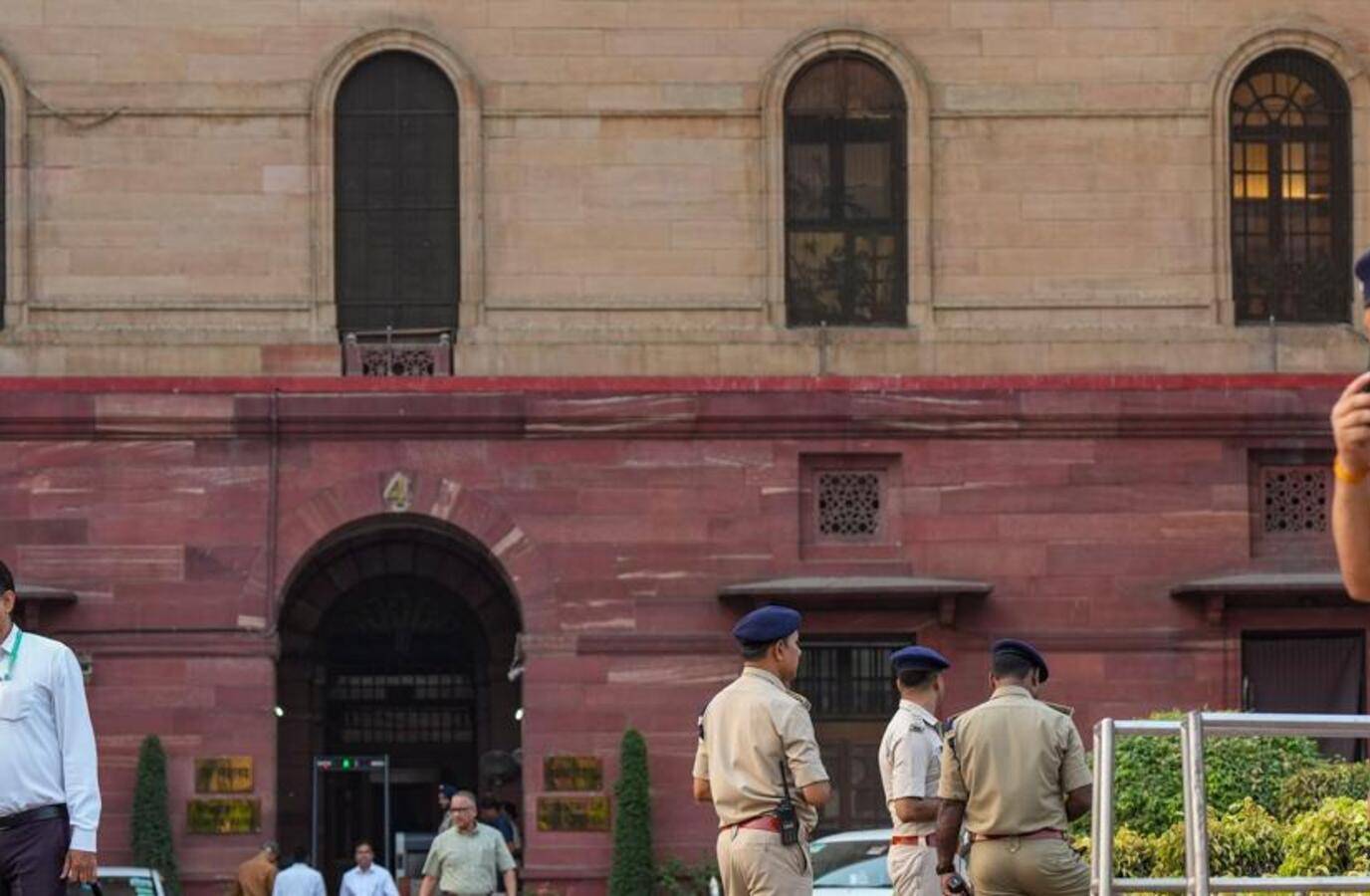
The Delhi police special cell arrested two government officials, including one posted in the home ministry’s Foreigners Division, for allegedly seeking illegal gratification from an association in return for facilitating its pending registration under the Foreign Contribution (Regulation) Act (FCRA), a government statement said on Tuesday.Police are probing their role in clearing similar FCRA registrations in the past.The two were arrested on Monday after a tip-off by the Union ministry of home affairs (MHA) about the two men who were allegedly taking money to get the FCRA registration cleared.“The officials, one working as a senior accountant and the other as an accountant, had allegedly approached an association and sought illegal gratification to facilitate its pending FCRA registration. While one of the officials is presently posted in the MHA’s Foreigners Division, the other is currently posted in a Pay and Accounts Office and had previously served in the Foreigners Division,” the spokesperson said.Also Read:Use facial recognition, real-time alerts to tackle human trafficking: MHA to states/UTsThe FCRA is the law that governs how Indian individuals, associations, NGOs, trusts and companies may receive and use money, securities or articles sent to them from a source outside India. It is administered by the MHA. It identifies who may accept foreign contributions, and under what conditions. It specifies how that money must be received, accounted for, and reported.“Preliminary questioning indicates that the two officials were in contact with certain associations to facilitate their registration and renewal in exchange for illegal gratification,” the spokesperson added.The MHA issued a statement reiterating that all FCRA-related services are delivered online through the FCRA portal and that no intermediary, agent or individual is authorised to facilitate any such service.India enacted the first FCRA in 1976 to regulate the acceptance and utilisation of foreign contributions. As international engagement expanded and cross-border financial flows became more complex, Parliament enacted the FCRA, 2010, replacing the earlier legislation with a modern regulatory framework. Since then, the framework has been strengthened through amendments in 2016, 2018 and 2020.Also Read:HC allows Lawyers Collective to seek settlement of FCRA offenceThe home ministry introduced the Foreign Contribution (Regulation) Amendment Bill, 2026 and the notified FCRA (Amendment) Rules, 2026 to further improve transparency, governance and regulatory clarity.Earlier this month, Lok Sabha speaker Om Birla constituted a 31-member joint committee of Parliament (JPC) to review the bill, after the proposal to send the controversial legislation to a parliamentary panel was accepted in the lower House. On August 12, the Lok Sabha referred the FCRA amendment bill to a JPC for an extensive review after multiple stakeholders, including church bodies, objected to the legislation’s provisions that allowed a Centre-appointed authority to take over assets created through foreign donations if the organisation failed to retain its FCRA license.First introduced in the budget session but held back at the time, the bill triggered major controversy with the Opposition, several church delegations and three CMs of Christian-majority states raising concerns.Also Read:‘Spy camera’ hidden in button helps bust 6-year cheating racket for Delhi recruitment examsThe amendments establish a designated authority for “a comprehensive framework for vesting, supervision, management and disposal of foreign contribution and assets, including provisional and permanent vesting.” A provision stated that the government can appoint a “designated authority” to take over, manage, or sell assets created from foreign funds by a non-governmental organisation (NGO) whose licence under FCRA was cancelled, suspended, or simply not renewed.The bill plans to remove section 15 of the current act, which limits the authority’s scope to manage the organisation’s activities, utilise foreign contributions, or dispose of assets created from them if adequate funds are unavailable for running such an activity.