Amid new EC rules, Delhi BLOs struggle to balance exams, SIR duty and 13-hour work days | India News
Many officers express difficulty managing their increased responsibilities, highlighting the strain on their personal and professional lives. | India News
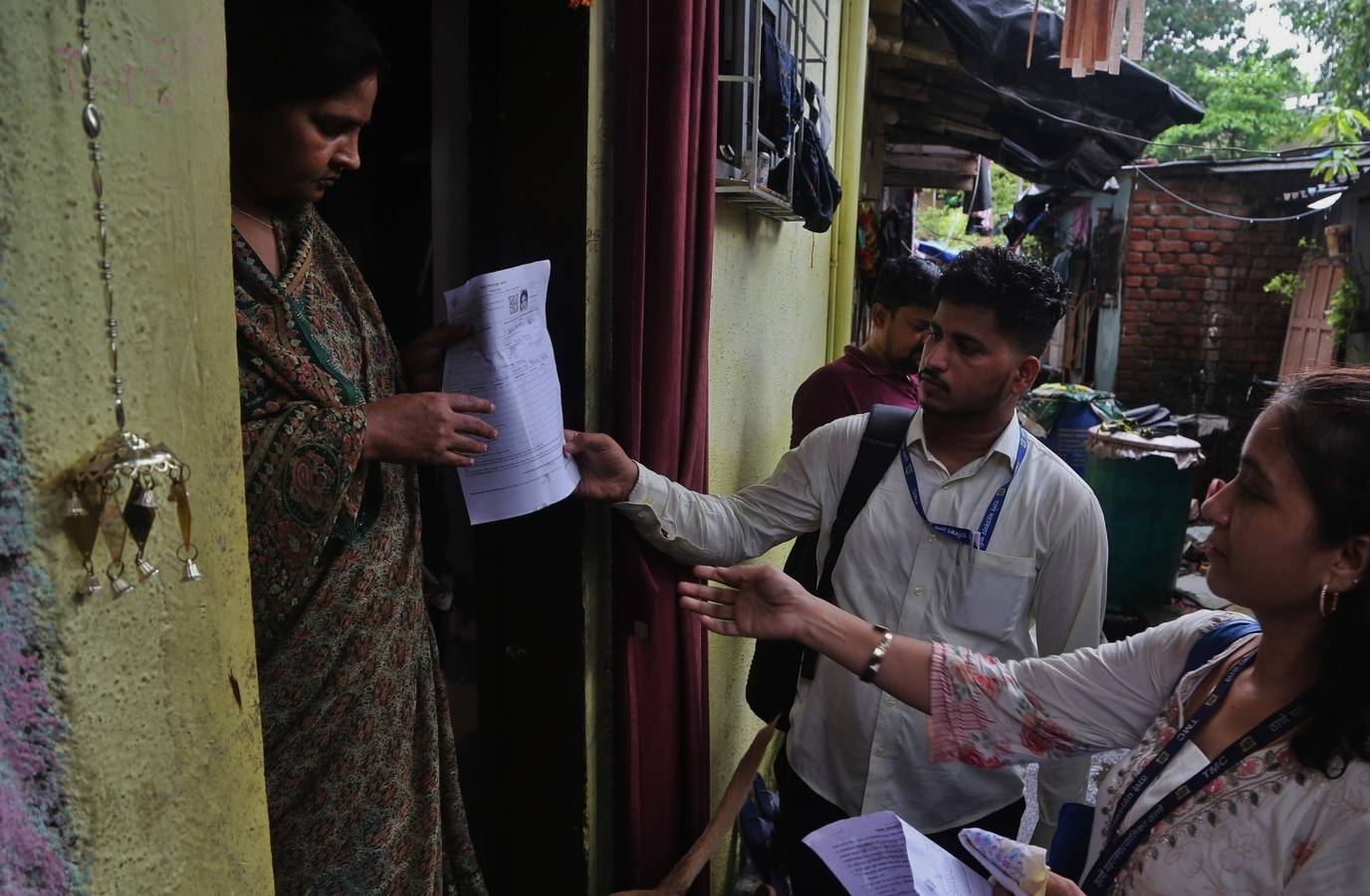
The Election Commission of India’s (ECI) sweeping changes in the special intensive revision has left booth-level officers, many of whom are government school teachers, struggling to balance their classroom responsibilities with new duties to visit every voter’s home and collect documents – especially in the middle of exam season.On Saturday, ECI announced large-scale changes in the SIR procedure, saying voters issued notices “for being unmapped and logical discrepancies” will no longer need to appear for a personal hearing before the Electoral Registration Officer (ERO). BLOs will visit such voters at home to collect documents, which will be uploaded to the ECINet portal “for decision by the ERO.”A hearing will be held “only in exceptional circumstances, as decided by the ERO,” and will “preferably” be conducted online, with such facilities to be strengthened. The commission said “any adult member of the family can be authorised by the elector to attend the hearing on their behalf, if required.”But these changes mean that Delhi’s 14,947 BLOs will have to visit the homes of 3.3 million people flagged under the logical discrepancy category and non-mapping with 2002 rolls categories. Many BLOs say that this round is more hectic than the enumeration phase because they were exempt from teaching duties then.Also Read | Delhi SIR deadline extended to October 30; final rolls on December 4“It has been extremely hectic. During the enumeration exercise, we were exempted from teaching work but this time, it has become tough considering that my workload has doubled and the working hours have also gone up from seven hours to nearly 13 hours,” said a 38-year-old Urdu teacher at a government school in Okhla.His school timings are from 12.30 pm to 6.30 pm. Before heading to school, he manages household responsibilities, including buying groceries and dropping and picking up his children. After teaching and completing academic work, he spends his evenings visiting voters’ homes to serve notices. Once he returns home, often around 10 pm, he has nearly 200 answer sheets from mid-term exams to grade.“People expect us to visit them at their convenience. Some people ask me to visit at 9 pm, some at 7 pm,” he said.Another BLO from Okhla said each visit can take between 15 and 20 minutes because of the procedure involved in serving notices and collecting documents.“There is a due process that has to be followed. While serving a notice, we have to collect acknowledgement, get a photo clicked and then while collecting documents, we have to click a selfie, upload those documents online and properly scrutinise them. It is an extremely sensitive task,” he said.Also Read | EC holds special camps at Delhi polling stations for SIR form submission, query resolutionA 50-year-old government teacher in East Delhi’s Krishna Nagar, who requested anonymity, said a combination of camps and home visits could have reduced the burden on BLOs. “Earlier people were coming with their notices to the camp, and we were visiting homes of elderly people or people with disability, but ever since ECI has said that BLOs will visit homes, people have stopped coming completely,” she said.“Mid-term exams are going on—I have to check answer sheets, prepare results, and then visit people’s homes,” she said.Another teacher in Mayur Vihar, who was deployed for SIR, described the academic session as the hardest of her seven-year career. She said the workload extended beyond the regular school calendar, with census work taking up the summer vacation, followed by SIR and its subsequent extension.“There have been days where I have just gone back home crying and had fights at home because I wasn’t able to look after my domestic responsibilities. Barring a few hours of sleep, my days are packed. From 7 am to 1 pm, I am at school, after which I head out to visit people’s homes. By the time I return around 6 or 6:30pm., I am tired and exhausted from the day’s work. While my workday may be over, the domestic chores that have accumulated throughout the day are still waiting for me,” the 32-year-old said.It’s not just Delhi. HT spoke to at least 10 BLOs in seven states where the claims and objections filing period for SIR is currently underway. All of them held regular jobs as local government or semi-government employees.In Telangana, 9.2 million voters were sent notices. Of these, roughly six million had anomalies such as name and age mismatches, and 3.2 million were unmapped with the base roll. The state has around 36,000 BLOs.A BLO in Hyderabad said that disposing of these cases can take much longer than a routine visit.Also Read | The SIR exercise and the points of concern“I am an anganwadi worker. I can only visit for a hearing after or before my work hours. Sometimes the voter is not at home, sometimes the documents are incomplete, and then we have to return. The number of cases looks manageable on paper, but it is different when you have to physically visit every household. As a woman, working late hours often feels unsafe,” she said.In Maharashtra, 12.2 million people were flagged for notices in a state with 100,300 BLOs. Similarly, in Karnataka, an estimated 4.3 million electors are in the no-mapping and anomalies categories, against 59,050 BLOs.In addition to the notices, BLOs will be required to help people excluded from draft rolls fill out Form-6 for re-inclusion.“There has been no separate time given to us for this work. We finish our regular duties and then start the election work. Both have deadlines. I cannot even begin to explain the kind of pressure this comes with,” a second BLO from Hyderabad told HT.State CEOs told HT that decision-making or delegation of work to BLOs was not in their hands. “There isn’t much that we can do. Orders come from the top. Work also gets allotted there. Any complaint regarding a tech glitch or document related problem is solved as quickly as possible from our end,” a Telangana CEO official said.ECI emphasised that it valued BLOs. “It’s not like ECI has any permanent staff at that level. All election related work, even before SIR, was done by BLOs. They are supremely important for our election system and we value them deeply,” an ECI official said.