
Annual audits, coaching scrutiny, compensation for cancellations: What parliamentary panel suggested on NTA reforms | India News
In its report on “Reforms and Strengthening of the NTA”, the panel headed by Congress MP Mukul Wasnik called for a defined “duty of care” towards candidates. | India News
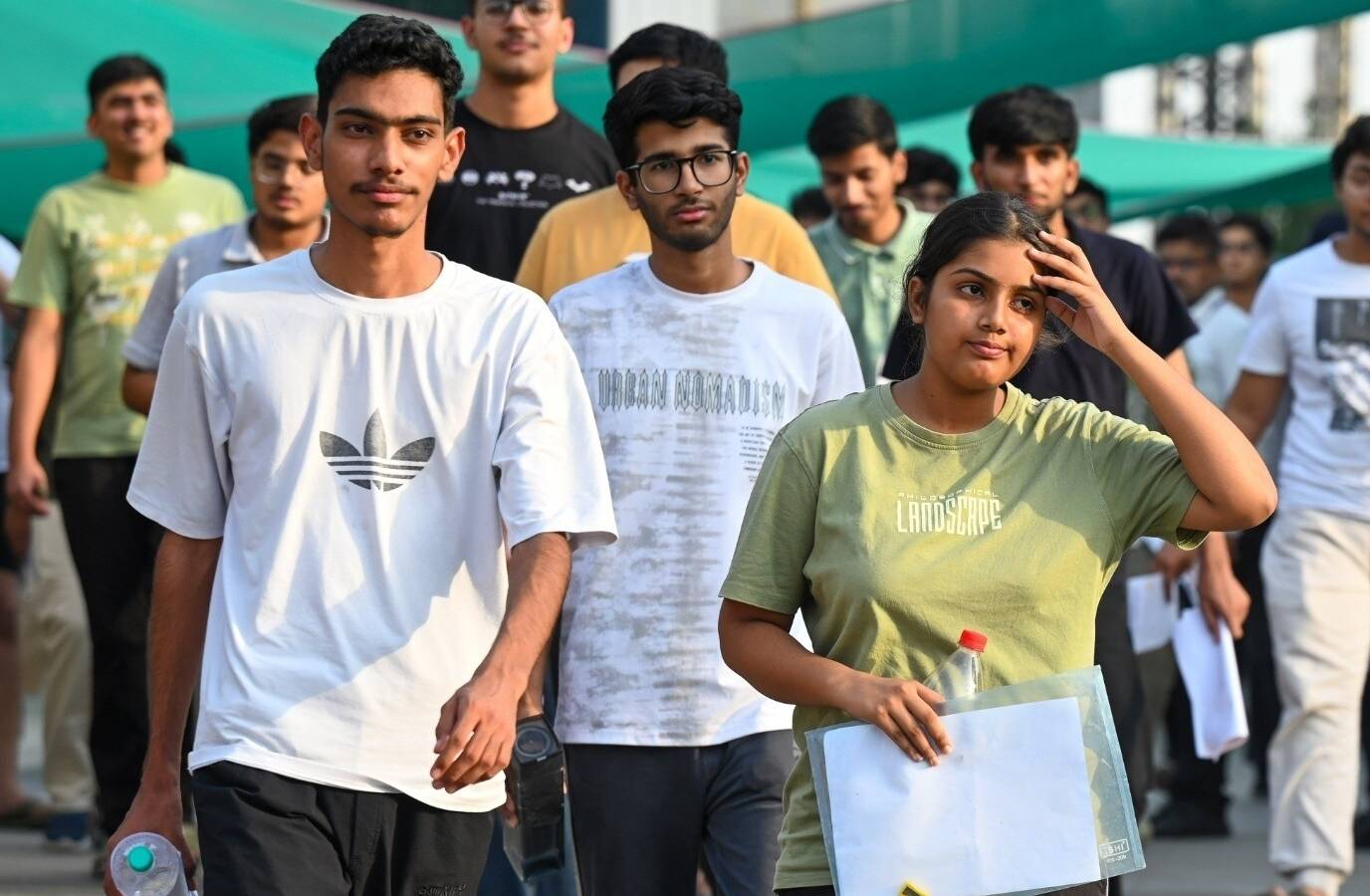
The National Testing Agency (NTA) should conduct annual audits of who succeeds in NEET, JEE-Main and CUET across states, genders, school boards, mediums of instruction and social categories, a parliamentary panel has recommended, flagging gaps in the agency’s data on examination outcomes.In its report on “Reforms and Strengthening of the NTA”, submitted to Rajya Sabha on October 9, the 31-member parliamentary committee on education, women, children, youth and sports, headed by Congress MP Mukul Wasnik, also called for a defined “duty of care” towards candidates, potentially including financial compensation for those affected by administrative cancellations. It recommended time-bound grievance redressal, an independent mechanism to investigate complaints and a regulatory framework for coaching centres covering fees, safety and students’ mental health.The panel examined the agency following the cancellation of NEET-UG 2026 on May 12, after allegations that around 120 questions in a guess paper matched questions in the May 3 examination. The matter was referred to investigative agencies, and the test was re-conducted on June 21. Committee members met NTA and education ministry officials on May 21, June 1 and July 1.Annual equity auditNTA told the committee it had data on registrations from different states, but did not track whether candidates from those states succeeded. “Participation data and success data are very different things,” the report said. “A State may have high registration numbers but poor pass rates, pointing to a quality or access problem.”The panel recommended an annual “Equity Audit” examining participation, pass and cutoff achievement rates in each major examination, broken down by state, gender, school board type — government, aided, and private — medium of instruction, and social category, including OBC, SC, ST, EWS, and general candidates.The findings should be published in NTA’s annual report and submitted to the education ministry for policy consideration, it said. The audit is intended to help identify disparities in outcomes; the report does not establish that any particular group currently performs worse.NEET results and exam formatThe committee also sought greater transparency in NEET results, noting that detailed results were disclosed in 2024 following a Supreme Court order, prompting scrutiny of performance variations across cities and examination centres. It recommended that NTA follow the Union Public Service Commission’s practices on result transparency to help identify “anomalous patterns” and improve public trust.The panel called for a year-wise, data-based review of NEET’s qualifying percentile and cutoff methodology, with the number of candidates qualifying kept “reasonably aligned with the number of available seats”, without compromising merit. It also asked NTA to examine a two-stage examination model, with a common preliminary test followed by specialised main examinations for different courses.On computer-based testing (CBT), the committee favoured a phased transition for NEET, which had more than 22 lakh registrations in 2026. It cautioned that multiple sessions could make score normalisation contentious, recommending an independently audited methodology, explained publicly in advance, alongside mock tests.Stating that a significant proportion of NEET candidates come from rural and low-income backgrounds or from government schools where computer literacy may be limited, the panel cautioned, “a sudden shift to CBT mode examination risks disadvantageing candidates from rural and low-income backgrounds or from government schools where computer literacy is not popular.”Where infrastructure is inadequate, the committee suggested considering a hybrid model in which encrypted questions are delivered to centres and printed locally until full CBT readiness is achieved.Duty of care for candidatesThe committee recommended that NTA clarify its responsibilities to candidates, including possible compensation for those affected by administrative cancellations and timelines for grievance redressal. “This will reduce the financial and psychological burden that such events place on candidates,” the report said.It also called for a secure channel to receive information and complaints relating to all aspects of examinations, and an independent mechanism, operating separately from NTA, with the power to audit examination security protocols, investigate candidate grievances, and report directly to the education ministry.To address exam-related stress, the panel recommended free, accessible counselling helplines in partnership with mental-health professionals, stress-management material well before examinations and a calm, supportive environment at centres, particularly around results.Coaching industry under scrutinyThe panel said the coaching industry had created a “parallel curriculum that often matters more than the official school curriculum”. It said examination papers that go beyond the NCERT or state-board syllabus, or reward “rapid recall and pattern-recognition developed through repetitive practice rather than genuine conceptual understanding”, inevitably favour coaching over learning.Such design choices, it said, had helped create a “large, largely unregulated private coaching industry” that had displaced school-level learning as the primary site of preparation.“Only a student from a well-resourced family can spend two years in any of the coaching institutions, paying anywhere between ₹2 lakh and ₹5 lakh a year, essentially preparing for one examination. While an equally talented and hardworking student, belonging to a poor or lower middle class family simply does not have that option, i.e. access to money, to infrastructure, and to a coaching ecosystem that the school system cannot offer,” the committee said.The panel recommended that the education ministry set “specific, measurable standards” to ensure that NEET, JEE-Main, and CUET tests assess conceptual understanding based on the official school curriculum, rather than on coaching-specific techniques. It also called for a regulatory framework covering fee transparency, safety standards and students’ mental health.