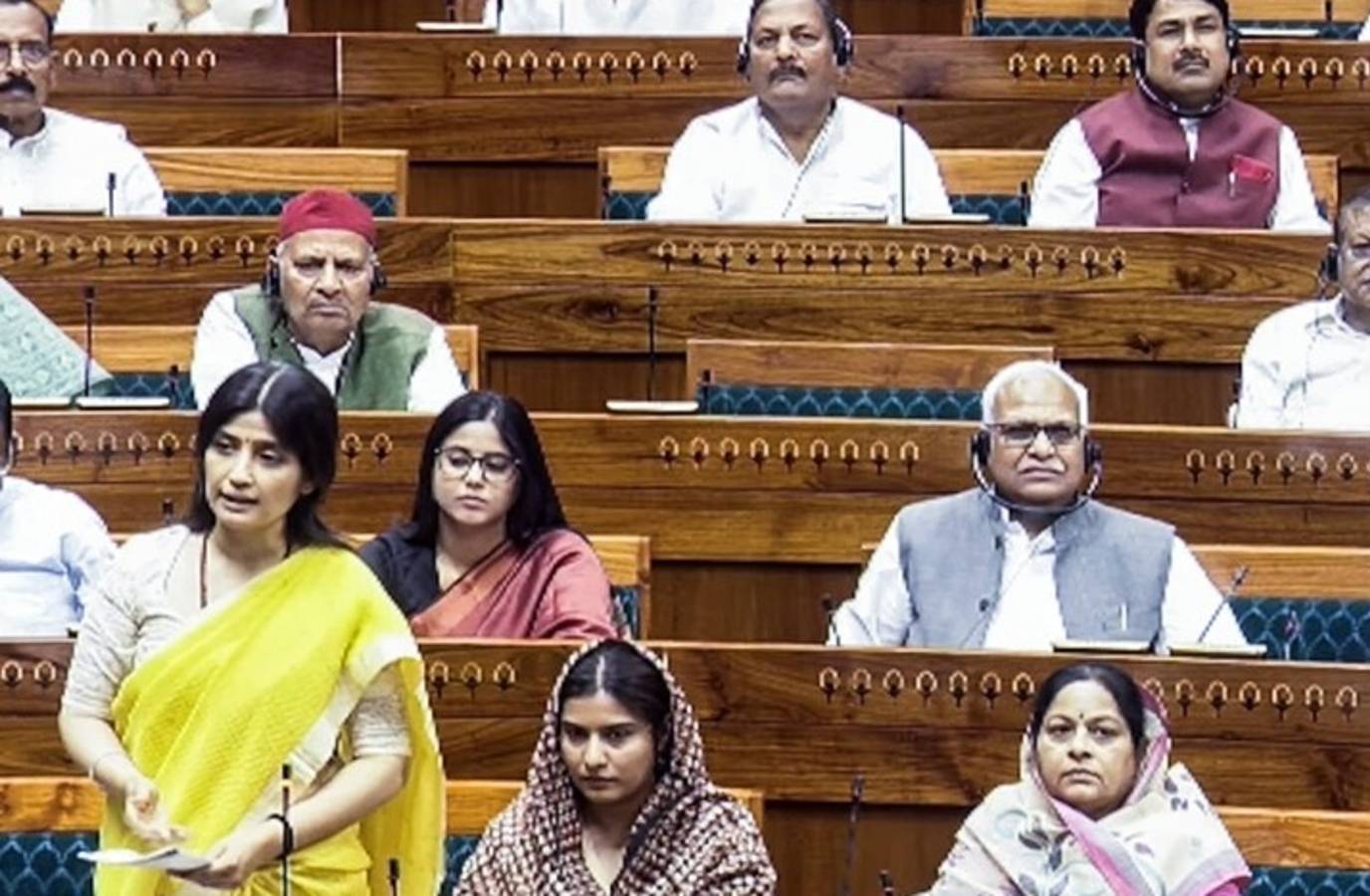
The BJP-led government's plan to link women's quota with delimitation has sparked a heated debate in the Lok Sabha, with the Opposition accusing the government of trying to sideline the caste count in the ongoing census.
Leader of Opposition Rahul Gandhi alleged that the government is trying to avoid giving power and representation to the Other Backward Classes (OBCs) by using the 2011 census data for delimitation, which does not include OBC data.
The government had proposed to remove the 'latest census' stipulation in the delimitation bill, which would have allowed them to use any census data for delimitation. However, the main amendment bill was defeated in the Lok Sabha by Friday evening.
The Opposition contended that the 2023 women's quota law can be implemented instead, and that the real purpose of the new bills was to trigger a delimitation sooner - with women's quota being used as cover.
Delimitation can't be 'hastened', as it needs deeper consultation, and the caste count being done as part of the census can impact what and how much is given to the OBCs.
The demand for OBC quotas, even within women's reservation, is not new, and the Constitution of India only provides for 15% and 7.5% reservation for SCs and STs.
The last time India counted caste comprehensively was in 1931, under the British, and the Mandal Commission estimated OBCs at 52% of India's population in 1980.
State-level surveys conducted in recent years suggest the data of over 50% OBCs may in fact be correct, and the Opposition's argument for a nationwide caste census is that detailed caste data might strengthen demands for proportional representation, especially from OBC communities.