Delhi's AQI crosses 300 for first time this season, more smog expected in coming days | India News
Delhi’s air quality deteriorated to the very poor category for the first time this season on Monday, with a thick haze enveloping the national capital. | India News
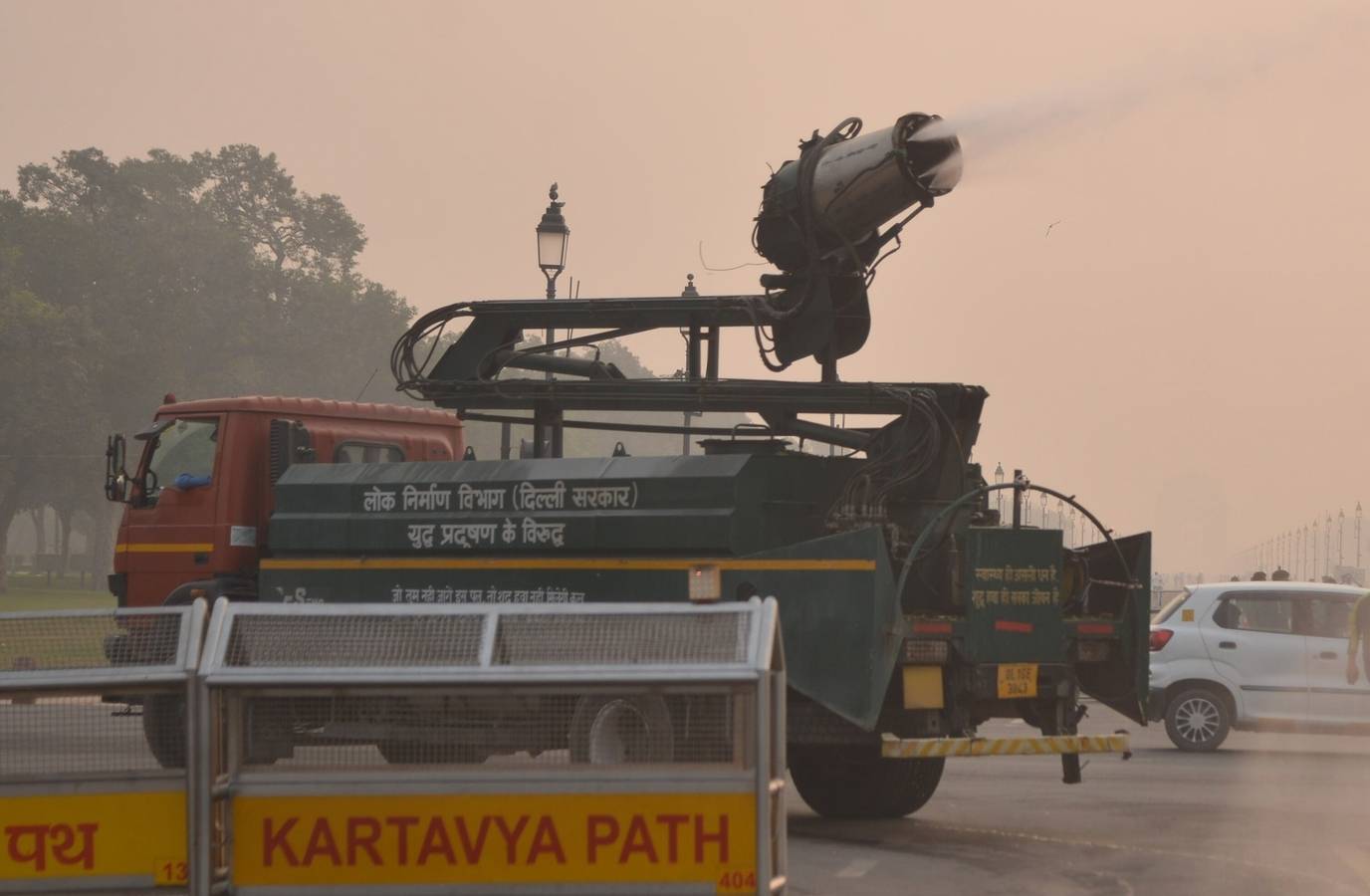
Delhi’s air quality deteriorated to the “very poor” category for the first time this season on Monday, with a thick haze enveloping the national capital as pollution levels rose sharply after last week’s brief respite brought by rain.The air quality index (AQI) stood at 307 at 7.05 am on Monday. The city had recorded a 24-hour average AQI of 261 (poor) on Sunday, according to the Central Pollution Control Board’s (CPCB) 4 pm bulletin, marking a sharp deterioration from 117 (moderate) a day earlier. On Friday, the AQI was 60, after of heavy rain washed the pollution out of Delhi’s air and gave the cleanest October day in four years.36 monitoring stations record very poor air qualityOf Delhi’s 59 air quality monitoring stations, data was available for 58. Of these, 36 recorded “very poor” air quality, while Jahangirpuri was the only station in the “severe” category, with an AQI of 417. Five stations recorded “moderate” air quality, while the remaining stations were in the “poor” category. CPCB classifies an AQI of 0-50 as “good”, 51-100 as “satisfactory”, 101-200 as “moderate”, 201-300 as “poor”, 301-400 as “very poor” and 401-500 as “severe”. PM2.5 primary pollutantAt 6 am on Monday, CPCB listed PM2.5 as the primary pollutant at 51 of the 58 reporting stations and PM10 at the remaining seven. At the same time a day earlier, PM2.5 was the main pollutant at 46 of 57 stations, while PM10 was recorded at 11.Delhi last recorded “very poor” air quality on February 11 this year, when the 24-hour average AQI stood at 305. Before that, the AQI had reached 339 on February 4.The rise in pollution levels comes a week ahead of Diwali, when firecracker bursting typically adds to the pollutant load in the Capital’s air.ALSO READ: ₹68.4 lakh in fines on Day 1, sends back 1,539 vehicles">Delhi's anti-pollution drive collects ₹68.4 lakh in fines on Day 1, sends back 1,539 vehiclesMeanwhile, satellite data from NASA detected 1,394 farm fires in Punjab and Haryana between October 1 and November 1, 1,249 in Punjab and 145 in Haryana. Of these, 171 were recorded on November 1. During the same period last year, the satellite detected 1,861 fires.To be sure, the figures may not be directly comparable, as stubble burning has increasingly shifted to later hours of the day. About 98 per cent of the fire heat recorded by Meteosat in 2025 came after 3 pm, compared with 94 per cent in 2024. Both years' figures are likely to be undercounts, as most burning now takes place after the satellite's pass at around 1.30 pm.Air pollution to worsen in coming daysMeteorologist Navdeep Dahiya warned that the smog season had begun, with unfavourable weather conditions likely to worsen pollution levels in the coming days.ALSO READ: Delhi air quality takes a nosedive ahead of Diwali, anti-pollution curbs kick in“Most AQI sensors across Delhi NCR are now reporting AQI levels above 300 and many are climbing the 400-500 range tonight. The flow of winds are from the north west with calm conditions. All emissions will persist in the atmosphere for longer duration,” he said in a post on X.Dahiya added that no favourable meteorological conditions were expected over the next seven to 10 days, warning that smog would worsen across Delhi-NCR and the northern plains.