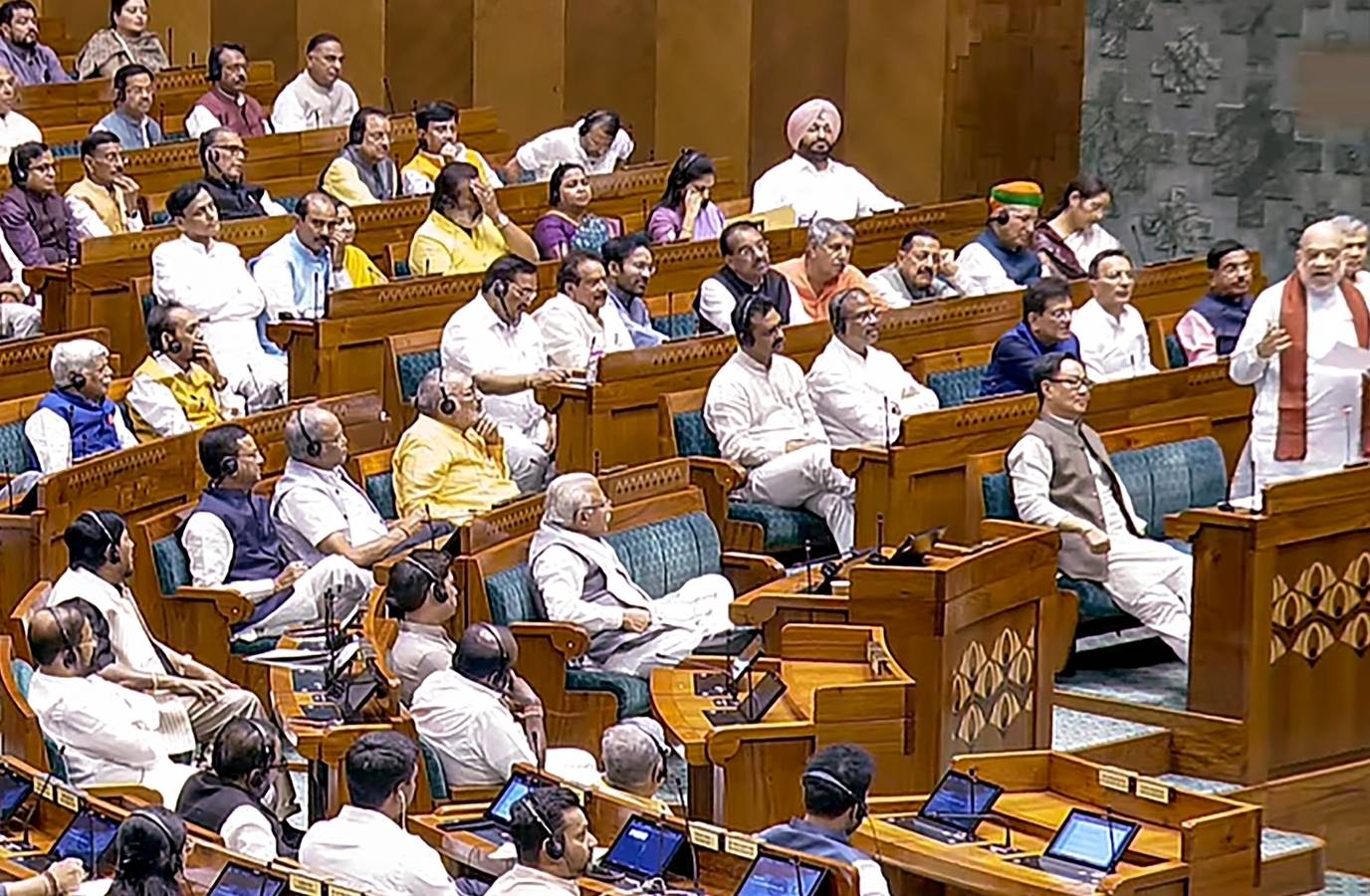
India's parliament has reconvened to debate and vote on bills that will reallocate Lok Sabha seats, delimit constituency boundaries, and reserve 33% of new constituencies for women.
The government insists that the state-wise proportion of Lok Sabha seats will remain intact after the changes, but critics fear that redrawing constituency boundaries could lead to gerrymandering.
Gerrymandering, a term used in many democracies, refers to the manipulation of electoral district boundaries for political gain.
Historically, India's delimitation exercises have been criticized for favoring the ruling party, and the current exercise is no exception.
While the government claims that the delimitation exercise is not intended to favor any party, critics point to the fact that the number of electors varies significantly across parliamentary constituencies, even within states.
A comparison of the 2023 delimitation in Assam and the 2022 one in Jammu and Kashmir shows that constituencies still show a very large variation in the number of electors.
In Assam, one-fourth of the state's assembly constituencies had a divergence of more than 20% either way from the average number of electors per constituency in 2024.
The situation is similar in pre- and post-delimitation Jammu and Kashmir.
The 2008 delimitation, which occurred when the Congress was in power, also showed extreme values in the degree of divergence between actual electors in a parliamentary constituency and the average electors per constituency.