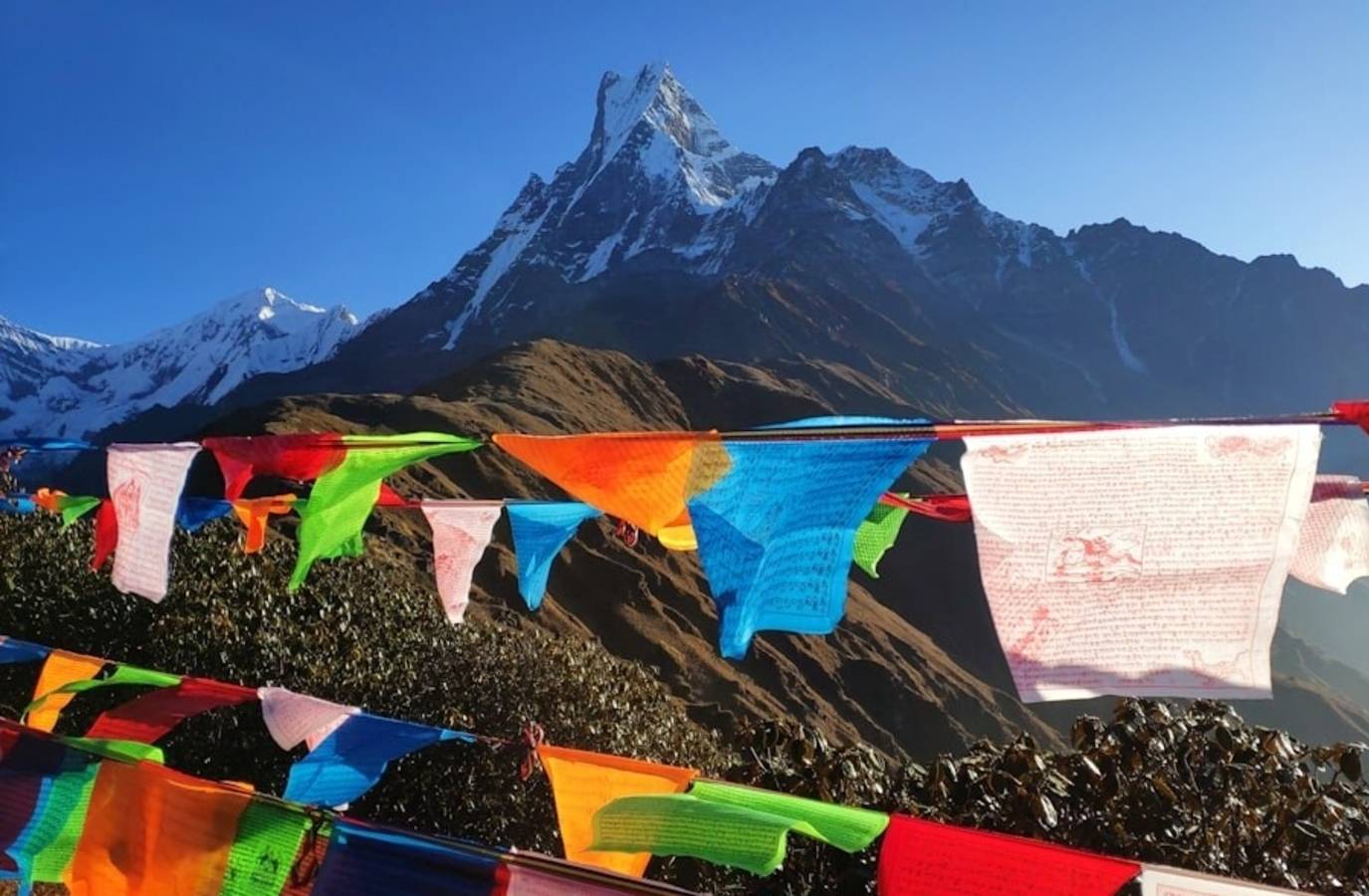
The rapidly changing climate has weakened Himalayan glaciers, forming unstable chunks of ice that hang off steep slopes and can snap, triggering environmental disasters in Uttarakhand, a new paper has found.
The paper, led by the Indian Institute of Science, Indian Institute of Technology Bhubaneswar, and the Defence Geoinformatics Research Establishment, mapped 219 of these chunks, known as "hanging glaciers" in Alaknanda basin.
Rapid settlement growth increases disaster exposure, with settlements in the basin expanding 616% over the past five decades, contributing to a 57% drop in agricultural land and a 33% drop in barren land.
Built-up surfaces are expected to increase from around 8,000sqm in year 2000 to about 152,000sqm by 2030, with the number of people exposed to these risks projected to grow from about 380 to 8,500 in the same period.
Warming Himalayas accelerating glacier melts, with glaciers in high-elevation alpine environments particularly sensitive to climate shifts.
The data is vital for planners to undertake systematic development and improve the safety of mountain communities, said Anil V Kulkarni, distinguished visiting scientist at the Divecha Centre for Climate Change, IISc.