HistoriCity: A look at India’s historic links with Mecca | India News
Mecca, holiest site of Islam, became a target in ongoing geopolitical struggle between Iran and the Houthis, and Saudi Arabia and other US-allies in the region | India News
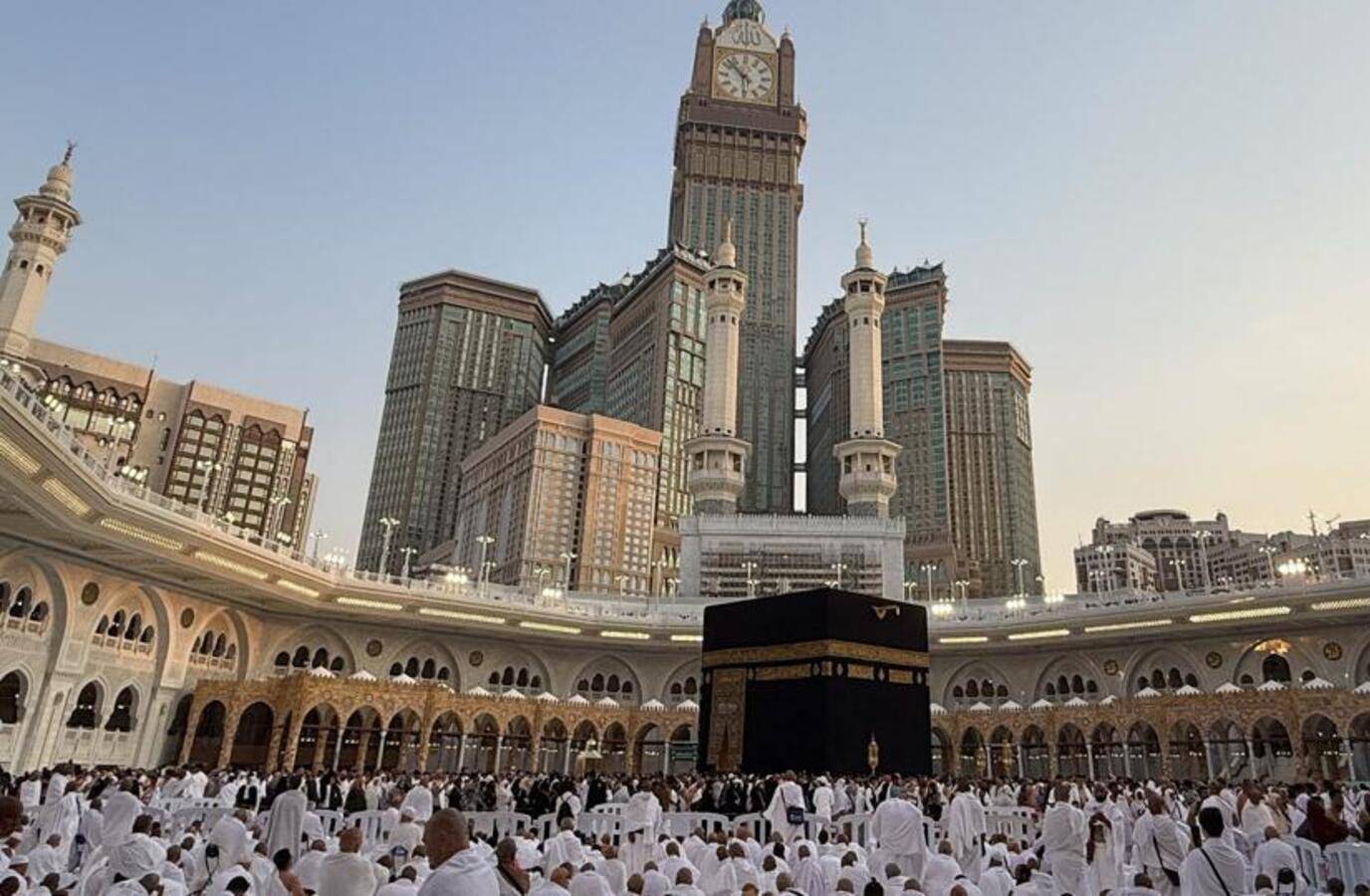
Mecca, the holiest site of Islam, became a target in the ongoing geopolitical struggle between Iran and the Houthis, and Saudi Arabia and other US-allies in the region. The alleged attack on Mecca comes just over a month after the inking of the Mecca Defence Alliance (MDA), also called the Mecca Pact, between Saudi Arabia, Pakistan and Turkey in August.It is unprecedented that Islam’s birthplace (also of Prophet Mohammad’s) has been pulled into the ongoing conflict. At the heart of the conflict are oil reserves, regional politics and sectarian faultlines between Shias and Sunnis.Mecca and the KaabaThe Kaaba, the cubical stone building at the centre of the Islamic world, is considered by Muslims to be the house of god or Baytullah. Since the mid-8th century, first Arabs, and, later other Muslim communities from across the world have made annual pilgrimages to this shrine situated in a barren valley with no source of water other than the Zam Zam well located close to the Kaaba.Until at least the 5th century, the Kaaba was a pagan shrine worshiped by various Arab tribes such as the Kinanah, Hawazin, Quda’a. In the Prophet Mohamma’s lifetime, the Quraysh, Banu Kinanah and others were dominant in and around Mecca. Because of its strategic location on an ancient trade route, Mecca had been the an active hub for tribes, trade and their inevitable corollary- conflicts.India and MeccaBetween 708 and 711 CE, Mohammad bin Qasim became the first Muslim ruler to conquer Sindh which was ruled by a Hindu king, Raja Dahir. Qasim was born near Mecca and led a mixed force of various tribes including the Umayyads. He became the first link between the newly Islamised Mecca and South Asia.For nearly three centuries after this, links between Mecca and what was then India largely comprised of trade via sea as evidenced by the Nakhauda community on India’s western coast that traces its roots to the 9th century.Hussain Randathani, a Kerala based scholar focussing on the region’s links with Mecca, writes: “The chronicles are almost silent on the pilgrimage of Muslims to Makkah in the early centuries of Islam except that one Zamorin raja of Calicut who after converting to Islam started for Makkah and on the way, he died at in Dhofarr in Oman. His grave is often referred as that of Abdu Rahman Samiri but some claims that the grave is of Cheraman Perumal (Shakruti fermal). However the name Samiri indicates that it was that of a Zamorin who is said to have embraced Islam in thirteenth century under the influence of some Muslim missionaries in Calicut.”“It is said that the Zamorin accepted the name Abdu Rahman and went to Makkah where he presented a robe of honour to Kaaba . On his return to Malabar, he died at Dhofar where his grave still exists with the name that of Abdu Rahman Samiri.”Mahmal or the empty ceremonial royal litter placed on a camel used to be sent by kings from across Arabia, Syria, south Asia and other parts of the Muslim world. It was a symbol of power. While documented Mahmals from India begin in the 18th century there is strongreason to believe that Mahmals were dispatched annually by both the Delhi Sultans who reigned between the 12th and mid-16th centuries, as well as the Deccan Sultanates who continued till well after the demise of the Mughal empire.17th century Hajj pilgrim accountA fascinating account of a Hajj pilgrim, the Anis Al-Hujjaj, takes us back to the 17th century. Ibn Vali was an officer in the Mughal court when Aurangzeb was the emperor. In September 1676 he set out from Delhi, boarded a ship from Surat and reached Mecca in January 1677, after making stops to pick up pilgrims from Tunisia, Libya and other part of the Maghreb.His detailed account gives advice to travellers telling them to pick the right ship which has good drinking water, a doctor and warns them to avoid going on the outer deck. In Mecca, he described various rituals including shaving hair, sacrifices and stoning of the devil.Returning to the Malabar connection, this region of India was an important source of revenue and trade for Mecca, which remained impoverished until oil was discovered in what is now known as the country of Saudi Arabia in 1938.A decade earlier in 1924, the House of Saud led by king Abdulaziz Ibn Saud who defeated the ruling Hashemite family of Mecca. Until oil was discovered, Mecca had depended on the patronage and aid of Muslims from other parts of the world. One such benefactor was Mayankutty Keyi, a wealthy merchant from Malabar, who built the Keyi Rubath, guest house for Hajis or pilgrims, in the 1870s. The Begums of Bhopal along with Nawabs of Tonk, Arcot, and Hyderabad too built guest houses (Rubaths) for pilgrims from their respective kingdoms.