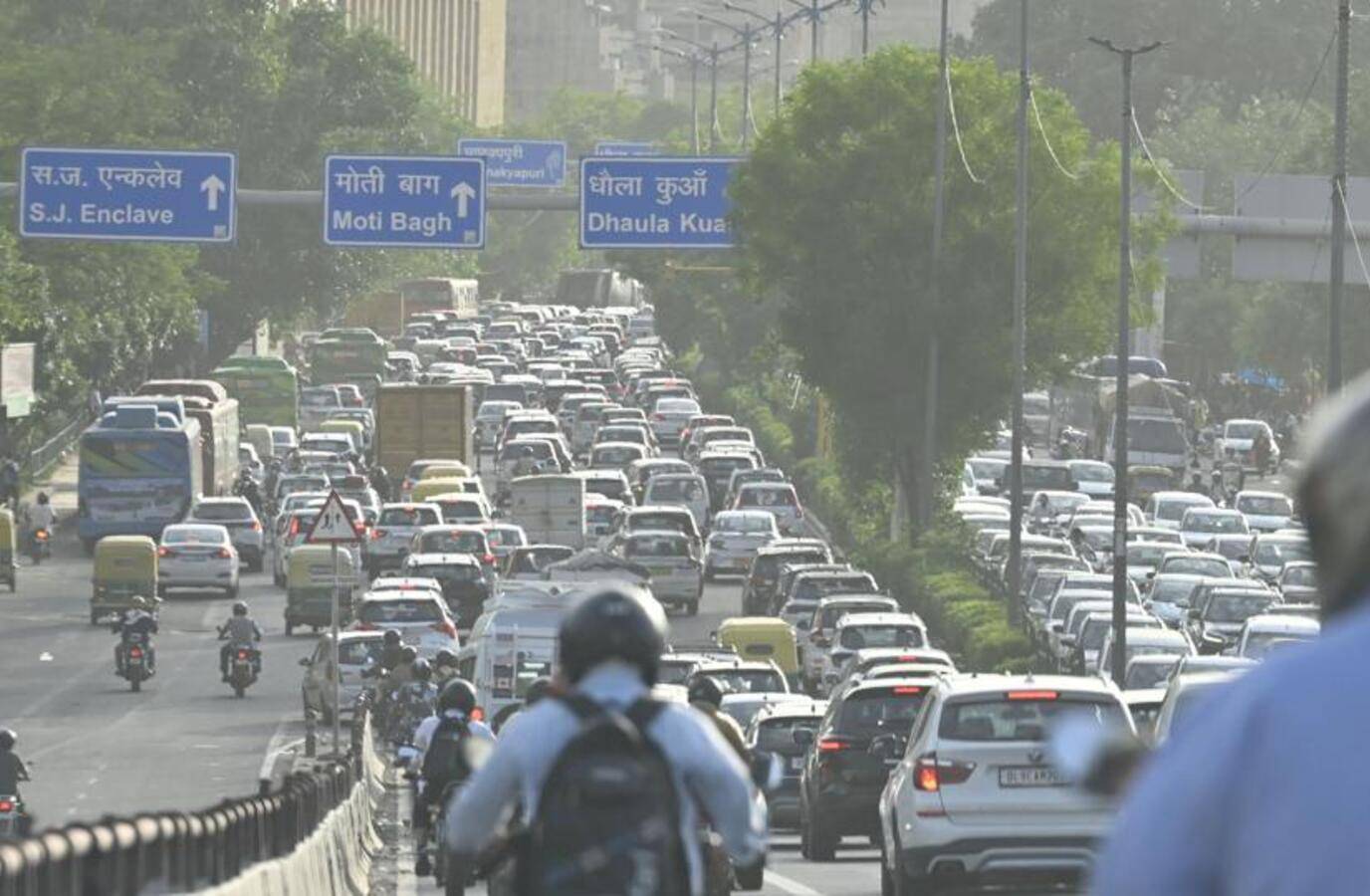
The Indian government has introduced a new urban decongestion policy to reduce ribbon development along highways, which contributes to congestion. The policy requires states to notify 15-metre no-development buffers and regulate construction in wider two-km influence zones around ring roads and bypasses.
The policy seeks greater state participation in funding urban decongestion projects through multiple cost-sharing models, including a 50:50 split in land acquisition costs, land pooling, reimbursement of state GST and royalties, and a value-capture mechanism.
The move aims to prevent bypasses and ring roads from losing effectiveness within a decade due to residential colonies, commercial establishments, and local roads proliferating along their edges.
The policy requires projects to be planned with a horizon of up to 50 years, taking into account projected urban expansion and demographic growth, and mandates integration with city master plans and the PM Gati Shakti platform.