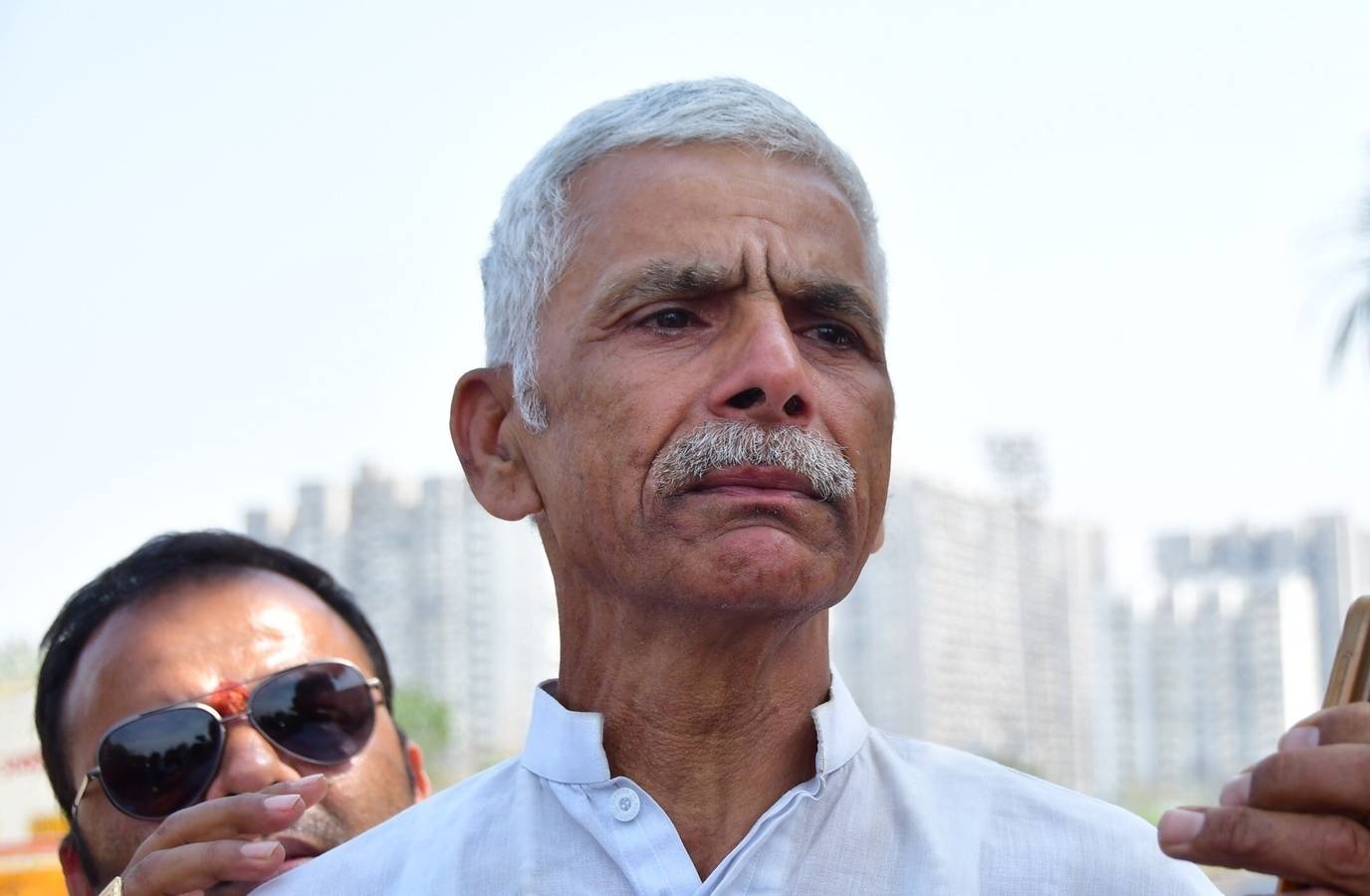
The process of passive euthanasia for 32-year-old Harish Rana, who suffered a catastrophic head injury in 2013, may take weeks to complete as it involves several stages, including gradually withholding or withdrawing nutritional support.
Rana, a resident of Uttar Pradesh's Ghaziabad, has been in a coma since the accident and was shifted to the palliative care unit at Dr BR Ambedkar Institute Rotary Cancer Hospital at the All India Institute of Medical Sciences (AIIMS) Delhi.
The Supreme Court on March 11 permitted the withdrawal of artificial life support to Rana, marking the first ever order allowing passive euthanasia in India.
Dr Sushma Bhatnagar, former AIIMS chief, said the case exemplifies palliative care focused on reducing prolonged suffering when recovery is no longer possible.
The process generally involves withholding or withdrawing nutritional support gradually while ensuring adequate pain relief, and life support measures such as artificial nutrition, oxygen, and medications are slowly withdrawn.
The entire process could take two to three weeks to complete, and all medical assessments will be carried out by the hospital's medical board constituted for the case.
Before life support can be withdrawn, two medical boards must certify that the patient meets necessary criteria, according to Indian law governing living wills and passive euthanasia.
A heartbreaking video from the Rana residence in Ghaziabad surfaced on social media, showing relatives offering prayers as a member of the Brahma Kumaris puts a 'tilak' on Harish's forehead and says softly, 'Sabko maaf karte hue...'