
March 11 OBC creamy layer quota order would not apply retrospectively: Supreme Court | India News
The court granted a further period of two months for the Centre to implement its judgment in favour of the litigants in the case. | India News
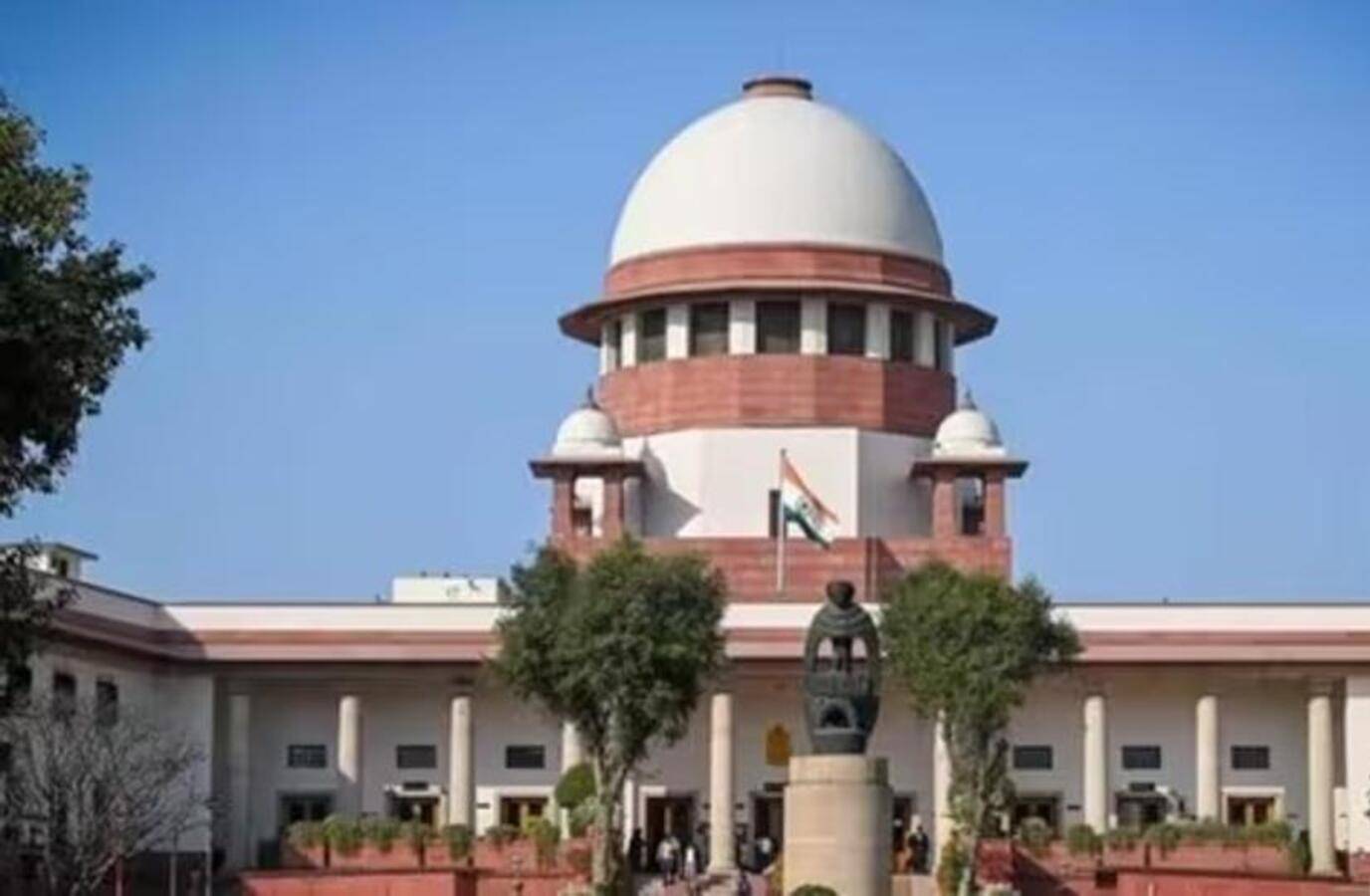
The Supreme Court on Friday held that its March 11 decision which said that the income of parents cannot be the sole criterion for their children being excluded from other backward class (OBC) reservation will not be a ground to reopen past appointments, giving relief to the Centre which had opposed retrospective operation of the judgment.Disposing of an application filed by Centre on whether the law decided by this judgment will reopen OBC selections made over the past years, the court said that the application was based on an “erroneous assumption” as it only applied to the persons who were litigating the case before the court.Supreme Court's commentsThe bench of justices PS Narasimha and R Mahadevan said, “The judgment dated March 11, 2026 determines the rights of the parties before this court…The ratio laid down in the judgment shall not, by itself, furnish a ground for reopening selections or appointments already concluded prior to the judgment.”The court granted a further period of two months for the Centre to implement its judgment in favour of the litigants in the case.“These directions are to be construed only in the context of the parties and applications dealt with in the judgment. The Government may, accordingly, accommodate the parties before this court who otherwise fulfil the requisite eligibility conditions,” it said. At the same time, it clarified that if there are claims of persons asserting that they are similarly placed and whose cases are pending before any court, tribunal or other competent forum or authority, the same can be considered on merits by the concerned court or adjudicating body. The Centre had further sought a clarification whether the judgment will determine the service allocation under the Civil Services Examination (CSE) 2025, the results of which were announced on March 6, just days before the judgment was delivered.The court said, “Since the process of allocation remains pending and there is no convincing or reasonable justification for deferring the implementation of the judgment dated March 11, 2026, the creamy layer principle, as interpreted in the said judgment, shall govern the allocation of services to OBC candidates selected through the CSE, 2025.”Creamy layer policyThe government had even sought time of two years to undertake the exercise of establishing equivalence between posts in the formulation of the creamy layer policy. The bench declined to prescribe any timeline as it said, “These matters fall within the domain of the executive and the legislature…The government remains at liberty to formulate its policy concerning reservation and the creamy layer criteria, in accordance with the Constitution and the principles laid down by this court.”The bench felt that the clarification was unnecessary as it never directed the retrospective revision or reconsideration of past selections and appointments. “The present miscellaneous applications (by Centre) appear to proceed on the erroneous assumption that the benefit of the judgment operates retrospectively,” the court said, adding further, “This Court did not direct the retrospective revision or reconsideration of selections, appointments, seniority or service allocations already concluded.”The six-month period stipulated in the judgment was intended for implementation of the directions in relation to the respondent candidates and intervenors and cannot be construed as requiring a general exercise, it said.Government's caseThe application filed by Centre claimed that the judgment’s operation to all appointments and admissions made in the past will result in a “complete administrative chaos”.The Centre led by solicitor general Tushar Mehta and additional solicitor general (ASG) Aishwarya Bhati had highlighted the potential impact on more than 0.669 million reserved vacancies, including 0.370 million OBC vacancies, filled over the preceding ten years across various government departments and public institutions as well as the consequential effects on seniority, pay, promotional prospects and the Foundation Course for CSE-2025 candidates. The Centre further stated that the judgment had triggered additional litigation, including claims by similarly situated candidates who were not parties to the civil appeals. However, the respondent candidates had opposed the Centre’s application alleging that it was a bid to deny them reservation benefits.The court judgment of March was passed in a set of appeals filed by the Centre against orders passed by the Madras high court. In one such case, the high court permitted an OBC candidate to be treated as a non-creamy layer candidate which furthered his career prospects. He was earlier recommended for the Indian Police Service by the UPSC but under OBC reservation, he became eligible for the Indian Foreign Service.Also Read I Madhya Pradesh High Court strikes down 27% OBC quota, says it will stay at 14%The top court approved the high court order and discarded the Centre’s objection that his father working with a multinational and having a high income would bring the candidate in the creamy layer. Similarly, the court permitted another candidate to obtain benefit under the Civil Services after he was initially refused OBC reservation owing to his father being employed by a public sector undertaking with a high salary.Both the candidates argued that their parents were excluded on the income criteria while for government servants, creamy layer classification was based on their parents’ posts by which Group A or B, C or D officers stood excluded as creamy layer. They argued that similar “equalisation” based on posts should apply to OBC parents working in PSUs and private employment.The judgment said, “Treating the children of those employed in PSUs or private employment, etc., as being excluded from the benefit of reservation only on the basis of their income derived from salaries, and without reference to their posts (whether Group A or B, or Group C or D) would certainly lead to hostile discrimination between parties who are similarly placed and would amount to equals being treated unequally.”The creamy layer notification was issued in 1993 following the landmark Indra Sawhney judgment of 1992 which allowed 27% reservation for OBCs subject to the exclusion of the creamy layer. The 1993 order identified five occupational categories as creamy layer and a sixth category based on an income/wealth test.