On its 500th anniversary, 16th century Portuguese decree inspires debate in Goa | India News
The document served as the first formal codification of the indigenous village administrative and revenue systems in Portuguese-controlled Goa | India News
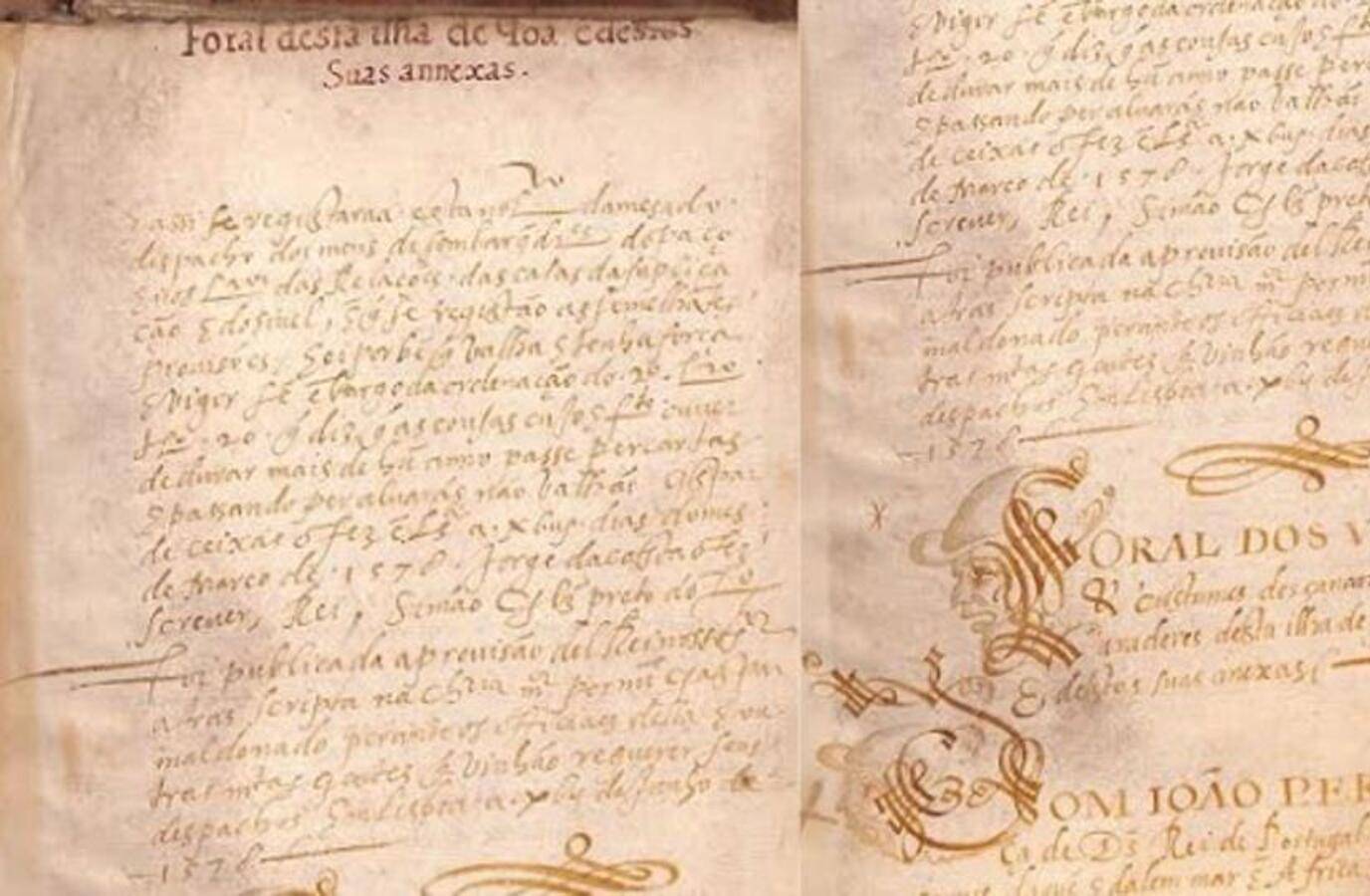
It is an anniversary being commemorated both in Goa and Portugal. Five hundred years ago on September 16, 1526, King João III of Portugal promulgated the Foral de Goa, a codified set of 49 laws historians consider to be not only Goa’s first ‘constitution’ but one of the earliest paper documents of this nature still preserved in South Asia.The document formed the basis of the relationship between the new foreign power and the local elite ensuring that the latter’s rights, especially those concerning land, inheritance and payment of taxes, were for the first time recorded in writing and acknowledged as justifiably merited since time immemorial.In Goa, judge of the Bombay high court, Valmiki Menezes will release a commemorative edition of the Foral later this month. While in Portugal, a year long series of events is being organised by the Centre of the History of Society and Culture at the University of Coimbra besides other Portuguese cultural institutions on the impact the document had, and continues to have, on Goa setting it on a path different than the rest of the country.Also Read:Ex-Tehelka editor Tarun Tejpal surrenders before Goa court after 2013 sexual assault convictionWhat is the Foral of 1526?Officially titled the Foral dos Usos e Costumes dos Gancares e Lavradores desta Ilha de Goa e outras Anexas a Ella, which translates as the Charter of the Uses of the Customs of the Gaunkars (village land owners) and Farmers of the Island of Goa and Other Islands Annexed to it; the document is sometimes referred to as the Foral de Afonso Mexia after Afonso de Mexia, the Vedor da Fazenda (chief comptroller of the treasury) in India who signed off on it, or simply the Foral of 1526.It was concluded in 1526, 16 years after the Portuguese captured the port city of Goa (today called Old Goa) from the Adil Shah of Bijapur and is the result of negotiations between the Portuguese administration and the Gaunkars (landed gentry) of thirty-one villages of Tiswadi.According to the director of Archives Balaji Shenoy, the document served as the first formal codification of the indigenous village administrative and revenue systems in Portuguese-controlled Goa.Also Read:SC seeks Goa response to Tarun Tejpal challenging conviction in rape caseThe Foral itself notes in its preamble that it was drawn up “after ordering careful inquiries and investigations to determine and clarify what they were obliged to pay us, and used to pay to the kings and lords of this land before it became ours…as well as the rights, uses and customs, under which they lived and which we ought to preserve for them…”At the centre of the Foral was the recognition of the rights of the Gaunkars, landed gentry who managed village common lands as a collective, a system known as Gaunkaria, as primary owners of the lands they administered.The gaunkaria or comunidade system, still in force in Goa today, administers sections of cultivable land in each village in Goa. Back then, Gaunkars paid a fixed tribute or foro (tax) to the state, apportioned the proceeds to pay those who performed varying duties for the village, auctioned the rights to cultivation and divided a percentage of the income earned as payment among themselves.Also Read:Royal deal: 361-year-old Portuguese manuscript reveals how Bombay became British territoryThe Foral recognised this system of giving Gaunkars primary as pre-existing since time immemorial and recognised that the ancestors of the Gaunkars “developed otherwise unproductive coastal land and made them so productive that they became large settlements.”“It was one of the initial documents issued by the Portuguese Crown to indigenous land administrators, sixteen years after the conquest of Goa… the Foral recognised the political significance of a local legend that legitimised the primacy of the gaunkars over the land in Ilhas by incorporating it into the document. The most minimal description of the Foral would see it as a revenue-fixing document, but in fact it addressed ritual practices, inheritance laws, and a range of other aspects through its forty-nine clauses,” independent scholar Rochelle Pinto, notes.Articles of the Foral laid out provisions for collection of taxes based on village revenue, distribution of the annual surplus, assessment of taxes based on the type of land, procedure for dealing with impoverished villages, hereditary rights, lease of uncultivated land, lease of lands to ‘outsiders’ as well as laid down procedure for dealing with disputes, absent or defaulting Gaunkars, hereditary rights and succession, protection of the rights of children of multiple marriages, etc.Also Read:Step inside 4-BHK Goa villa with stunning pool, timeless decor, vibrant aesthetic that revives Indo-Portuguese splendourColonial instrument or gift of civil liberties?According to historian Dale Menezes, who’s co-authoring a commentary to be released as part of a commemorative edition of the Foral, the Foral dealt with questions that went to the heart of everyday life: land and cultivation, taxation, inheritance, village offices, labour, customs, obligations, justice, and the redress of grievances.“The Foral should be understood as Goa’s first constitution—not a constitution in the modern sense, but a document that helped to constitute a new political community by putting into writing the terms through which the government and Goan society would relate to one another.Issued at a time when the Portuguese, who captured the city a decade and a half earlier in 1510 and imposed cultural changes like the ban on Sati and encouraging marriage between Portuguese soldiers and local women, the exercise that concluded with its proclamation, sought to reassure local Hindu elite that existing systems concerning taxes and cultural customs would not be greatly interfered with.Also Read:Goa launches mobile app to book its iconic motorcycle taxis: Govt“The Foral of 1526 represents a peculiar governmental instrument of the early modern times, that is to say 1500s onwards. There were certainly customs in earlier epochs, but kings, monarchs, and empires in India did not function by writing down these customs. At best we have land grants on stone or copper. Even the Bahamani and Bijapuri Sultanates that ruled parts of present-day Goa ruled according to localized custom but never set it down on paper for the use of all people across all villages in a given territory. Besides, the Foral of 1526 does not just codify land laws, it is much broader than that,” Menezes said.Jocel de Souza, who’s pioneering ‘United Gaunkaris’ a movement for the preservation and revival of Goa’s Gaunkari system, (also known as the comunidade system), first codified by the Foral, the promulgation of the decree was a “path-breaking document for its time” and offered insights into how the new power collaborated with local elite, a move that would help them retain control over the land longer than anyone else in recorded history.“It is a brilliant and path breaking set of laws compared to what rulers both in India and Europe were used to at the time. The usual practice was to impose sovereign diktats without any kind of collaboration. However, in the case of Goa, it was a collective charter and the people (who were being ruled) were involved in its drafting. This document laid the foundation for subsequent negotiations between the rulers and the ruled,” he said.De Souza says, Goa’s system of community held and community administered lands with profits distributed equally among members known as the Comunidade system formed the basis for which Goa’s has historically held a much more equitable system of wealth distribution and ensured a higher per capita income from the rest of the country through the ages.Also Read:Inside one of the world’s few crash courses in conserving and caring for ancient papyrus manuscripts“All this ultimately boils down to the fact that community land rights were recognised, safeguarded and codified by the Police as early as the 16th century, when legislation of this nature was practically unheard of in any other part of this side of the world,” he said.“It was this document that eventually was amended and expanded upon over the following centuries, that evolved and matured into the Portuguese Civil Code and the Code of Comunidades that we have today,” he added.But not everyone agrees.“The primary motivation of the Portuguese administration was to guarantee and stabilise tax collections for the Crown. It established a fixed, collective rent system for the villages. It was less a foundational gift of civil liberties and more a shrewd legal pact designed to anchor imperial tax extraction to pre-existing Hindu jurisprudence and agrarian frameworks,” Goa’s director of Archives Balaji Shenoy said.“The Foral of 1526 represents one of the earliest Western attempts at colonial mapping and administrative ordering of an Asian territory. Foral should not be viewed as Goa’s ‘first constitution,’ as doing so reframes a colonial instrument of conquest into a democratic gift,” he also said.Also Read:Of museums, mohallas, and memories: ‘The City as a Museum’ explores Delhi as landscape of learningWho owns Goa: A debate seemingly settled in 1526 that continues todayInitially only applicable to the 31 villages surrounding the city of Goa (today Old Goa) that were then under Portuguese control, the document became the basis for negotiation as Portuguese expanded their rule in 1543 to include the sub-districts of Bardez in the north and Salcete in the South offering a similar arrangement to landed elite of the territories.Over the subsequent decades and centuries there were amendments and it was this document that ultimately matured in the Code of Comunidades (which governs the use of community lands) and the Portuguese Civil Code.According to Menezes, the Foral was “not simply a record of Portuguese rule, nor merely a technical document concerning the old village communities.”Also Read:DAG’s ‘City as a Museum’ festival to showcase Delhi’s printmaking legacy“Its pages preserve an extraordinary encounter between an incoming power and Goan institutions, practices and people. They reveal that Goans were not merely subjects upon whom a new order was imposed but Goans negotiated, defended inherited practices, accepted new obligations and helped shape the political arrangements under which they would live. The document therefore offers a rare window into the making of Goan society at a crucial moment in its history,” he said.“Five centuries later, the questions contained in the Foral—about community, land, government, rights, obligations and the relationship between people and power—remain remarkably resonant,” he added.De Souza said that the document could serve as an example of collaborative governance between the government and the governed, something the government of today could do well to emulate.Beyond that however, legal questions abound as over the years much of once commonly held prime agricultural land in Goa fell into private hands, was acquired by the government or left unattended to be reclaimed by the waters of Goa’s estuarine network.Also Read:The Delhi house extinction archive: A record of all that we surrendered“The Comunidades are not merely remnants of Goa’s past. They form part of the State’s shared historical inheritance. These village institutions have survived changes in rulers, legal systems, religion, politics and economic structures over several centuries. The larger question is whether a centuries-old system governing village lands, community rights and customary institutions can be protected in an era of rapidly increasing commercial pressure on land,” advocate Kripa Pilarnekar who filed a petition in the Bombay high court at Goa seeking the restoration of certain alienated Comunidade lands, said.She said the debate today is increasingly relevant not to invoke a rare period of collaboration between the foreign ruler and local village chiefs, in an attempt to “turn Goa’s clock back by 500 years…[but] to ensure that five centuries of community history cannot simply be erased by a few decades of land transactions, conversions or changes in revenue records.”“The Foral of 1526 tells us what Goa inherited. The challenge of 2026 is to decide, within the framework of law, what Goa will preserve,” she adds.