Rift, dissent and more: The many Election Commission controversies over the years | India News
The latest ECI controversy is not new: the poll panel has faced scrutiny under successive governments over internal rifts and alleged overreach. | India News
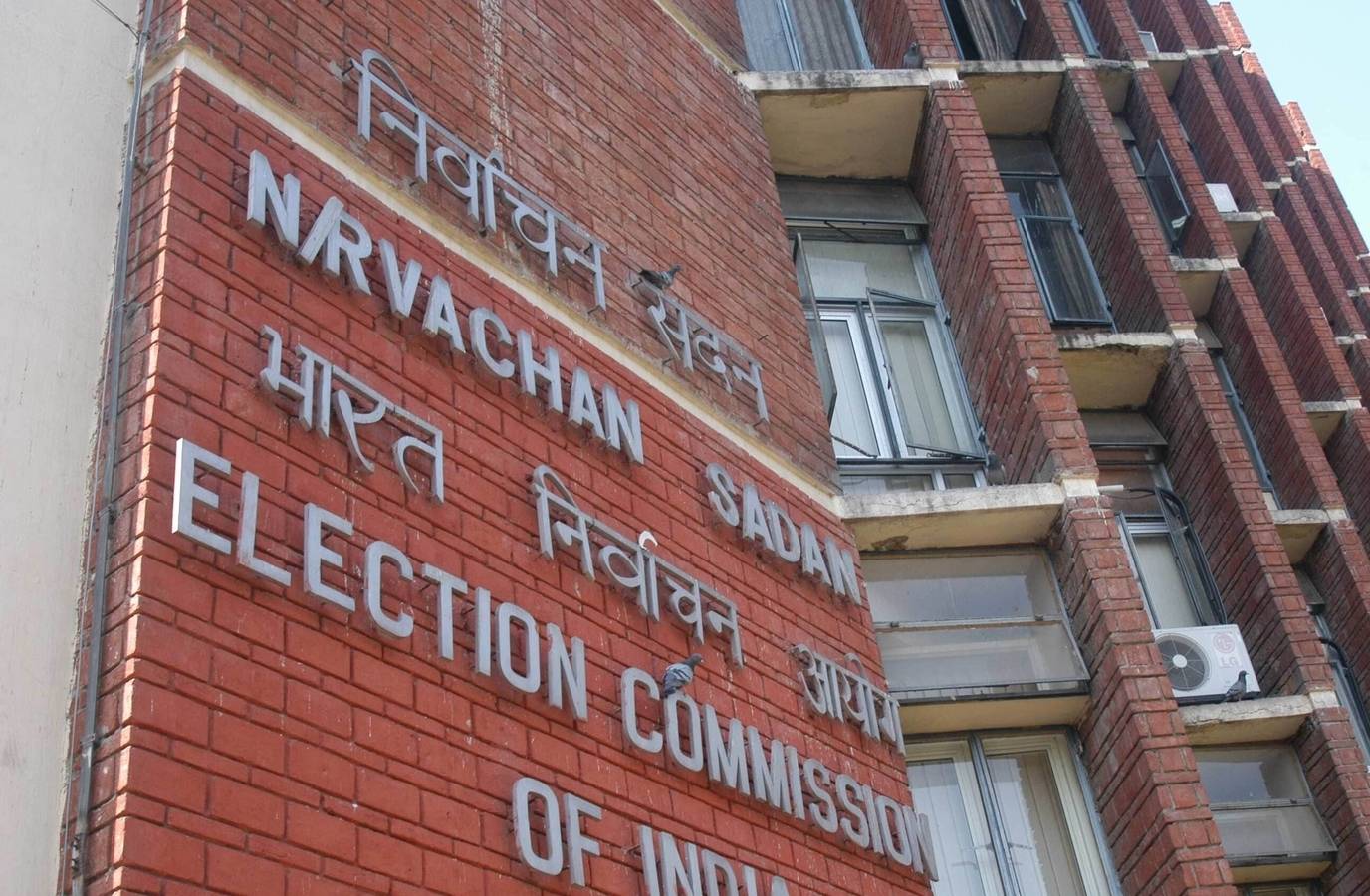
India's three-member poll panel finds itself embroiled in a controversy amid speculations of rift between chief election commissioner Gyanesh Kumar (CEC) and two election commissioners Sukhbir Singh Sandhu and Vivek Joshi.After a news report that Sandhu and Joshi had objected to certain key decisions of the Election Commission of India (ECI), including those related to the contentious Special Intensive Revision (SIR) process, opposition parties called for Kumar's resignation and the Supreme Court's intervention, also questioning the integrity of the poll process.The poll body rejected charges of one-sided decision-making, saying differences are part of the deliberation process but all ECI decisions are unanimous. The ruling Bharatiya Janata Party (BJP) distanced itself from the controversy. It's not the first time ECI is in the eye of the storm. In its journey through successive governments—from a one-member commission to three members and beyond— the poll panel and some of India's CECs have drawn constant scrutiny over allegations of internal rift and overreach.The TN Seshan episodeOne of the major controversies broke out in the 1990s, when TN Seshan was the CEC. Previously, the Election Commission had traditionally functioned as a one-member body, with the CEC effectively exercising the institution's authority.Two election commissioners were appointed in October 1989, but the arrangement lasted only until January 1990. The commission returned to a single-member structure until 1993. Then the Narasimha Rao government appointed MS Gill and GVG Krishnamurthy as election commissioners.Seshan challenged the move, arguing that the additional commissioners diluted the CEC's authority. The Supreme Court rejected his challenge in July 1995, holding that Article 324 of the Constitution permits a multi-member Election Commission and that the other commissioners were not merely advisers to the CEC but members of the Commission with a role in its decision-making.The tensions did not end there. In 1995, while Seshan was away in the US, he authorised a deputy election commissioner to hold the "current charge" of the commission. Gill and Krishnamurthy objected, arguing that Seshan could not effectively bypass the other constitutional commissioners by handing charge to a subordinate official.The episode, along with the Supreme Court's intervention, established an important principle: the CEC is the chairman, but the ECI is a collective body in which the other commissioners have a meaningful role.The Navin Chawla episodeMore than a decade later, the fault line shifted from the CEC's authority to allegations about the neutrality of an individual election commissioner.In January 2009, CEC N Gopalaswami recommended the removal of election commissioner Navin Chawla. The recommendation followed complaints that Chawla had acted in a partisan manner. Chawla rejected the allegations and refused to resign.Gopalaswami's recommendation triggered a constitutional confrontation of its own. The government opposed the CEC's recommendation, and President Pratibha Patil ultimately rejected it on the advice of the government. Chawla remained in office and succeeded Gopalaswami as CEC in April 2009.The Ashok Lavasa episodeIn 2019, the issue of dissent surfaced in a very different form.During the Lok Sabha election campaign, election commissioner Ashok Lavasa disagreed with the majority of the commission in several cases involving alleged violations of the Model Code of Conduct. The decisions were taken by a 2-1 majority, with Lavasa recording a different view in a number of cases.The disagreement exposed an important feature of the law governing a multi-member ECI. Under the 1991 law, the commission is required to make decisions unanimously "as far as possible". Where the members disagree, the majority view prevails.But Lavasa's concern went beyond the existence of a majority decision. He objected to his dissenting views not being reflected in the Commission's final orders. He subsequently recused himself from meetings dealing with Model Code complaints, saying that his views were not being adequately recorded.The commission eventually decided that the views of all members could be recorded in the proceedings, but that a minority dissent would not necessarily form part of the final public order.The Arun Goel episodeIn March 2024, dissent within the commission again became a subject of speculation when election commissioner Arun Goel resigned abruptly, just days before the announcement of the Lok Sabha election schedule.Goel's resignation left CEC Rajiv Kumar as the sole member of the commission temporarily. Reports subsequently pointed to possible differences between Goel and Kumar, including during a visit to West Bengal. But the precise reason for Goel's resignation was never publicly established. Kumar said Goel had cited personal reasons and that his personal space should be respected.At the time, Kumar also stressed that disagreement was not unusual inside a multi-member commission and that dissent was part of the institution's functioning.