‘Rivers once destroyed cannot be compensated’: Supreme Court expands probe into illegal sand mining | India News
The observation was made while dealing with the issue in a suo motu proceeding initiated in response to news reports of illegal sand mining in the Chambal River | India News
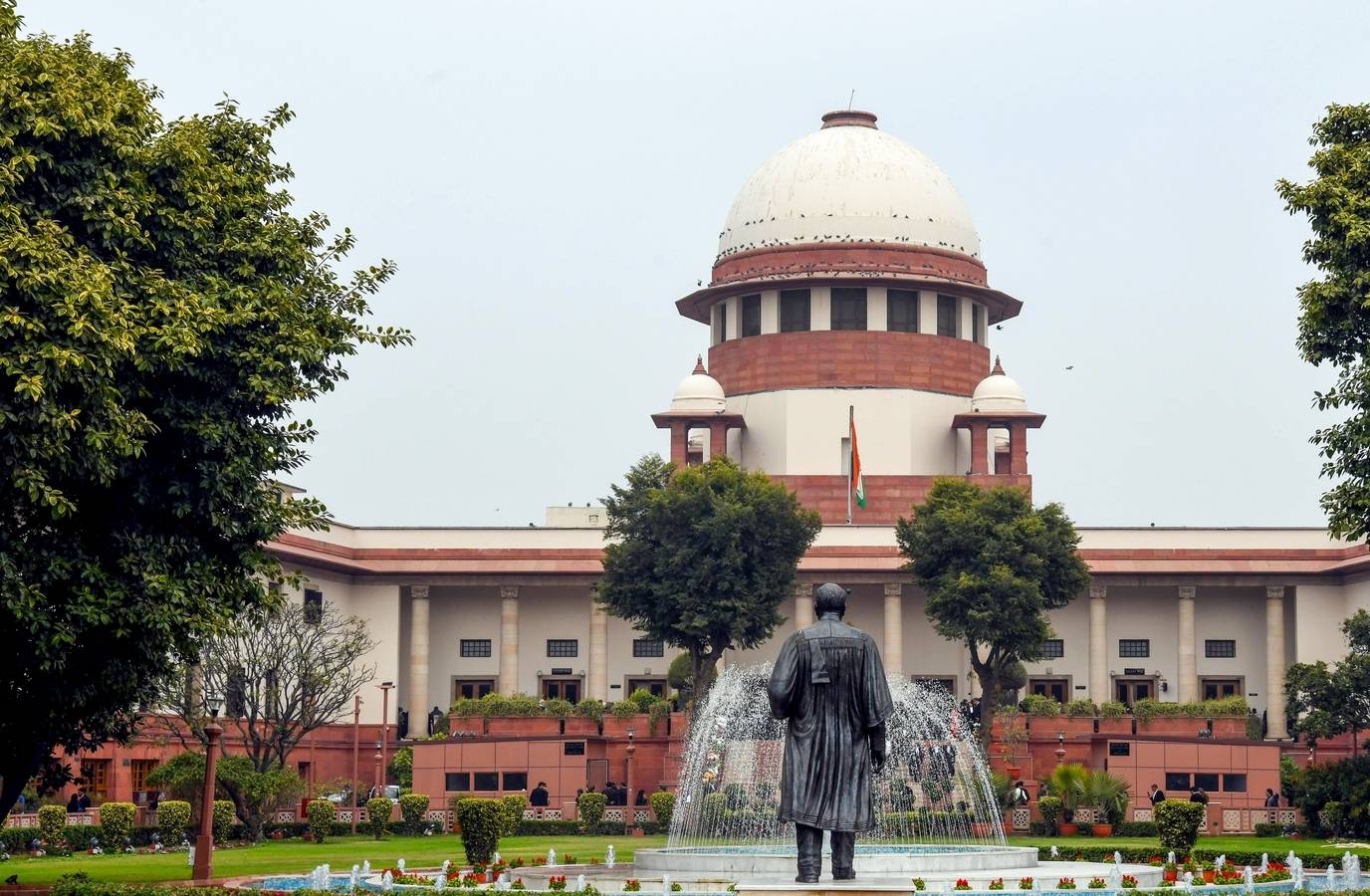
The Supreme Court on Tuesday observed that rivers once destroyed cannot be compensated, directing the Central Empowered Committee (CEC) to submit a report on illegal river sand mining across the country.The direction expanded the scope of the apex court's probe into the matter. The CEC is the expert body assisting the court on environmental issues.Dealing with the issue in a suo motu proceeding initiated over news reports of rampant illegal sand mining in the Chambal river inside the National Gharial Sanctuary, the court said that the matter assumes significance as, despite several orders passed on the river Chambal, illegal mining continues unabated.The Supreme Court also pulled up the states of Rajasthan and Madhya Pradesh for their failure to identify the organised gangs responsible for such large-scale extraction.It also took up another petition that alleged rampant illegal sand mining in the Ken River and sought a response from Madhya Pradesh on how huge excavators and sand-pulling pumps have been installed in the river at a time when there is no government contract for sand mining.Noting that the problem requires a pan-India approach, the bench of justices Vikram Nath and Sandeep Mehta said, “We direct the Central Empowered Committee to give its report on the issue of river sand mining in the country.”The bench said, “There is a measure of control the states must exercise while enforcing orders on sand mining in rivers. Nature takes care of itself but when you put obstacles, it becomes a problem. Ultimately, rivers will be destroyed, and once destroyed, they cannot be compensated.”The court was assisted in the suo motu proceedings by senior advocate Nikhil Goel and advocate Rupali Fransesca Samuel as amicus curiae, who submitted a note detailing compliance of orders passed with regard to the Chambal sanctuary in May and July this year. Going through the note, the bench said, “The court told Rajasthan that despite past orders to go after the kingpins of the illegal sand-mining mafia operating their nefarious trade across states, not a single such gang has been identified. Even the seized vehicles have been released on payment of a fine.The court told the state, “We want to inform you that a blanket ban on sand mining will be imposed in Rajasthan. We will not allow the rivers of the state to be destroyed in this manner.”Goel informed the court that last month, a forest ranger, Pratap Singh Chundawat, was crushed to death by a dumper carrying illegally mined sand while he was on duty. The bench noted that in the past, there was a total ban on sand mining in Rajasthan between 2018 and 2021, and during this time, the consumers suffered as sand is used for construction purposes and is in high demand.“We will not tolerate such a lacklustre response by the states. There has to be proactive action on your part. Our orders were very clear. Yet, we are told by the amicus that they have hardly been respected or followed,” the bench said.Posting the matter on November 4, the bench told the law officer representing Rajasthan, “We will give you two weeks’ time. You instruct your officials, and if we find the position is the same, we will direct a total ban on sand mining across all rivers in the state.”The court took suo motu cognisance of illegal sand mining in the Chambal Gharial Sanctuary early this year and issued a series of directions to the states of Rajasthan, Madhya Pradesh and Uttar Pradesh, which share the sanctuary's boundaries.The states were directed to increase surveillance, track illegal mining routes and provide protection to frontline forest staff. In its order passed on July 22, the court directed the states to consider preventive detention against kingpins of organised gangs involved in illegal sand mining.On May 25, a report published by HT showed how, despite court orders, mining continued unabated near the Chambal River. The court took cognisance of the report that found that the Chambal riverbank inside the sanctuary, once the nesting site for the critically endangered gharials and accounting for nearly 80–90% of the global wild gharial population, was degraded, with deep pits pockmarking the floodplain landscape.The CEC assisted the court in the Chambal matter, where it flagged the issue of a lack of legal protection to forest officials who are required to confront the sand mafia, possessing sophisticated weapons. The CEC pointed out that section 218(3) of the Bharatiya Nagrik Suraksha Sanhita (BNSS) requires prior sanction to prosecute a public servant for an offence committed in the discharge of official duty. It recommended similar protection for forest guards, citing experience in Odisha and Assam, where such protection has yielded positive results.The CEC had further noted other gaps in the enforcement mechanism and recommended filling up vacancies of forest guards, adequate financial support for surveillance infrastructure, periodic technological upgradation, regular ecological monitoring, strict district-level accountability, and continuous inter-state coordination, among other measures.In 1978, the area along the Chambal River, spanning three states, was designated a wildlife sanctuary. The Chambal River is home to the largest population of gharials. At the same time, there are 173 villages in MP, 260 in Rajasthan and 130 in UP situated within the demarcated boundary of the national sanctuary.