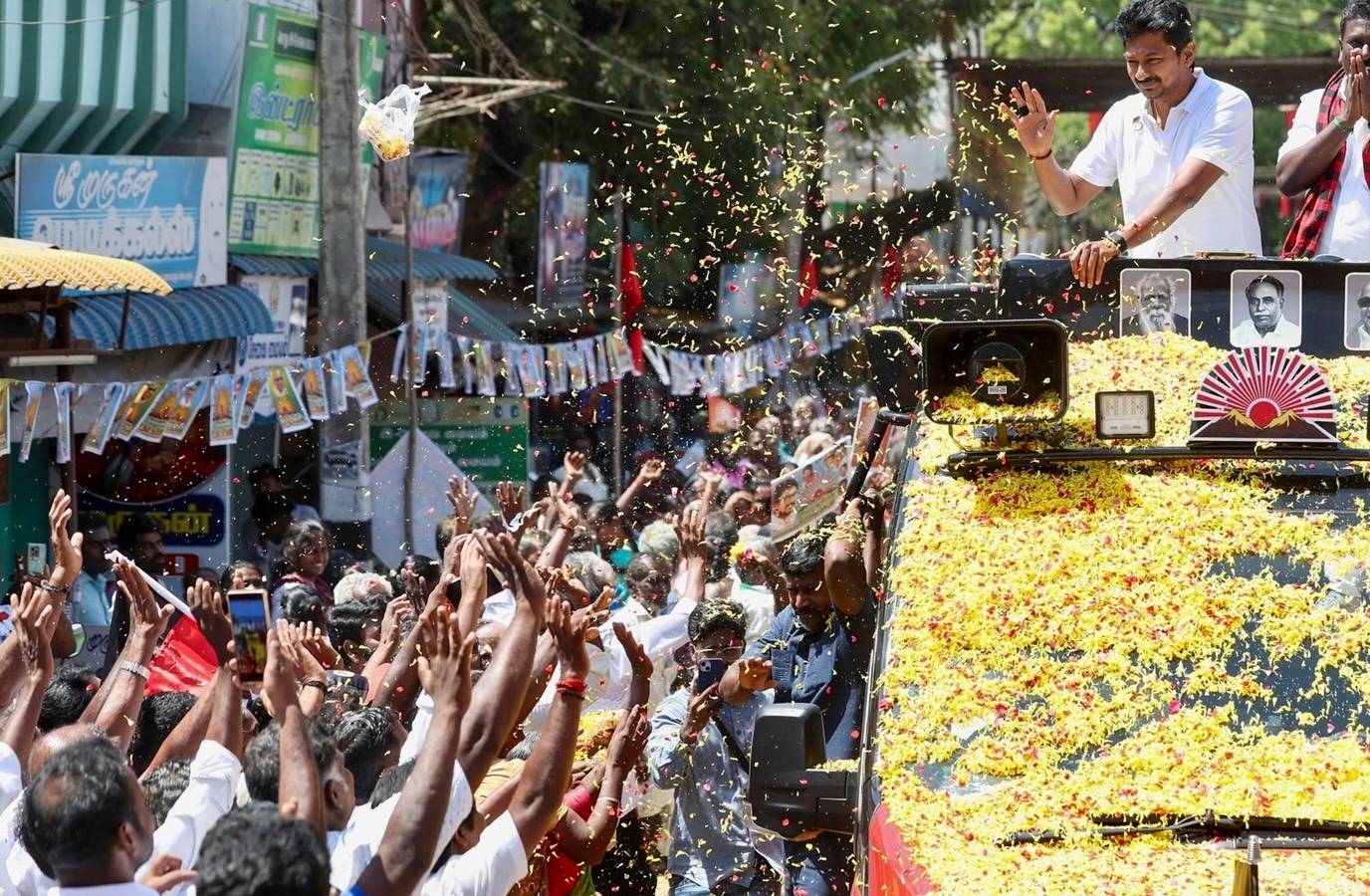
Social engineering may be the deciding factor in the upcoming Tamil Nadu polls, with a week remaining for the elections on April 23. The ruling Dravida Munnetra Kazhagam (DMK) is facing a challenge from the All India Anna Dravida Munnetra Kazhagam (AIADMK).
Data points to a consistent pattern in Tamil Nadu, with a significant number of constituencies decided by narrow margins, often under 5,000 votes. This means even smaller caste-based parties can decisively tilt outcomes.
The DMK has anchored its campaign in a broad, layered alliance under the Secular Progressive Alliance (SPA), combining governance messaging with targeted caste outreach. The party will contest 164 seats, with other allies including the Indian National Congress, Viduthalai Chiruthaigal Katchi, and Left parties.
The AIADMK, led by Edappadi K Palaniswami, has adopted a similar approach, consolidating dominant caste blocs and hoping to leverage anti-incumbency sentiment against the ruling DMK. The party will contest 178 seats, with the BJP contesting 27 seats.
The real battle lies in an estimated 50 to 60 constituencies where victory margins in the past have remained narrow. Smaller parties function as vote-transfer mechanisms rather than standalone contenders, and their effectiveness depends on whether caste groups vote cohesively for alliance candidates.
Electoral data underlines how narrow the gap remains, with the AIADMK securing about 20.46% of the vote and the BJP about 11.24% in the 2024 Lok Sabha polls in Tamil Nadu. The DMK-led INDIA alliance's overall vote share was estimated at around 46-47%.