Despite making up over 51% of the electorate in Tamil Nadu, women voters remain a fragmented group, with parties scrambling to win their support in the upcoming assembly elections.
With around 56.7 million voters, women outnumber men by roughly 1.2 million in 215 of the state's 234 assembly constituencies.
However, experts say that women voters are divided along lines of caste, class, and religion, making it challenging for parties to win their support.
Major political parties, including the DMK and AIADMK, have failed to field dominant woman leaders, raising questions about who can best understand and capture the evolving aspirations of women voters in the state.
The DMK has anchored its campaign in welfare delivery, with schemes such as free bus travel for women and the Kalaignar Magalir Urimai Thittam (KMUT), which provides ₹1,000 per month to one woman per family.
However, the eligibility criteria for KMUT have generated dissatisfaction among women whose applications were rejected on technical or data-linked grounds.
The AIADMK has positioned itself as the natural reclaimer of the women's vote, promising a higher monthly allowance of ₹2,000 and reviving schemes such as Thaalikku Thangam (gold for marriage).
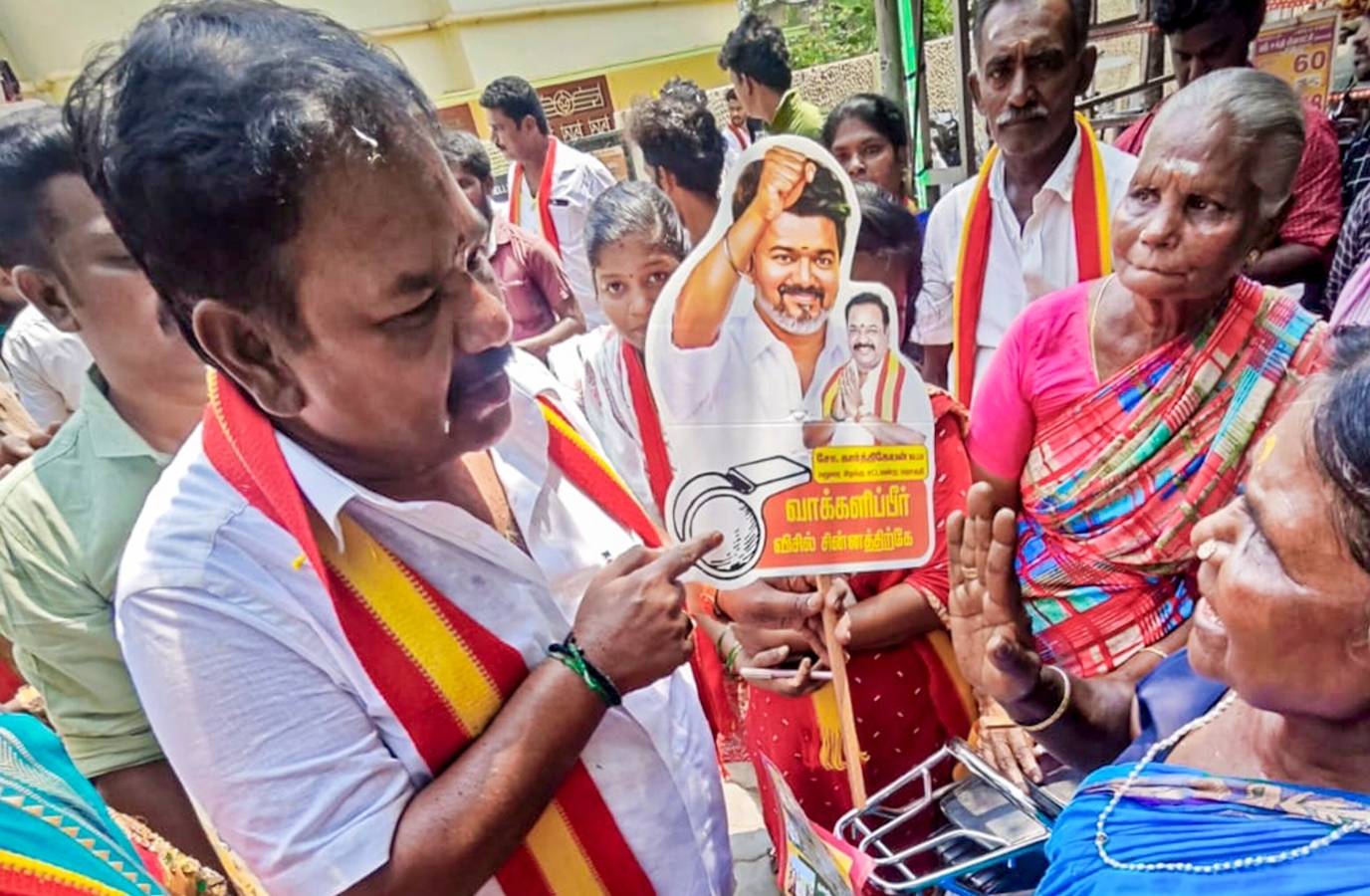
Meanwhile, actor-politician Vijay's Tamilaga Vettri Kazhagam (TVK) has drawn some women, particularly in rural areas, by foregrounding concerns around safety and violence.
Women voters in Tamil Nadu approach governance, welfare, and political choice as deeply intertwined, judging governments through everyday delivery of public services, safety, and cost of living.
They view welfare both as economic support and as recognition of their role within the household and the State, producing a voting pattern that blends emotional trust in leadership with pragmatic calculations of stability and benefit.