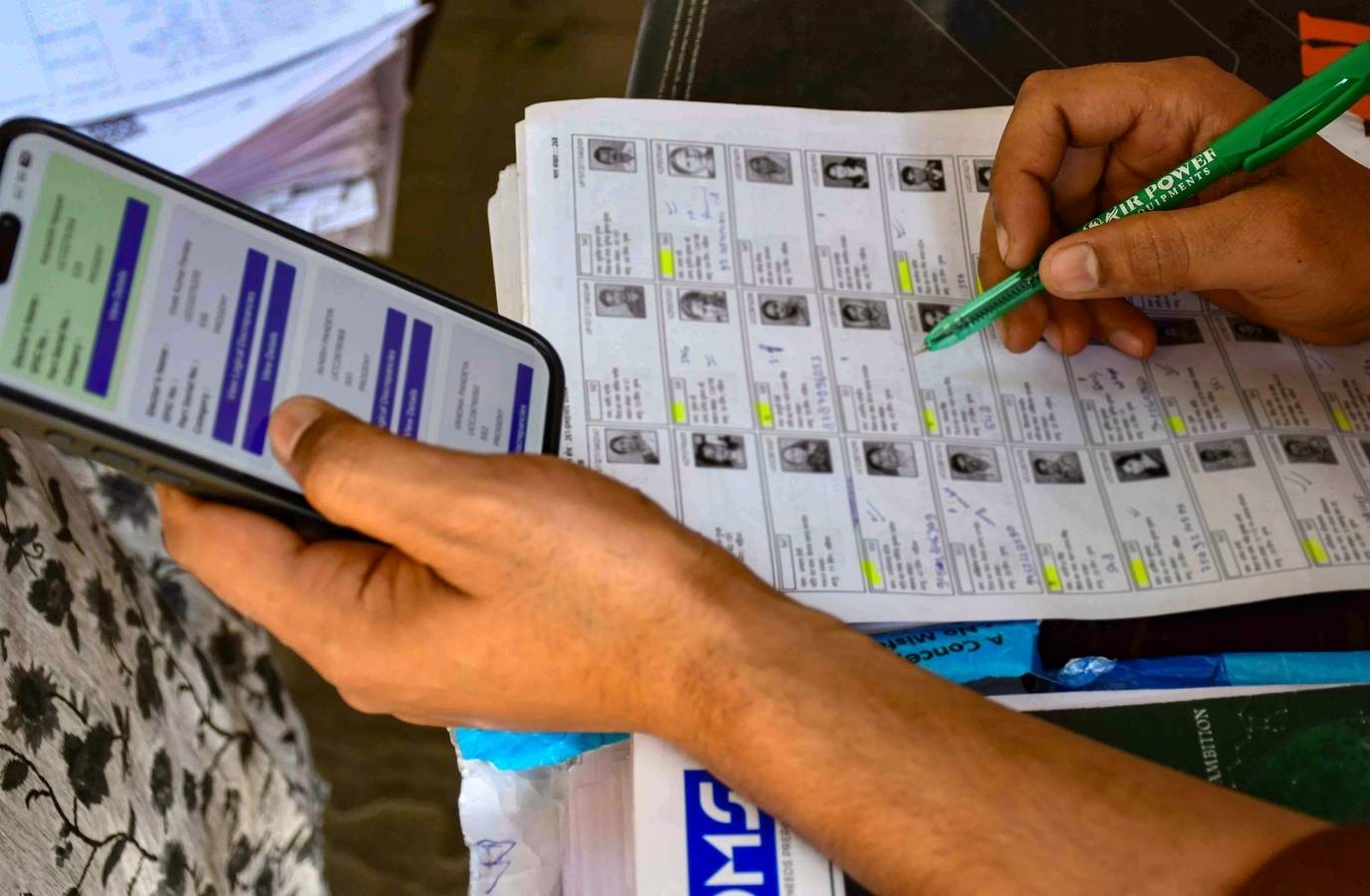
Has the Special Intensive Revision (SIR) in West Bengal led to a gerrymandering of the state's electorate ahead of assembly elections? The question arises because districts or assembly constituencies (ACs) with more Muslim voters suffered higher deletions during the adjudication process.
However, data shows that the number of electors in West Bengal is still significantly higher than the number of actual voters who voted in the 2024 Lok Sabha election. For the number of voters to not fall in the upcoming state elections, its turnout will have to increase from 81.7% in 2021 to 88.9% in 2026 -- a record for the state.
AC-wise deletion of voters during the adjudication process in West Bengal was significantly more skewed than the deletions under pre-adjudication SIR. This is driven by the trends in two kinds of ACs where a particular community is politically more salient than others.
The number of electors in 2026 has fallen below the 2024 number in three ACs, and many ACs are on the precipice of witnessing a fall in the number of absolute votes cast in the 2026 election, compared to 2024 Lok Sabha.
It is impossible to answer the question of elector gerrymandering without compromising statistical integrity, unless one has a complete religion-wise breakup of Bengal's pre and post-SIR roll.