What’s in a school? A Swiss woman's West Bengal initiative offers new meaning | India News
15 years ago, a Swiss woman travelled across India to uncover her true passion for education and social reform. Her work now spans 2 villages and 20,000 lives. | India News
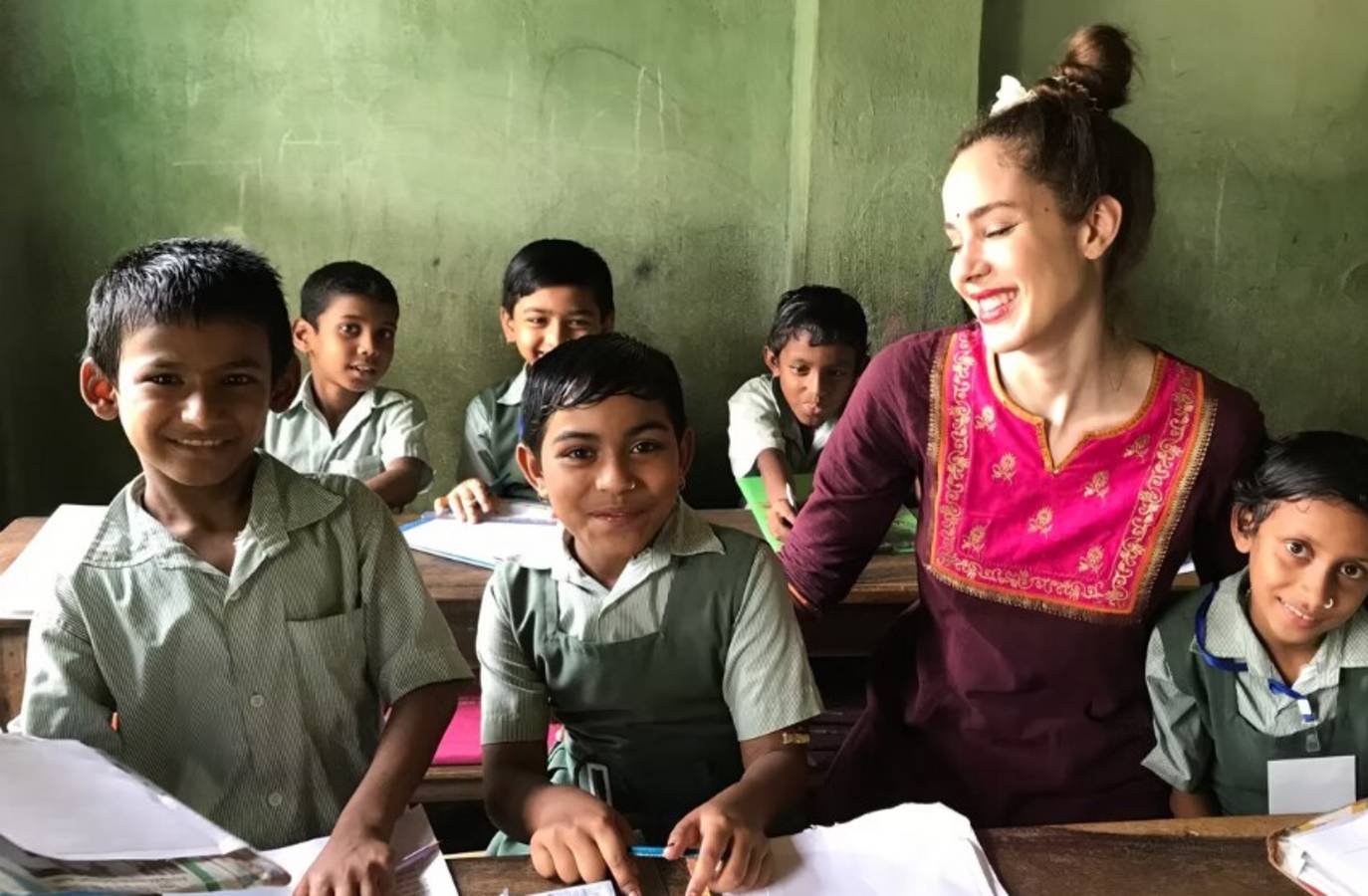
Education, considered one of society's greatest equalisers, became the focal point of a nationwide stir across India recently. Despite being inked into a fundamental right under Article 21A of the Constitution, the topic captured the imagination of the nation, became a common platform for people from diverse backgrounds to rally around, and forced the country to think about the opportunities available to one of its most significant assets — the young.At a time when real change from the grassroots of India's education sector is demanding the spotlight, HT spoke to someone who came from foreign soil but chose to give her life, finances and time to educating, empowering and uplifting women and children living on a remote island in the Sundarbans of West Bengal.Sandra Lavie Gojkovic, a young Swiss woman offered all the comfort and convenience one may pray for, chose to live not just for herself but for those less fortunate around her. Travelling across India, mostly by train, exposed her to a very different reality in 2011, and what began as a journey of self-discovery led her to set up the India School Project which has helped boost literacy rates in rural villages, empowered women through vocational training and generated awareness against child marriage, human trafficking and domestic violence.Also Read I Beyond degrees: A principal’s mission to empower girlsEarly hardships, experiences and endeavoursA foreign national with an unfamiliar appearance and no grasp of the local tongue, she set up a school on Sagar Island, where her earliest challenge was persuading families to send their children. "Many parents did not yet understand the importance of regular education. For some families living with very little income, the immediate needs of survival naturally came first," she said in an interview with HT.Local teachers on her team, who understood the rural community better, proved crucial. "They would literally go from house to house and pick up the children every morning to bring them to school," she said. "I remember thinking at one point, 'This is not going to work.'"Her team refused to give up, showing the importance of education through the children themselves. Eventually, the tide turned. "Instead of us going from house to house asking parents to send their children, we suddenly had parents queuing up because they wanted their children to attend our school," she said.Also Read I India’s education spending rises, still lags some BRICS nationsFour projects, one goalThe Primary School Project, one of her earliest initiatives, began by offering core subjects and extra-curricular activities to village students free of cost. It now covers 180 children across five classes, who get a pure vegetarian meal, teacher support and learning material simply for showing up. A parallel literacy programme, Education Support, addresses the high dropout rate in local schools. Since early 2015, it has partnered with two public schools south of Kolkata to offer 3.5 hours of tutoring. Managed by four teachers and one social worker, it has lifted the annual board exam pass rate from 50% to 100%, as verified by Sandra.Asked about introducing what may look like foreign concepts to a hyper-traditional community, she said: "Education, protecting children, empowering women, treating people equally and showing compassion are not Western values. They are human values. And many of them have deep roots in Indian culture and philosophy as well. I don't believe in going into a village and telling people that their culture or traditions are wrong. My approach has always been to listen first."A Swiss mind with an Indian soulSandra believes these communities have given her a lot more in return. "You don't simply arrive somewhere and give. You also receive."Cyclones are a recurring threat. "The communities we work with experience cyclones regularly, and these are not distant environmental events for them — they can completely disrupt people's lives," she said. After one severe cyclone, the school sheltered families "who had lost everything".Blocks in a broken structure"When I first arrived in the villages, I saw that there were free government primary schools, so technically, education was available. But in reality, many of the teachers were not consistently present, and the children were often not attending either," she said. Those administrative issues add to the barriers created by poverty and the disproportionate household expectations placed on women."Seeing this made me realise that the solution cannot simply be to build more schools or provide access to education. The question is what happens once a child enters that school."Red tape adds to the burden on India's social welfare sector, in her view, and the constraint is not only a lack of money but how that money is managed and whether there is a long-term vision behind it."Social work is often approached through short-term projects: raise money, build something, take a photograph and move on. But real change rarely happens that quickly. Education, in particular, requires years of consistency."Also Read I The future of India is sitting in our classroomsAsked about expanding to other parts of the country, she said: "For me, it is much more important to do something deeply and properly in one place than to spread ourselves too thinly across many locations."Her ultimate wish is to see a day when her work is no longer required — not because of negligence, but because the issues it addresses have been sufficiently tackled.