Why SC collegium separately transferred Justice Agrawal to Rajasthan amid row | India News
By recommending Justice Agrawal’s transfer immediately, the collegium has created a route for him to take over the administrative leadership | India News
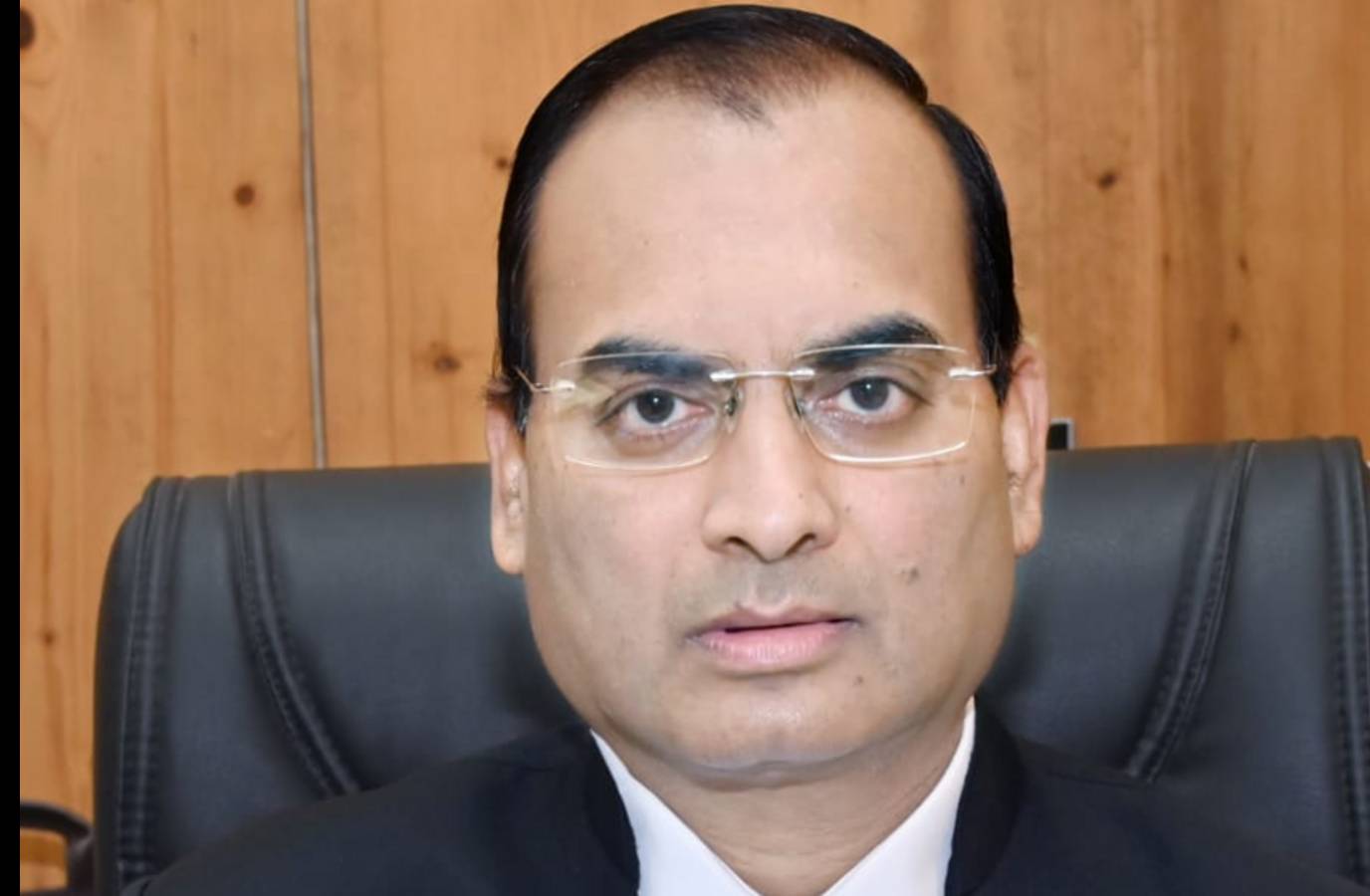
The Supreme Court collegium’s decision to recommend Justice Sanjay Kumar Agrawal as the next chief justice of the Rajasthan High Court amid an escalating controversy over Justice Sanjeev Prakash Sharma’s continuance as the acting chief there was accompanied by a second, seemingly routine resolution that could prove more significant in the immediate term: his transfer from the Chhattisgarh High Court to Rajasthan. The twin resolutions, passed on Monday evening, were not merely a matter of procedural sequencing. The separate transfer recommendation is understood to have been driven by the need for an early change at the top of the Rajasthan High Court, amid the controversy surrounding its acting chief justice Sharma, who has been accused of “corruption”, “nepotism” and “favouritism” by Supreme Court judge Justice Sandeep Mehta.By recommending Justice Agrawal’s transfer immediately, the collegium has created a route for him to take over the administrative leadership of the Rajasthan High Court even before his appointment as its full-time chief justice is formally completed.The distinction is important because the process for appointing a chief justice of a high court can take time. A collegium recommendation is followed by processing at the government level, including the prescribed consultations, before the appointment is formally notified. The process can therefore extend beyond the date on which the collegium takes its decision.A transfer of a sitting high court judge, however, is a comparatively more straightforward exercise. Once the collegium recommends the transfer and the requisite formal order follows, the judge can move to the new high court without having to await completion of the entire consultative process that accompanies a chief justice’s appointment.In Justice Agrawal’s case, his seniority at the Rajasthan High Court would also enable him for the position of acting chief justice once he assumes charge. This would mean that the court need not remain under the administrative charge of Justice Sharma merely because the process of appointing its regular chief justice is still underway.The urgency behind the move assumes significance against the backdrop of the extraordinary controversy that has engulfed the Rajasthan High Court.Supreme Court judge Justice Mehta, in three letters to Chief Justice of India (CJI) Surya Kant dated August 2, 10 and 17, had sought the immediate appointment of a chief justice from another high court and urged that Justice Sharma be transferred out of Rajasthan. Justice Mehta levelled allegations of “corruption”, “nepotism” and “favouritism” against Justice Sharma, besides accusing him of misusing his powers as master of the roster and favouring influential litigants.In response, CJI Surya Kant, in a statement released on August 26, said that concerns raised against a sitting judge have to be dealt with through the established institutional mechanism and that the judge concerned must be given an opportunity to respond. He had added that the process of appointing regular chiefs to all high courts was underway.But the controversy has since spilled into the open, with lawyers in Jaipur and Jodhpur protesting against Justice Sharma and demanding that he be divested of his administrative charge. On Monday, the Rajasthan High Court Lawyers Association announced a complete strike till September 6 and decided to send representations to the CJI and President Droupadi Murmu.By Monday evening, Justice Sharma also opted out of judicial work amid the controversy, with a modified roster providing for his non-sitting and distributing matters assigned to his bench among other benches.It is against this backdrop that the collegium’s decision to issue a separate transfer resolution for Justice Agrawal assumes significance.The collegium’s official resolutions make clear that the two decisions were taken together but separately: one recommends Justice Agrawal’s elevation as chief justice of Rajasthan, while the other recommends his transfer from Chhattisgarh to Rajasthan.The arrangement also reflects a practical reality in the high court appointment system: a recommendation for chief justice does not necessarily translate into an immediate appointment.The delay currently surrounding another high court appointment illustrates the point. On August 6, the collegium recommended Justice Ashwani Kumar Mishra, then acting chief justice of the Punjab and Haryana High Court, as its full-time chief. More than two weeks later, the Punjab government is yet to convey its views on the recommendation, as first reported by HT on Monday.The Memorandum of Procedure, which guides appointment and transfer of constitutional court judges, provides a six-week period for the state government to convey its views in the case of high court judge appointments, although there is no specific timeline prescribed for a chief justice appointment.That experience underlines why the collegium appears to have treated Justice Agrawal’s transfer as a separate and urgent step. Waiting only for the chief justice appointment process to conclude could have left Rajasthan without a regular chief and, in the present circumstances, potentially left Justice Sharma continuing as acting chief justice during the intervening period.The transfer route, therefore, offers a quicker institutional intervention: Justice Agrawal can move to Rajasthan first and, by virtue of his seniority, be positioned to assume the role of acting chief justice, while the formal process for his appointment as full-time chief justice runs its course.This is also significant because Justice Sharma’s tenure as acting Chief Justice has already stretched beyond 10 months. He has been functioning in that capacity since September 2025, following the retirement of Justice S Shriram. Justice Sharma is due to retire on September 26.Justice Mehta had specifically questioned why Rajasthan had continued without a regularly appointed chief for such a prolonged period, arguing that the arrangement had allowed the acting chief justice to exercise extensive administrative powers.The collegium’s decision seems to now address both aspects of the problem — it has recommended a regular chief justice and, through a separate transfer recommendation, sought to ensure that the proposed successor can reach Rajasthan without waiting for the longer appointment process to conclude.To be sure, one part of Justice Mehta’s demand remains unaddressed: his call for Justice Sharma to be transferred out of Rajasthan.Justice Agrawal, who is presently a judge of the Chhattisgarh High Court, was elevated as an additional judge of that court in September 2013 and became a permanent judge in March 2016.