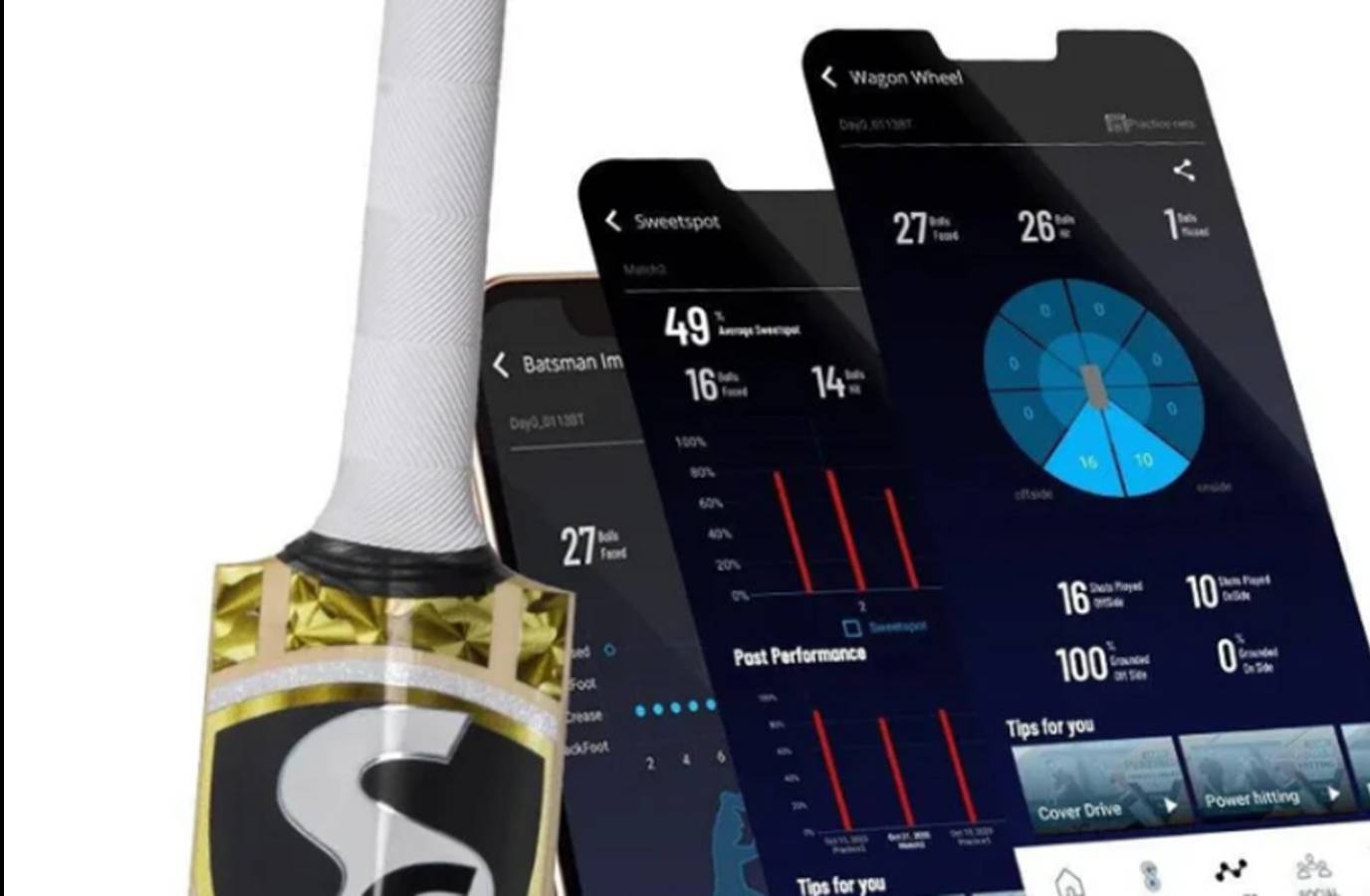
New Delhi: Cricket is evolving, and Str8bat is at the forefront of this change. Founded in 2017, this Indian sports-tech company has developed a small sensor that attaches to a cricket bat, recording data like bat speed, swing path, timing, and impact point. This information is then sent to an app, providing players with instant feedback on their batting and areas for improvement.
The idea behind Str8bat came from a familiar cricket phrase, 'let the bat do the talking.' Co-founder Gagan Daga explained that they wanted to make the bat literally talk, and this thought became the foundation of the company.
The sensor has come a long way from its early version, which looked like a 'duster stuck behind the bat.' However, the team was able to shrink the hardware without affecting the bat's balance or pickup, a crucial aspect for cricketers.
Str8bat's technology is not just about the device itself but about how sport is moving from guesswork to measurable understanding. In football, GPS trackers and wearable performance vests are now a norm, and in tennis, smart rackets and motion sensors analyze racket-head speed and spin generation.
Cricket has traditionally been slow to adopt analytics beyond scorecards and broadcast graphics. However, tools like Str8bat suggest the sport may be entering a new phase where it tries to understand the movements behind performance.
Modern cricket demands players to constantly switch between formats, requiring different batting styles. Str8bat's technology becomes useful in these situations, allowing players to measure and improve their batting. A young batter may discover their bat path becomes too aggressive under pressure, or another may realize a small change in backlift improves timing and power generation.
The aim of Str8bat is not to make cricket robotic but to support creativity and not control it. The technology can help players understand why certain things work and why others do not.
The impact of Str8bat could go beyond elite cricket, especially in India, where access to coaching and visibility often depends on geography. The company's long-term vision is 'talent accounting,' using measurable skill data to identify players beyond reputation or scorecards.
Rajasthan Royals has already used Str8bat within its player-development and scouting systems, building databases around player movement and batting patterns. The viewing experience could also change, with broadcasts discussing bat acceleration, reaction time, and swing mechanics.
Str8bat may still be early in its journey, but it reflects that modern sport is heading towards deeper understanding, more personalized coaching, and a future where talent is analyzed with far more precision than before.