Faster, higher, stronger: The pursuit of fractions at Asian Games and beyond | Sports News
In elite sport, everything can become an adversary – the air, the water, the resistance around a body in motion | Sports News
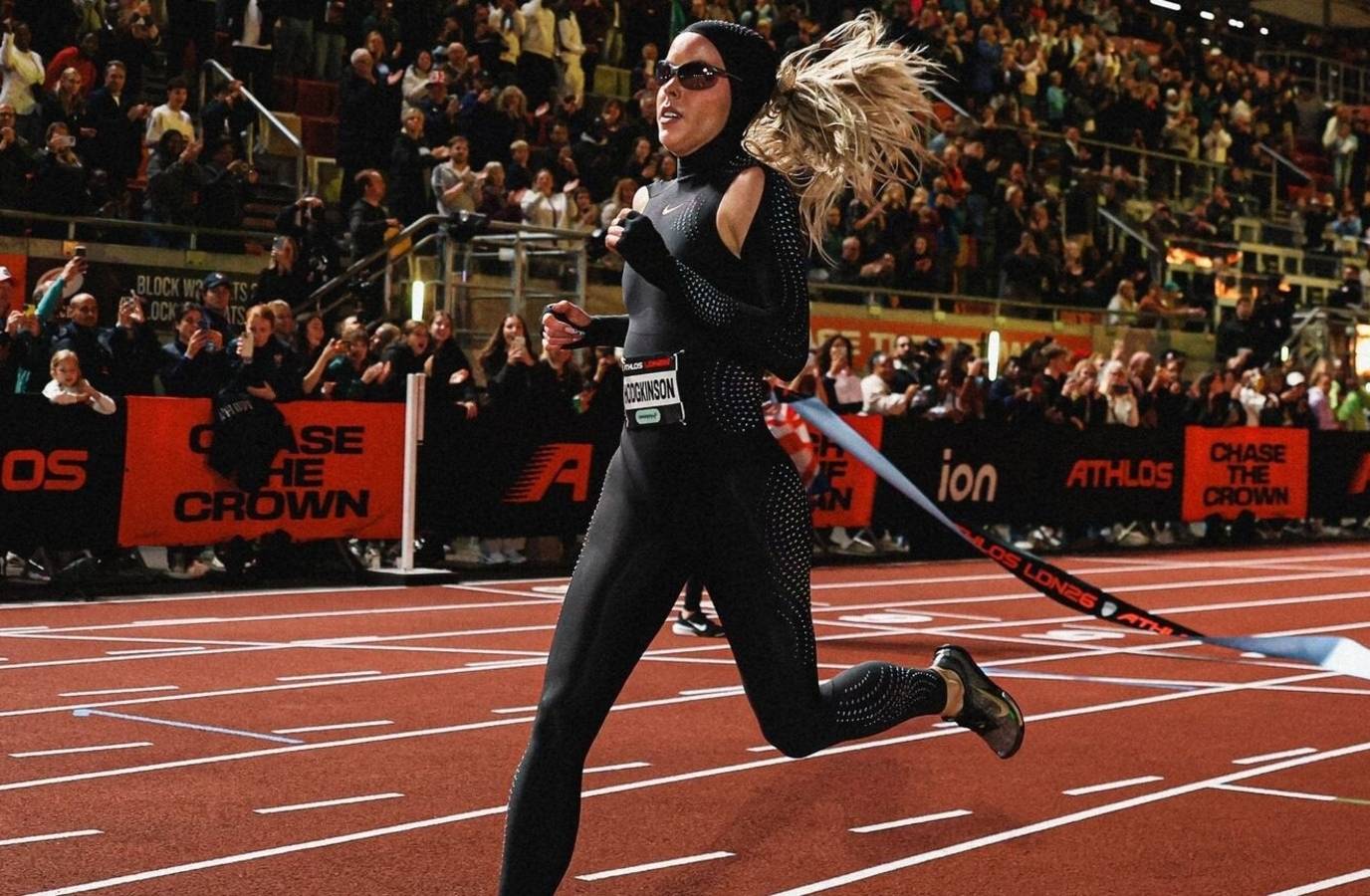
Thousands of athletes have arrived at the Aichi-Nagoya Asian Games chasing the smallest of margins: a little more speed, a fraction of a second.An 800m race is over in less than two minutes. Medals and records can turn on milliseconds. Elite athletes train hard, perfect their stride, count their steps, refine their shoes – and, eventually, start worrying about the air.This week in London, Keely Hodgkinson turned up looking like a sci-fi character. Her one-off Nike speed suit was black, hooded and full-length, running from head to ankle, with an open back and even a hole designed around her ponytail. Across the hood, shoulders, torso and thighs sat tiny 3D-printed structures called vortex generators. Their purpose was straightforward: make the air work a little kindly around her.The 3D printed structures, according to Nike, were positioned to manipulate airflow around Hodgkinson's body and reduce drag. The suit was built using 4D patterning based on how she moves at full stride. The hood tackles another, rather less obvious, aerodynamic nuisance: hair.Six months went into developing it. Hodgkinson then wore it at Athlos London and won the 800m in 1:56.80.The suit looks futuristic. The thinking behind it has been around sport for decades. When there isn’t much more to squeeze out of the body, athletes and engineers start looking elsewhere for time. In a shoe, a seam, a piece of fabric, the angle of a cyclist's head, the surface of a swimmer's suit and even the air peeling away from a runner’s shoulders.Chasing milliseconds is worth the trouble.Twenty-six years before Hodgkinson pulled a hood over her head, Cathy Freeman walked onto the track at the 2000 Sydney Olympics zipped into one of sport’s most unforgettable outfits.Edward Harber was working on body armour for the military in the 1990s when he got a call from Nike’s newly put together innovation department, asking him to help design a second skin for athletes. Working on the Swift suit project together with aerodynamic expert Len Brownlie, they used different textured fabrics for different body parts and tested them in wind tunnels. The team would often talk about ‘double advantage’ – the advantage of having the science as well as the athlete understanding the science and having the psychological power of knowing they have what no one else does.When Freeman stepped onto the track in Sydney wearing the green and silver hooded Swift suit, she won an Olympic gold in 49.11 seconds. The suit became inseparable from the image of that night.At the same Sydney Games, swimmers were negotiating resistance.Speedo’s Fastskin swimsuit took its inspiration from shark skin. The idea was to mimic some of its hydrodynamic properties to reduce drag. Swimmers appeared on Olympic starting blocks covered from neck to ankle in engineered fabric.A 17-year-old Ian Thorpe raced at his home Olympics in a black, skin-tight, wrist-to-ankle compression bodysuit designed by Adidas, winning three gold and two silver medals.At Beijing 2008, Michael Phelps won eight gold medals wearing Speedo’s LZR Racer, a tightly woven nylon-elastane suit fitted with polyurethane panels to compress the body and reduce drag. Speedo had collaborated with NASA, using aerospace wind-tunnel testing at the agency’s Langley Research Center in developing the suit.At the 2009 World Championships in Rome, 43 world records were broken. Increasingly sophisticated polyurethane suits were seemingly at the heart of it. FINA, swimming’s governing body, ruled that technology had gone too far and from the following year required suits to be made only from textile fabrics and restricted how much of the body they could cover: for men, from the waist to the knee; for women, from the shoulders to the knee.Even back in 1992, cyclist Chris Boardman was obsessing over air and drag. He waited at the start line of the Barcelona Olympics for the 4000m pursuit final in his Lotus 108 carbon-fiber superbike, having worked tediously on his posture for the race – folding himself into a low, narrow position, and offering the wind as little surface area of his body, as possible. Boardman ended up breaking the world record and winning Britain’s first Olympic cycling gold in 72 years.At the 2004 Athens Olympics, seams were moved and bonded, no-sew hems were used on rowing suits by Nike to reduce drag. By London 2012, the hunt for fractions had reached the feet. Mo Farah's neon-yellow Nike spikes, in which he won the 5,000m and 10,000m double, weighed all of 98 grams. There was even a chunk cut out of the heel to shed weight. To do away with pins and flapping numbers on their skinsuits, cyclists at the 2012 London Olympics used transparent pockets for their race numbers.The hunt for seconds turned into an arms race. It led to the rise of the carbon-fiber super shoe. All three marathon podium finishers at the 2016 Olympics wore the Nike protoype - later released as the Zoom Vaporfly 4% which has a carbon fibre plate running from toe to heel within the foam sole with their scoop shape considered key to their performance, helps return energy to the runner each time their foot strikes the ground.Records tumbled and World Athletics issued guidelines in 2020, permitting thickness of up to 40mm in road running and 25 mm in distance running spikes.When Ashton Lambie smashed the 4K individual pursuit world record in his custom aerodynamic skinsuit, later acquired by Smithsonian, people wondered if his handlebar moustache too was aero.In elite sport, everything can become an adversary – the air, the water, the resistance around a body in motion. The margins are so fine that even the invisible matters.