
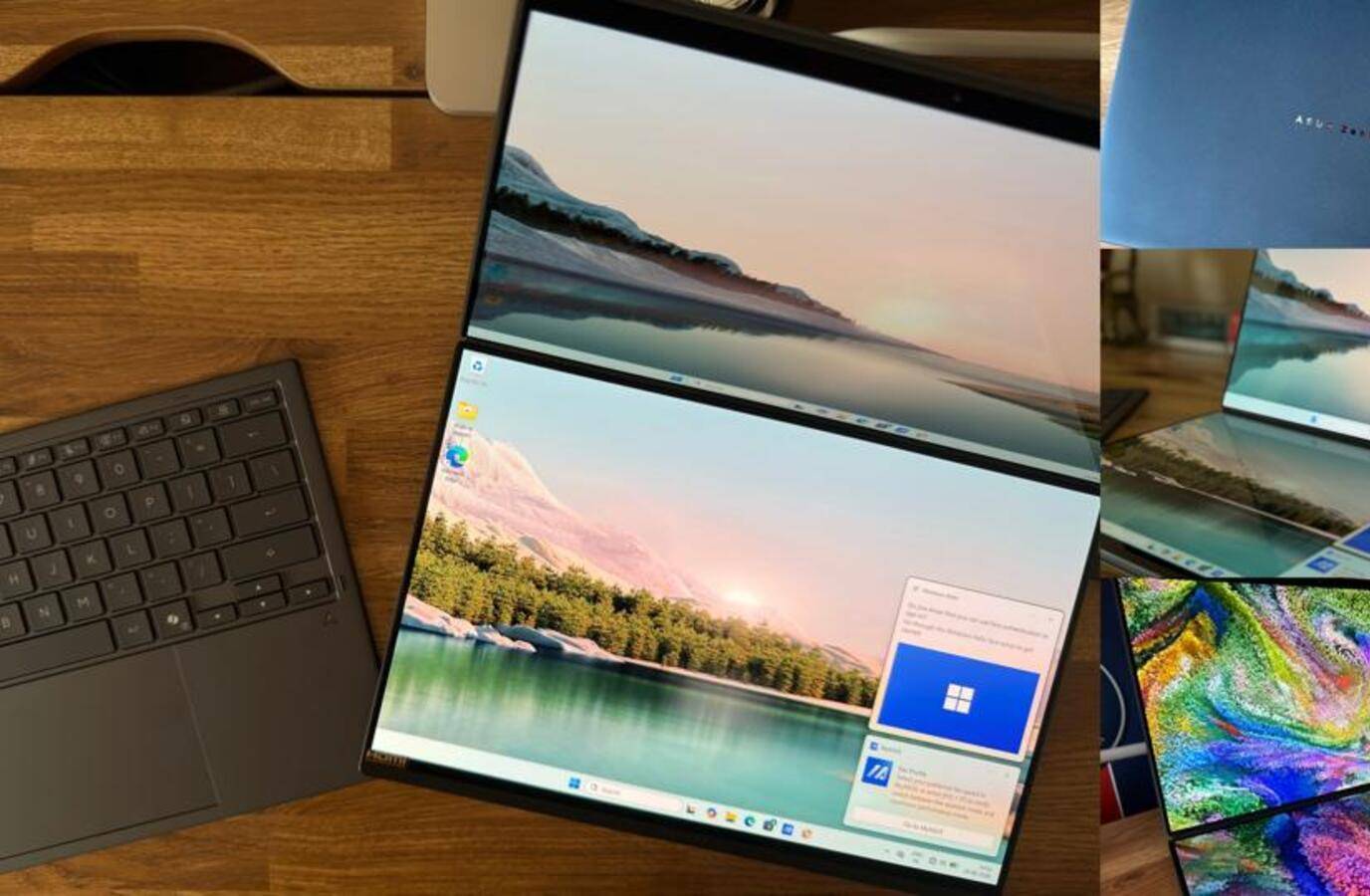
It's becoming increasingly difficult to get excited about laptops that try to be different, as they often come with a hefty price tag without substantial additional value. The Asus Zenbook Duo, reviewed in 2024, has undergone significant changes since then. The latest iteration boasts Intel's Panther Lake chips, a notable leap forward. However, the experience and product itself haven't evolved meaningfully, apart from generational spec upgrades.
The Zenbook Duo (UX8407AA-SN183WS) struggles to find its place as a laptop, convertible, tablet, or desktop, making it a desktop replacement at best. Its thickness and heaviness render it impractical for carrying around or using as a tablet. A 100-watt Type-C power adapter without a brick is a welcome feature, though.
Despite its form factor and utility issues, the Zenbook Duo is a well-made machine with a rigid build, desirable design, and improved hinge reducing the gap between screens. Asus pitches four modes, but only the laptop mode works effectively.
The integrated kickstand has undergone 40,000 open-and-close tests for durability. The Asus Lumina Pro OLED displays and Intel Panther Lake chips are standout features, offering gorgeous visuals and improved performance. The battery life is decent, with up to 15 hours of backup time with single-screen use.
However, the Zenbook Duo's high price, inconsistent Windows performance, and excessive preloaded software make it a hard sell. Even with regular use, the laptop emits perceptible heat, and the underside is uncomfortably warm. The target audience for this flexibility attempt remains unclear, and the product falls short in various aspects.