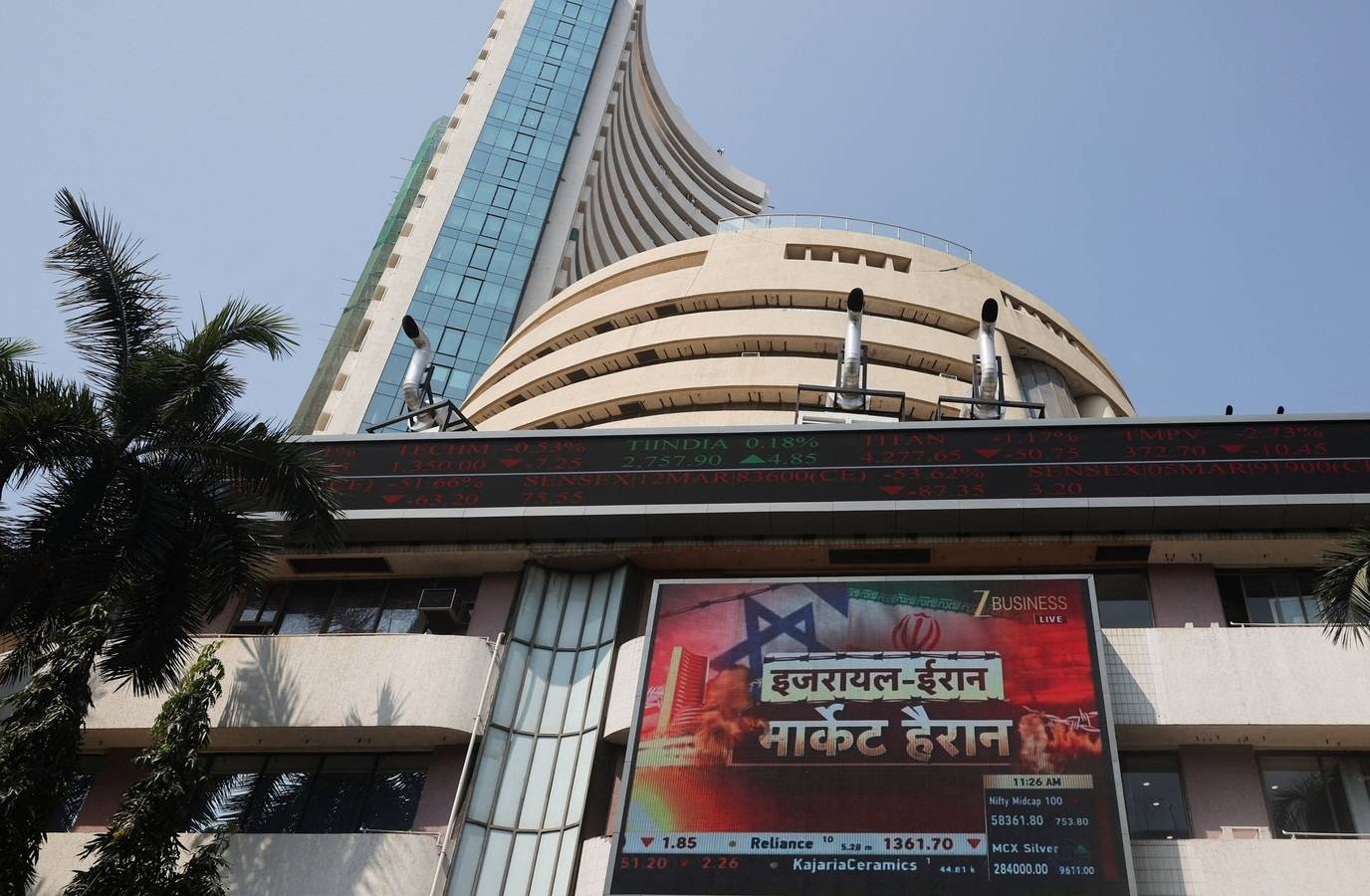
India's stock market suffered a selloff as the Iran war pushed crude oil prices above $100 a barrel, threatening the inflation outlook and fiscal stability of Asia's third-largest economy.
The benchmark Sensex fell 2.07% to 75,070.44, while the NSE Nifty 50 dropped 2.22% to 23,305.75. The rupee plunged to a lifetime low of 92.4325 per dollar, losing 1.5% of its value since the Iran war began.
Brent crude climbed to $101 per barrel, a direct hit to India's growth-inflation dynamics. Analysts warned that if oil averages $90 a barrel, headline inflation could reach 5%-5.5% for the fiscal year ending 31 March 2027.
The energy shock impacted the industrial and metal sectors, with Larsen & Toubro Ltd. and Tata Steel Ltd. slumping over 4%. Defensive plays like Hindustan Unilever Ltd. and Bharti Airtel Ltd. managed modest gains.
The selloff extended to the sovereign debt market, with the benchmark 6.48% 2035 bond yield edging up to 6.6744%. The RBI conducted OMO purchases to anchor the market, but the swaps market signaled growing anxiety.
Geopolitical tension triggered a sharp reversal in foreign capital flows, with overseas investors offloading nearly $5 billion of Indian stocks this month.