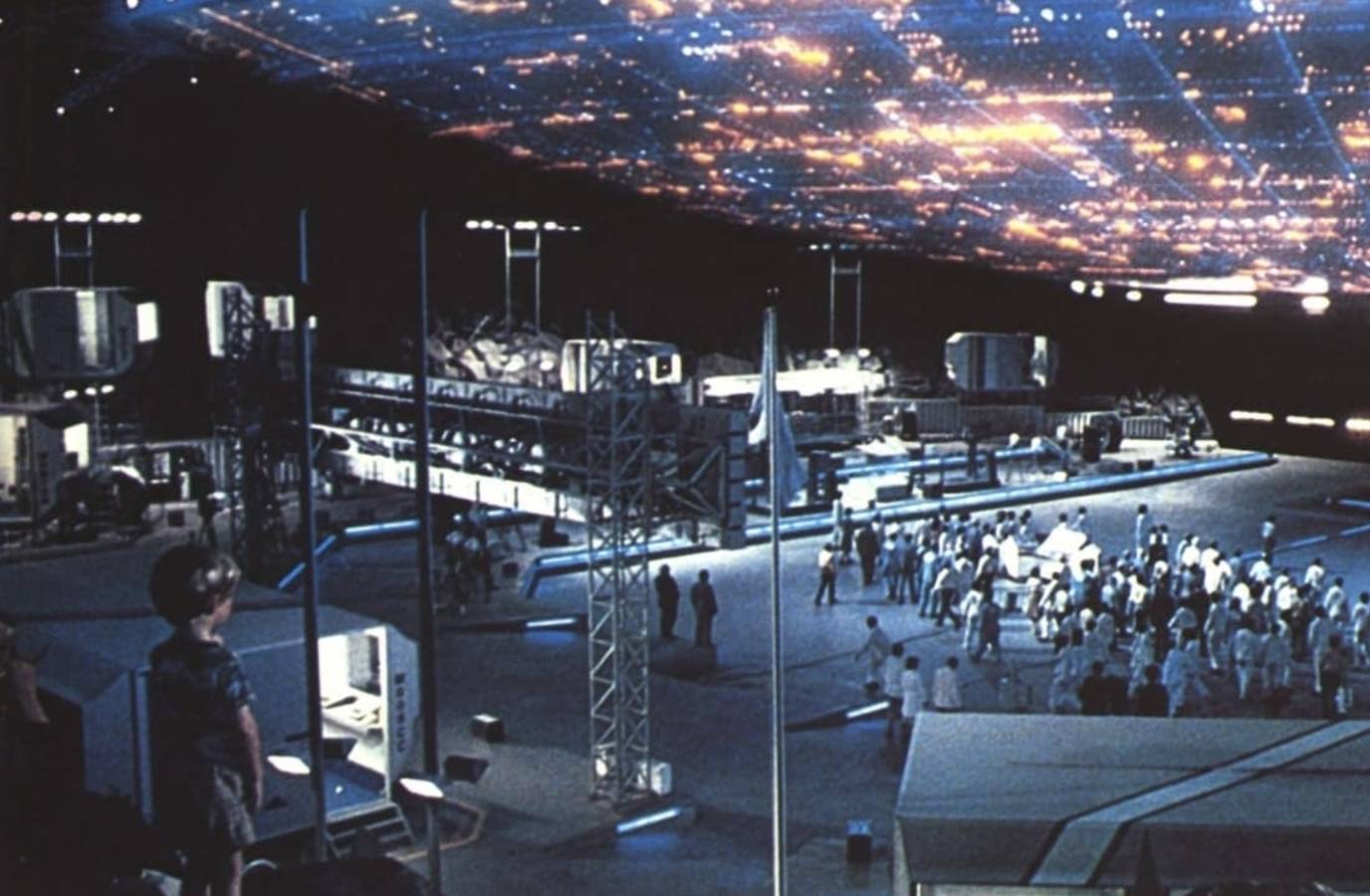
Like many great directors, Steven Spielberg has something of an allergy to sequels, but he has been tending to a series of films in all but name for nearly 50 years. His extraterrestrial trio, starting with 'Close Encounters of the Third Kind' (1977) and continuing with 'E.T. the Extra-Terrestrial' (1982) and 'War of the Worlds' (2005), form a rich, sometimes contradictory but clearly distinct body of work within Mr. Spielberg's canon.
The trio will become a quartet with the release of his latest alien film, 'Disclosure Day,' on June 12. So longstanding is Mr. Spielberg's fascination with interstellar travelers that it was the basis for what is considered his first notable amateur film, 'Firelight,' directed as a teenager and exhibited in his then-hometown of Phoenix in 1964.
'Close Encounters' can be terrifying, especially when Jillian's little boy is beckoned from their house onto a visiting, quickly vanishing spacecraft, but Mr. Spielberg maintains a hopeful, expectant tone. The finale confirms the benevolence Mr. Spielberg feels will flow from human-alien contact.
'E.T. the Extra-Terrestrial' proposes that only a space being—E.T., erroneously marooned here by his fellow beings during a visit—can address the familial emptiness of Elliott, the middle child in a family upended by divorce. The predicament mirrors Mr. Spielberg's family history, though loneliness at any age seeded his initial concept.
'War of the Worlds' reflects its post-9/11 context, with evil emanating from the skies—one of several ways in which the movie reflects its post-9/11 context. Here, the space creatures bring not amity but pitiless destruction, as experienced through the eyes of a canny, resilient family led by divorced dad Ray Ferrier.
Whatever its tone or message, 'Disclosure Day' is sure to be in dialogue with these earlier efforts. For much of his 79 years, Mr. Spielberg has wondered what good (or ghastly) things might find their way to Earth.