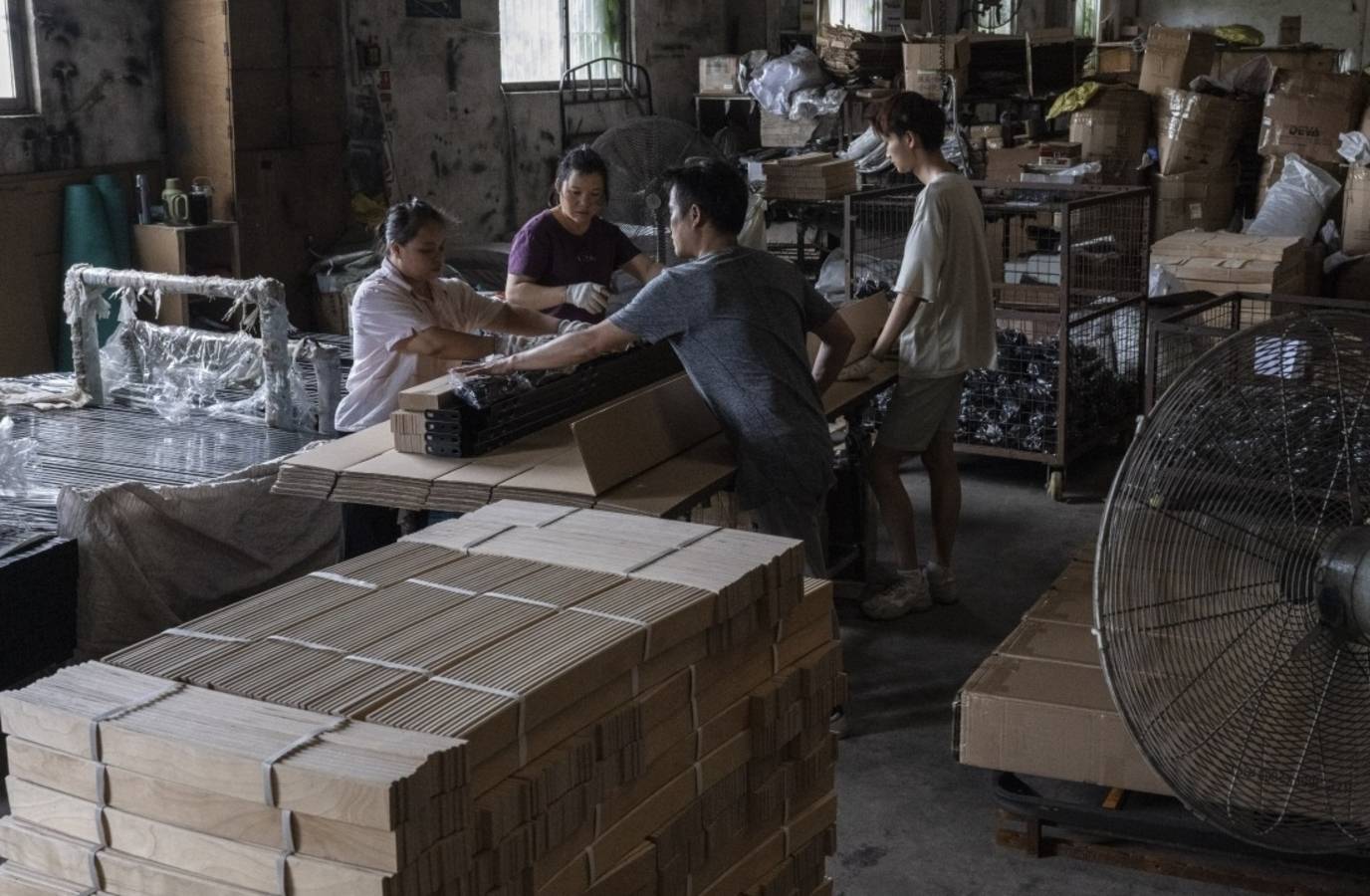
Foshan, China's furniture capital, is struggling to survive as the city's economy grew just 0.2% last year, dragged down by a contraction in manufacturing. The decline in furniture exports, which fell 6.8% in 2025, has forced manufacturers to adapt to new market realities.
Many factories in Foshan, known for producing low-value goods, are shifting to higher-end furniture and custom designs to stay competitive. Ken Huo, a furniture exporter, said, 'We have to uplift ourselves.'
Some factory owners have moved production to Southeast Asia to avoid tariffs, while others have scrambled to find new customers in other regions. The war in Iran has also weighed on demand from the Middle East, a quickly growing source of demand for Chinese furniture.
Manufacturers are trying to adapt to the new reality by investing in new technologies, such as automated cutting machines, and focusing on branding and design. Ciaoweather, an outdoor-furniture maker, has created a studio to take photos of their original-design products to market on social media.
Despite the challenges, industry veteran Ken Huo believes China will remain an important hub for furniture manufacturing, even if other countries gain market share.