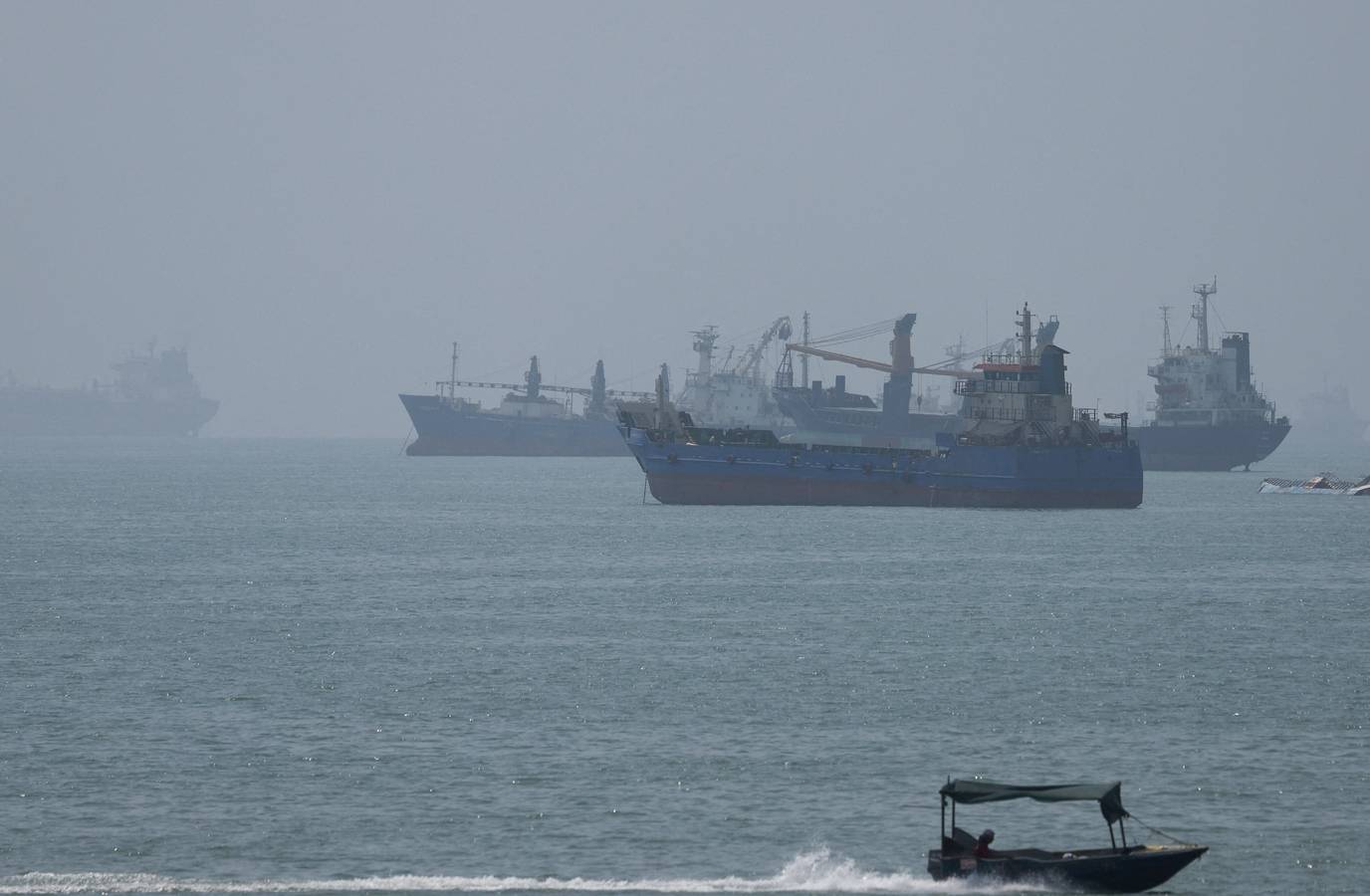
The Strait of Hormuz, a critical trade chokepoint, remains largely shut two months into the Iran war, with vessel traffic running at a fraction of pre-war levels.
The bypass infrastructure is providing around 3.5 million barrels to 5.5 million barrels a day of crude capacity, but this is still nowhere near enough to meet global demand.
The East-West Pipeline, also known as Petroline, runs across Saudi Arabia and has a capacity of 7 million barrels per day, but its loading terminals are struggling to keep up with the increased oil flow.
The pipeline has been targeted by Iranian drone strikes, which have knocked 700,000 barrels a day offline.
The Abu Dhabi Crude Oil Pipeline, which runs through the United Arab Emirates, has also been targeted and suspended loadings.
Iraq and Kuwait have no pipeline alternatives, with their crude exports going almost entirely through the Strait of Hormuz.
Qatar's vulnerability is different, with its pre-war crude exports smaller than its Gulf neighbours, but its gas exports are a major concern, with no alternative to shipping through Hormuz.
A proposed 1,000-kilometre pipeline from Goreh to Jask in Iran has been built, but actual throughput has been limited due to sanctions and unfinished terminal infrastructure.
Replicating Hormuz in pipelines would cost hundreds of billions of US dollars and a decade of construction, but may not provide a solution to the targeting problem.