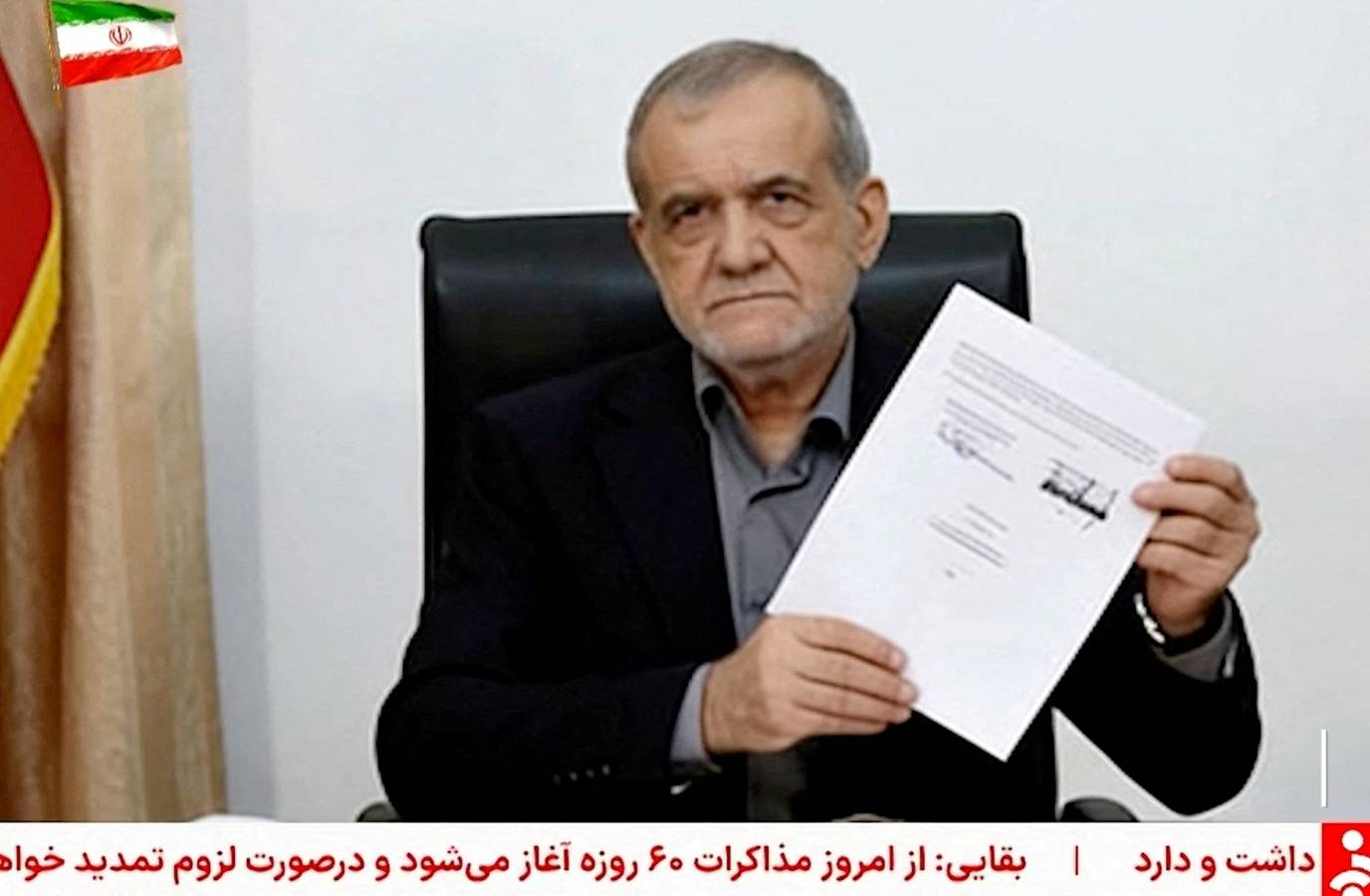
It was a moment both historic and anticlimactic as Donald Trump and Masoud Pezeshkian signed a memorandum of understanding that they claim will end their war. The agreement, barely a dozen paragraphs, will pause, not end, the hostility, and ultimately will be judged by what comes next.
The key points are as expected: the Strait of Hormuz should reopen, America and Iran will extend their truce and start 60 days of talks over a final pact to restrict Iran's nuclear programme. Iran will receive limited economic benefits up front, including a sanctions waiver allowing oil exports and the release of billions of dollars frozen in foreign banks.
However, the details of all this are vague and contested. America insists it will unlock Iranian assets only if the regime meets certain commitments over the next 60 days, but no one can say what those commitments are.
The MOU mentions a plan for a reconstruction fund of "at least $300bn" to be developed "with regional partners", but Gulf officials say they are hardly keen to pour money into a country that spent the past months bombing them.
Iran has pledged in the MOU that it will never build a nuclear bomb, but this promise seems meaningless without a comprehensive accord that imposes real, verifiable limits on Iran's nuclear programme.
At best, this is a deal that allows oil to start flowing, giving both sides an incentive to abide by it. But beyond the next two months, three starkly different scenarios seem possible.