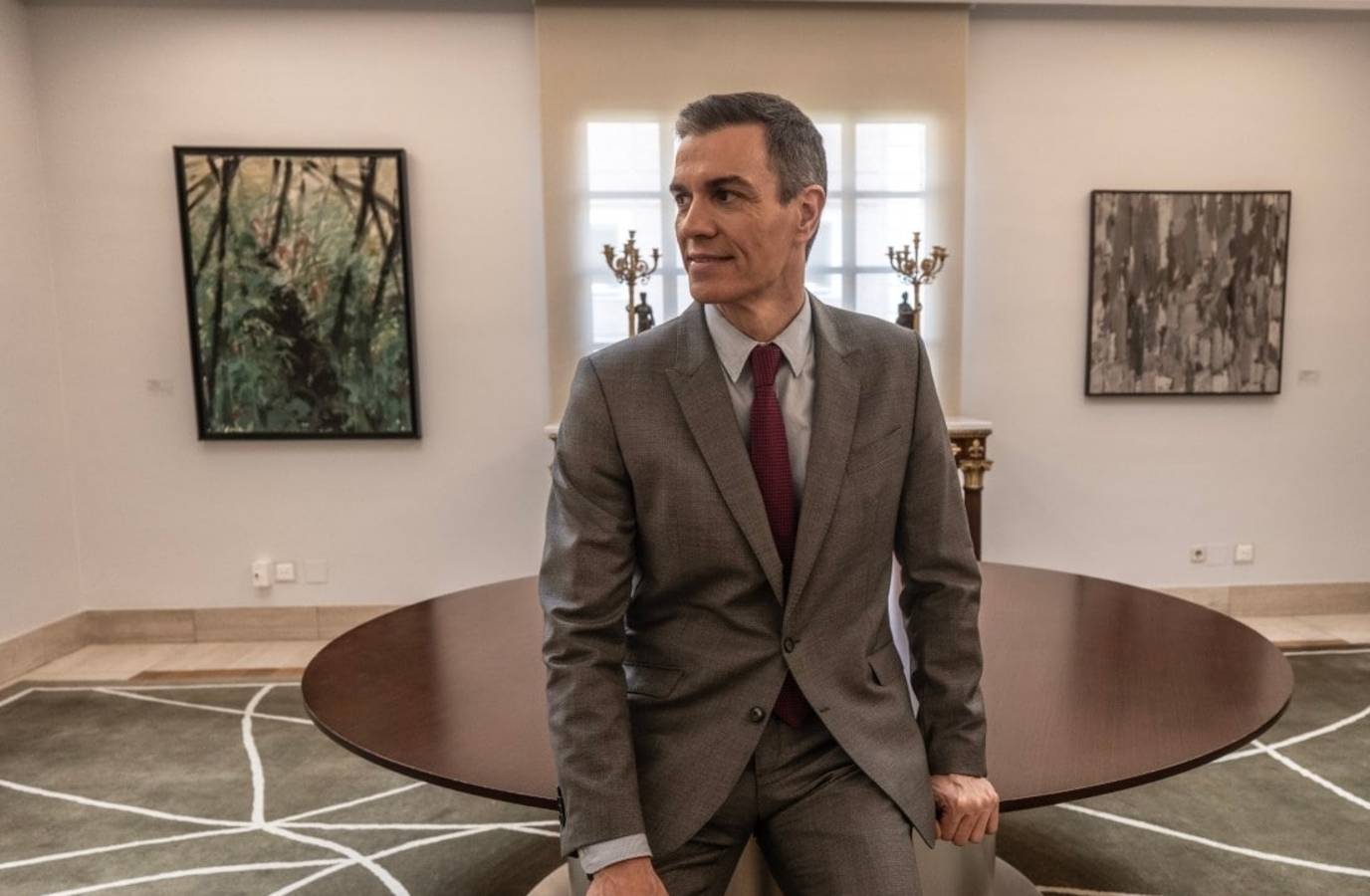
MADRID—The war in Iran hadn’t even begun, and Spain’s prime minister had resolved to oppose it.In the nerve center of Spain’s government, housed in a leafy compound in Madrid, aides to Prime Minister Pedro Sánchez were reading intelligence reports last December, which assessed that President Trump was charting a course for war with Iran.
As they analyzed the messy consequences for Europe’s energy supplies and economy, they already knew their boss would rail against it—loudly—whatever Trump’s reaction.For the past year, most of Europe has walked on eggshells with Trump. Sánchez has been trialing an alternative tactic: the “Just Say No” theory of Trump diplomacy.
He is betting the Western alliance will be healthier if America’s allies candidly air their disagreements with the president, rather than tiptoe around him.As the U.S.-Israeli war with Iran spreads shock waves throughout the global economy, Sánchez, a telegenic 54-year-old Socialist, has adopted the simple slogan of “no a la guerra,” or “no to war.”
Unlike others in Europe, he has refused to let the U.S. military use his country’s air bases for the war despite Trump’s anger.Spain, rarely the center of gravity in European affairs, has become the standard-bearer for Europeans frustrated at the continent’s fear of standing up to a U.S. president.
Trump’s threats on Greenland and the unpopularity of the Iran war with voters have brought more Europeans around to his position.“Good allies are like good friends. We tell each other the truth no matter what,” Sánchez told The Wall Street Journal in an interview at La Moncloa, the government’s headquarters.
“In my view, this war in Iran is a big mistake for the world and therefore for the U.S.”“In this world where decisions are more and more driven by impulse, from Spain we offer the opposite: We offer predictability,” he said.
Most European leaders have spent the past year trying to win Trump’s ear through deference and flattery—only to find their concerns brushed aside as the White House makes decisions with heavy global consequences.
Their restraint appears to be one of the Iran war’s casualties. Some of them are now shuffling toward Sánchez’s approach, rejecting Trump’s pressure for NATO allies to help reopen the Strait of Hormuz.
Germany is not part of this war, and we don’t want to become a part either,” German Chancellor Friedrich Merz said recently. “Italy is taking no part and doesn’t intend to,” said Italian Prime Minister Giorgia Meloni.
Both conservative leaders are seen as among Trump’s closer friends in Europe.Making nice with Trump is becoming evermore unpopular on the continent.
A survey by Polling Europe released in February found 25% of Europeans now view the U.S. as a friendly power, down from 61% two years ago. In Spain, 77% of voters in a December YouGov survey disapproved of Trump, who threatened to embargo Spain if it didn’t raise defense spending.
The dispute has been good for Sánchez, whose domestic popularity had otherwise slipped after eight years in office.
Beyond Trump, he has tangled with Elon Musk, vowing to hold the X owner and other social-media leaders to account “if their algorithms poison our society.”
He is one of Europe’s most outspoken critics of Israel’s wars in Gaza and Lebanon.