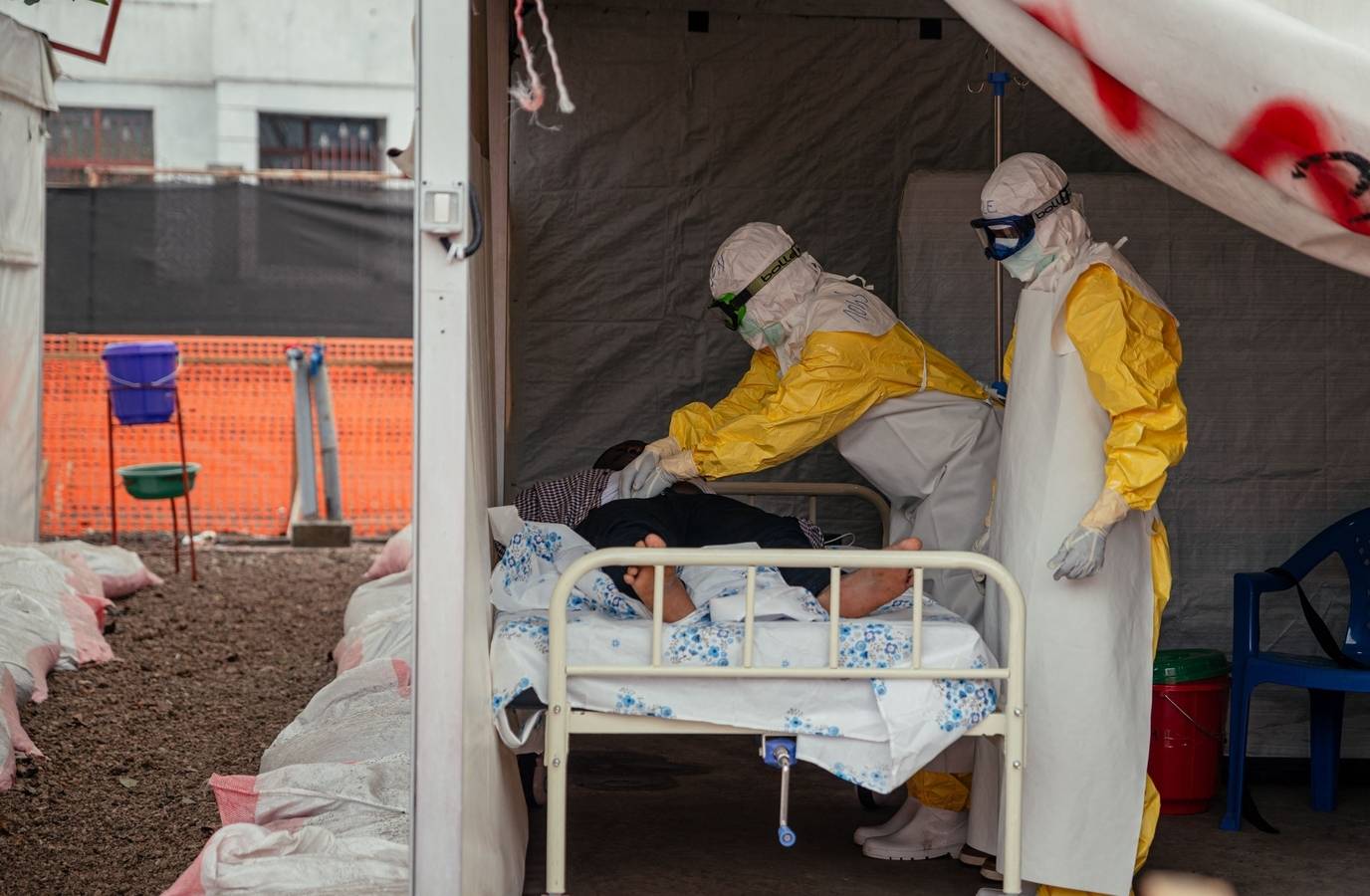
Whenever Ebola comes, some of the afflicted choose the road to the nearest hospital. Others take the path to the shrine of a traditional healer, often with devastating consequences.
The current outbreak in Congo, the seventeenth since 1976, has seen victims include health workers without protective gear as well as pastors and worshippers who gathered while Ebola was spreading.
The virus spreads through close contact with sick or deceased patients' bodily fluids, but misinformation about Ebola has made it harder for health workers to respond to the outbreak that has so far killed at least 181 people.
Some people still describe Ebola as something mysterious, spiritual, or brought by outsiders, rather than a disease that needs medical care.
The current outbreak is caused by the Bundibugyo virus, Ebola that has no approved medicines or vaccines to combat it.
Humanitarian workers are urging religious leaders to get involved in combating Ebola, as the outbreak intensifies the suffering in a remote area of Congo that also faces armed violence by rebel groups as well as displacement.