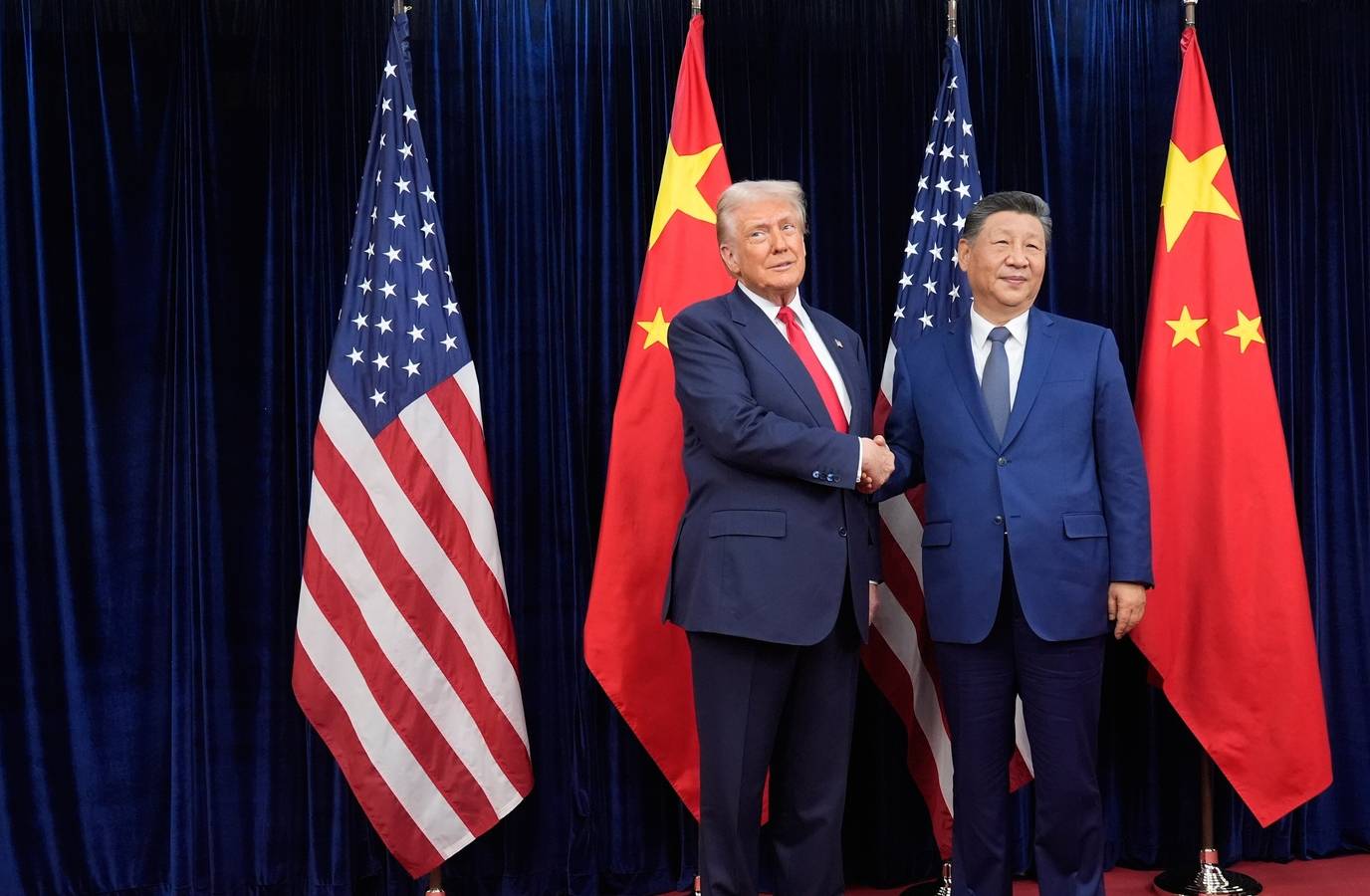
Donald Trump heads to China this week with fewer cards in his hand than at any point in his presidency, as the unresolved US–Iran war, a volatile Gulf, and an uncertain Indo-Pacific architecture pile pressure on Washington, Beijing, and New Delhi alike.
The picture that emerges from the recent Point Blank conversation between Hindustan Times Executive Editor Shishir Gupta and Senior Anchor Aayesha Varma is of a world where leaders are constantly in motion, but durable solutions remain elusive.
Trump in China: A visit without leverage
Gupta underlines that Trump is flying into Beijing at a time when his traditional tools of pressure have been blunted and the Iran conflict casts a long shadow over every conversation.
Washington has already rejected a proposal, routed via Pakistan, in which Tehran refused to yield “an inch” on the nuclear issue and attached conditions to reopening the Strait of Hormuz, effectively turning the plan into a non-starter.
Compounding the challenge, Trump no longer has tariffs as a credible bargaining chip after US court rulings undercut his ability to use even a 10% levy as leverage against China.
The last round of tariff escalation saw Beijing retaliate by cutting off critical mineral supplies, forcing Washington to back off and reminding the White House that economic coercion can cut both ways.
Gupta also stresses a more structural problem: Trump’s impatience clashes with the political culture of both Beijing and Tehran.
China and Iran, he notes, are civilisations that place a premium on written texts, long negotiations, and carefully drafted understandings, whereas Trump prefers instant outcomes and headline-grabbing deals.
That mismatch virtually guarantees that the US president will not find “instant solutions” in Beijing to the Iran crisis or to the broader strategic contest with China.