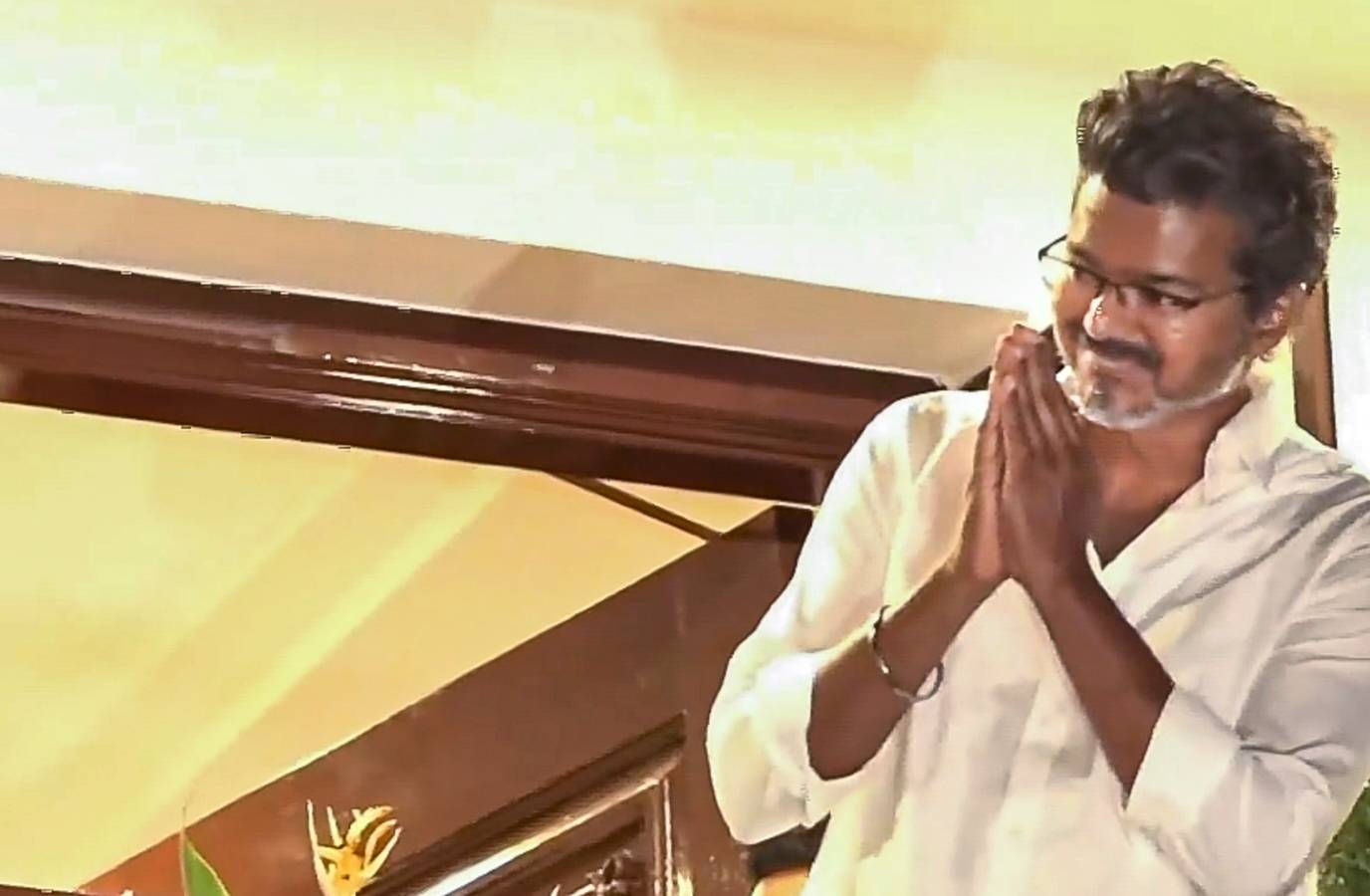
Vijay's Tamilaga Vettri Kazhagam (TVK) performed way above many expectations in the 2026 Tamil Nadu assembly elections, emerging as the single-largest party in the state.
The actor-turned-politician may well become the next chief minister of Tamil Nadu.
The TVK, formed in 2024, won 107 seats in the 234-member Tamil Nadu assembly, as results announced on Monday showed.
The incumbent DMK alliance won 74 seats, while the NDA won 53.
This means the newest party, led by the actor, is in pole position to form the government, even though it is just shy of the majority mark.
But there was a time when Vijay did not want to enter politics at all.
And he had even sued his parents for pushing him to do the same.
Vijay's father, SA Chandrashekar, started a political party, Vijay Makkal Iyakam (VMI), in 2020, converting the already existing fan club of the actor into a political outfit.
Chandrashekar became the general secretary of the party, while his wife and Vijay’s mother, Shobha Chandrashekhar, became the treasurer.
But apparently, they hadn't consulted their son on the issue.
In September 2021, Vijay filed a lawsuit against 11 people, including his parents, to restrain them from using his name, photographs, or the name of his fan club for any political activities.
Vijay formally distanced himself from his father's political efforts, stating there was no direct or indirect connection between him and the party started by his father.
Then comes the change of heart.
Vijay's entry into politics
In February 2024, Vijay took the plunge his father wanted him to take and officially launched TVK.
The party was registered with the Election Commission in September of that year.
According to the party, TVK aligns with secular social justice and egalitarianism, following the principles of Dr BR Ambedkar, Periyar, and K Kamaraj.
The 2026 Tamil Nadu assembly elections were Vijay’s first direct foray into electoral politics, although he had tested the waters in the state’s local body polls through his fan club.
And he has had a spectacular entry into the field, winning both Perambur and Tiruchi East constituencies.
His party won 107, short of the majority mark of 118.
But he disrupted the DMK-AIADMK duopoly in Tamil Nadu that had persisted since 1967.