Bangladesh Unrest Escalates: Anti-India Protests Amid Fears of Further Violence
The caretaker government of Muhammad Yunus was left scrambling for some semblance of control as protests took on distinct anti-India overtones | India News
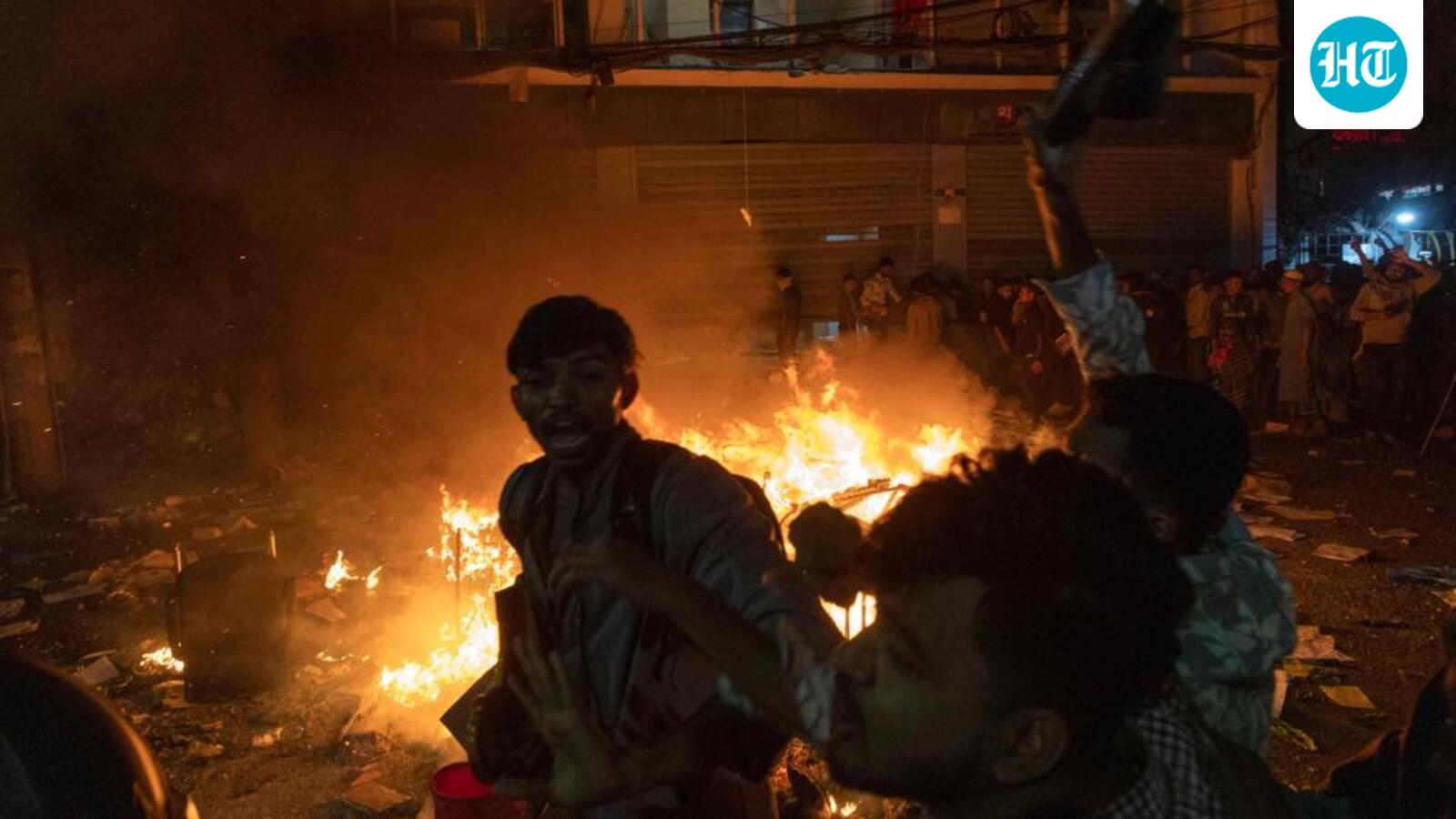
Bangladesh remains on high alert after a series of anti-India protests broke out across the country on Friday. The demonstrations, sparked by the death of radical student leader Sharif Osman Hadi, have taken on a distinctly anti-India tone, with protesters targeting Indian missions and offices of several newspapers.
Hadi, who was injured in a shooting on December 12, died in a Singapore hospital on Thursday. His body was brought back to Dhaka on Friday evening, prompting violent protests.
The caretaker government, led by Muhammad Yunus, has struggled to maintain control as protests spread. In a statement, the government condemned acts of violence and intimidation, urging people to resist 'mob violence' committed by 'fringe elements'.
Security forces have been deployed to protect Indian missions, but police have been criticized for their slow response to the situation. The Indian government has summoned the Bangladesh high commissioner, Riaz Hamidullah, to express concerns over the deteriorating security environment and the threat to Indian missions.
Student groups have linked the Awami League party, led by former premier Sheikh Hasina, to Hadi's killing, although no evidence has emerged to support this claim. The government has announced a day of state mourning on Saturday and has called for restraint and rejection of hatred.
The situation is expected to worsen ahead of Hadi's funeral, with Indian authorities gearing up for further protests and apprehending the possibility of violence. The interim government has condemned the lynching of a Hindu factory worker in Mymensingh, describing it as a 'heinous crime' that has no place in the new Bangladesh.
India-Bangladesh relations have been strained since the interim government came to power in August 2024, with India criticizing the caretaker administration for failing to protect minorities and act against radical forces. The situation has raised concerns about the potential for further violence and the impact on bilateral relations.