Hindi Imposition Row: Jayant Chaudhary Stresses Language Empowerment Over Imposition
Union Minister Jayant Chaudhary emphasizes language as a connection tool, rejecting Hindi imposition claims and advocating for India's linguistic diversity. | India News
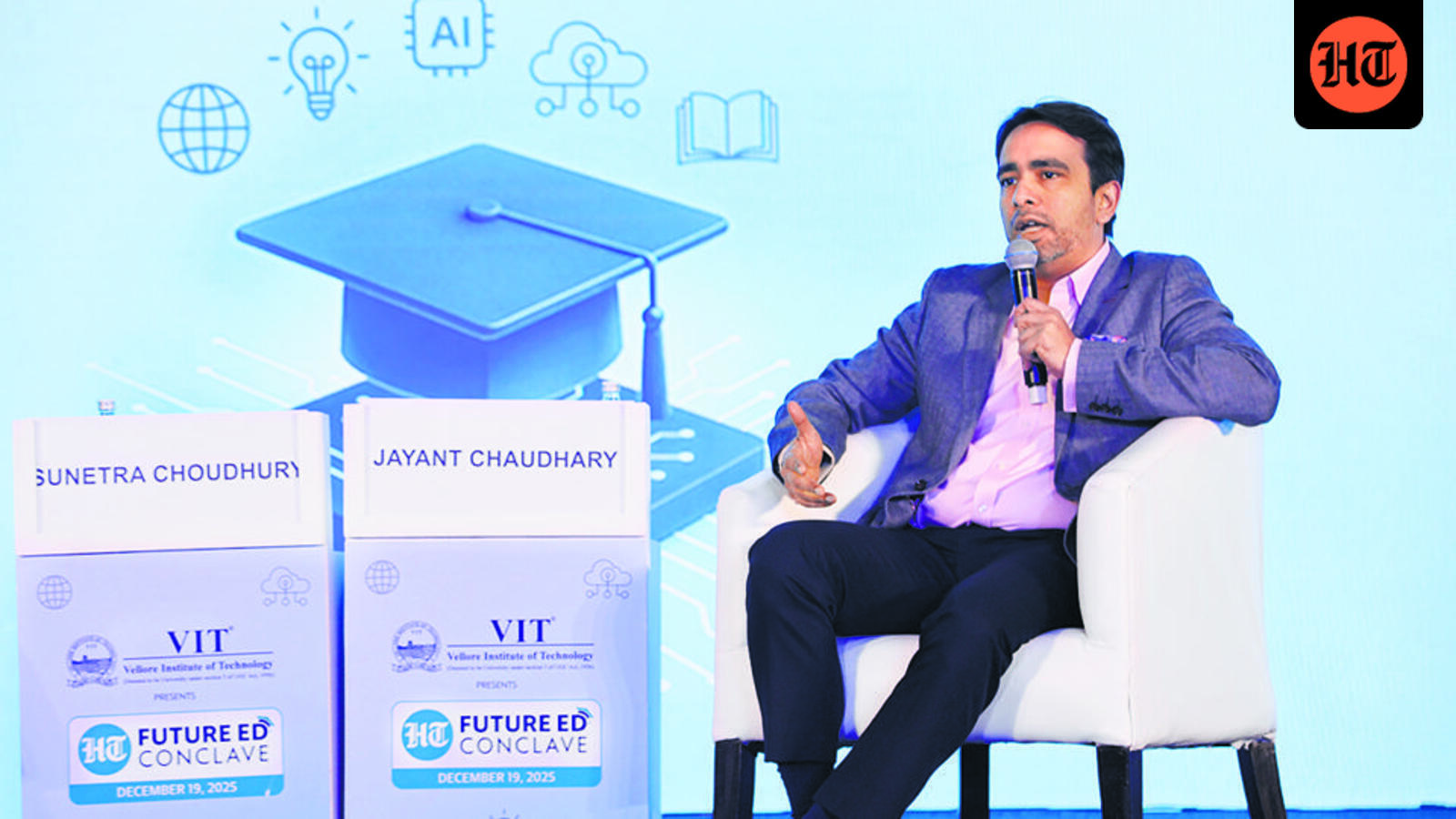
New Delhi: Union Minister of State (MoS) for Education and Skill Development Jayant Chaudhary has emphasized the importance of language as a source of connection and empowerment, rather than a means of imposition. Speaking at the HT Future Ed Conclave 2025, Chaudhary clarified that there is no constitutional mandate for a single language in India, and that the government's policy is to respect and enrich the country's multicultural and multilingual diversity.
The minister's comments come amid controversy over several bills introduced in Parliament during the Winter Session, which carried Hindi titles. Opposition MPs had argued that this was an attempt to impose Hindi on non-Hindi speaking states. However, Chaudhary rejected these allegations, saying that the focus should be on the substance of the legislation rather than its name.
Chaudhary also addressed concerns that the National Education Policy (NEP) 2020 promotes Hindi at the expense of other languages. He clarified that there is no mandate to teach Hindi, and that under NEP, students must study two out of three languages, which can be any Indian language, including regional languages.
The minister emphasized the importance of learning multiple languages, which he said enhances cognitive ability and mobility. He also called for a more humane education system that reduces stress and focuses on empowerment, creativity, and dignity of work. Chaudhary stressed that every life matters, and that education should aim to build resilience and productivity rather than just technical skills.
Regarding the use of Hindi in Parliament, Chaudhary said that it is a reflection of India's pluralism rather than fragmentation. He also called for a seamless education journey, rather than short-term skilling fixes, and emphasized the need to see artificial intelligence as an opportunity rather than a threat.
Overall, Chaudhary's message is one of language empowerment, rather than imposition, and a focus on building a more inclusive and humane education system that values diversity and promotes creativity and productivity.