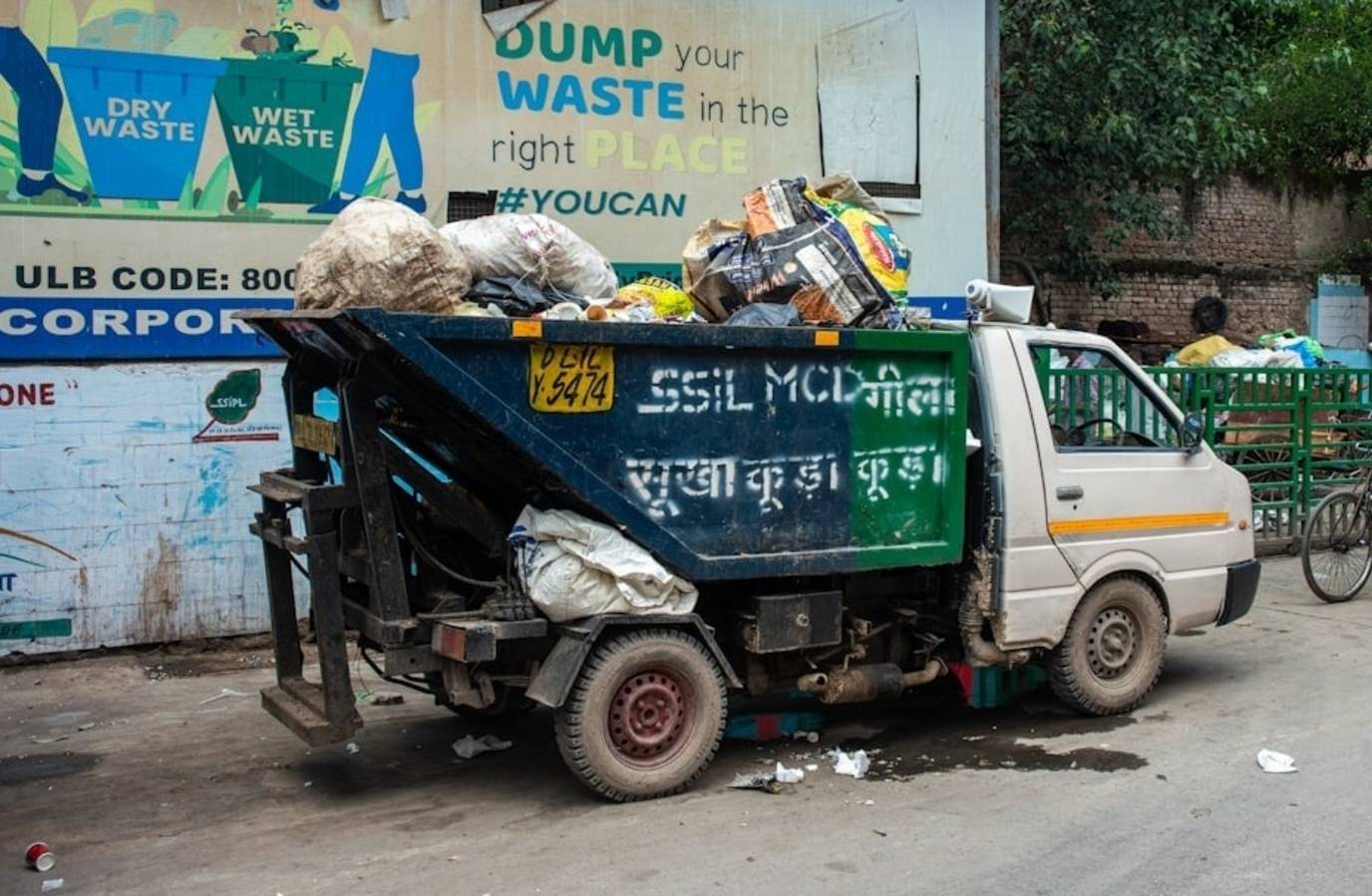
The Indian government has implemented a new waste management system, requiring households to segregate waste into four categories from April 1. The revised Solid Waste Management Rules, 2026, notify the use of colour-coded bins for waste separation.
The colour-coded bins are:
Green bin: Wet waste including vegetable peels
Blue bin: Dry waste, including plastic, paper, napkins, etc.
Red bin: Sanitary waste, including sanitary napkins, diapers, and similar waste
Black bin: Hazardous waste including medicines, e-waste, bulbs, etc.
The rules apply to all urban and rural local bodies, including industrial areas, SEZs, and public and private landowners. Penalties will be imposed for non-compliance.
Citizens are advised to securely wrap used sanitary waste and store construction and demolition waste separately. Bulk waste generators must process wet waste on-site, and biomedical waste cannot be mixed with general solid waste.
The 'polluter pays' principle has been introduced, enabling authorities to levy environmental compensation for violations.