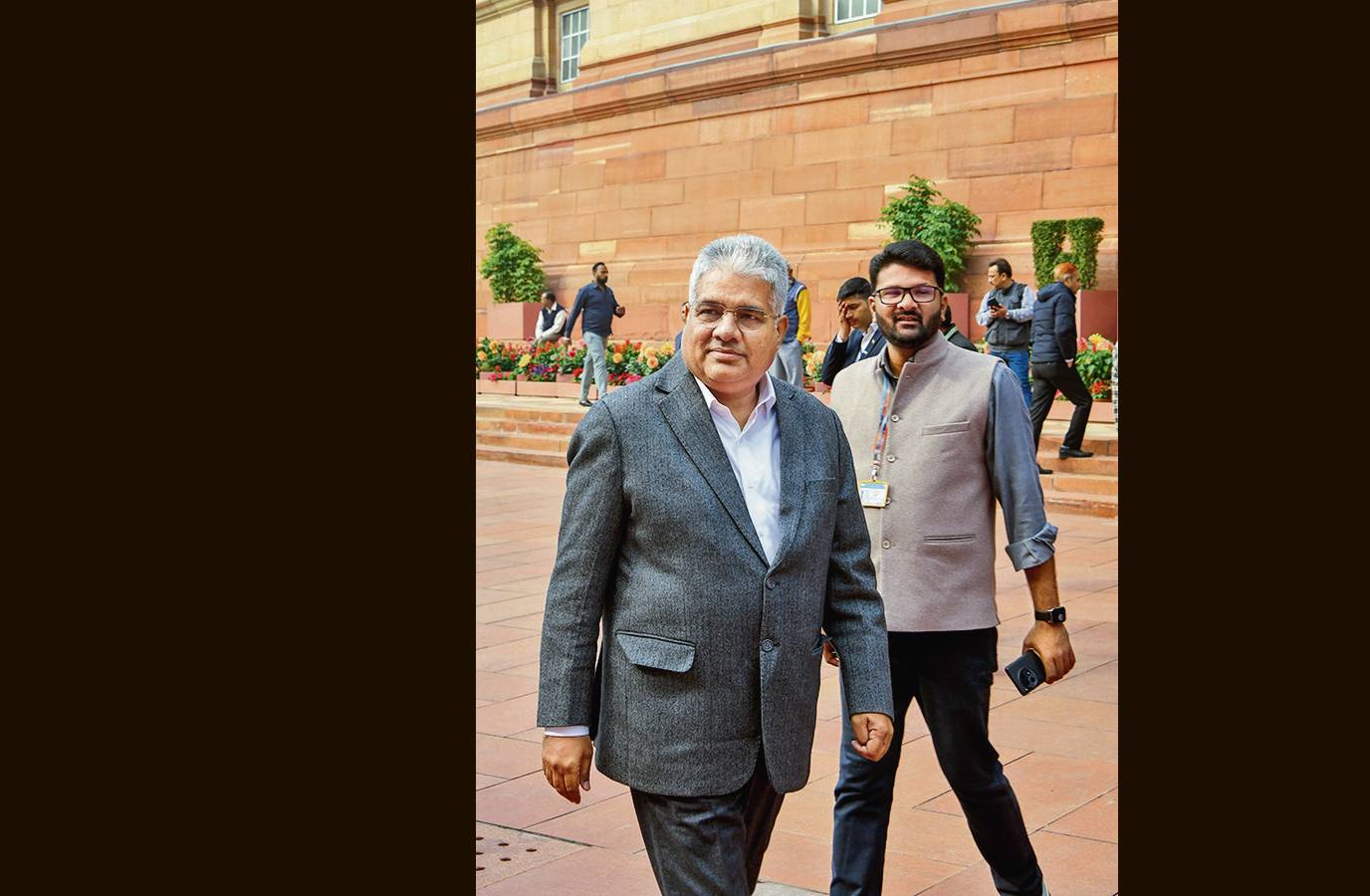
India's nationally determined contributions (NDCs) are no longer just environmental pledges but are shaping the country's economic trajectory, said Union environment minister Bhupender Yadav in an interview with HT.
The revised NDCs for 2031-35 were finalised after explicitly factoring in geopolitical realities, including their impact on global energy markets and supply chains.
India's climate commitments are no longer just environmental pledges. Through these commitments, PM Narendra Modi has offered a blueprint for economic transformation. India's NDCs, anchored in our long-term vision of net-zero by 2070, signal a decisive shift toward a growth model that is cleaner, more resilient, and globally competitive.
The NDCs align with the Viksit Bharat goals. These are important stepping stones where each one progressively raise ambition while balancing development needs.
Over the next decade, the updated Nationally Determined Contributions (NDCs), including the recently announced goals for 2031–35, signal commitment for continuation of a growth model under the visionary leadership of PM Modi that is cleaner, more resilient, and globally competitive.
India's NDC is likely to shape growth through substantive initiatives which include: A decisive push on clean energy. India is accelerating investments in renewable energy, especially solar and wind, while also expanding nuclear power as a stable, low-carbon base load.
This will not only reduce emissions but also strengthen energy security and reduce import dependence. The emergence of renewable energy, green hydrogen and carbon capture, utilization and storage (CCUS) is crucial.
Along with solar, wind and other forms of renewable energy, hydrogen is expected to become a cornerstone of India's future energy system, particularly for hard-to-abate sectors like steel, refining, and heavy transport.
This will open new industrial ecosystems and export opportunities.
As India continues to industrialize, CCUS technologies, for which a provision on ₹20,000 crore has been made in the Budget, will also play a critical role in decarbonizing the sectors where emissions are difficult to eliminate.
This will drive innovation and create new technology markets.
We are encouraging an adaptation-centric development model and strengthened disaster preparedness. India's NDCs rightly emphasize adaptation alongside mitigation.
Investments in water management, climate-resilient agriculture, and sustainable coastal management, and early warning systems for all will safeguard livelihoods and ensure long-term productivity.
Scaling up early warning systems and climate-resilient infrastructure will also reduce economic losses and protect vulnerable communities, making growth more stable and predictable.
Technology and innovation are key enablers. From energy storage to smart grids and climate-smart agriculture, the transition will catalyse a wave of Innovation.
India's climate strategy is rooted in pragmatism ensuring that the transition does not compromise access to affordable energy or food.
These remain the cornerstones of all climate actions.
Taken together, India's climate action will create jobs, build new industries, and enhance India's global competitiveness, while also making the economy more resilient to climate risks.
In essence, India's NDCs are not just commitments to the world. These are commitments to our own development trajectory.
These chart a pathway where growth is sustainable, inclusive, and secure, ensuring that as India rises, it does so responsibly and resiliently.