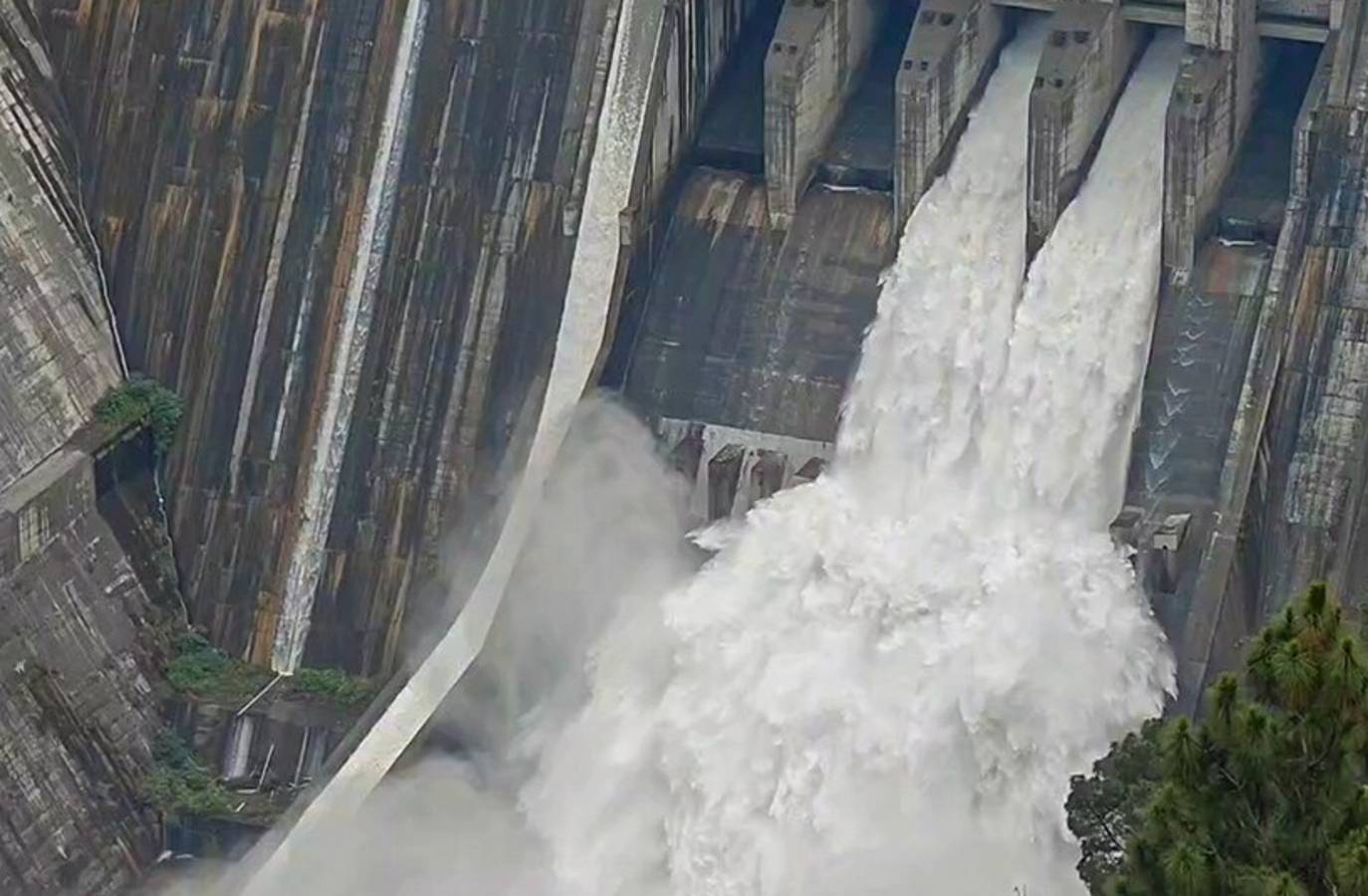
The Indus River System, comprising six major rivers, flows through India and Pakistan, supporting hundreds of millions of people.
When India and Pakistan were partitioned in 1947, the Indus River System was divided between the two countries.
India, as the upper riparian state, held the headwaters of most rivers, while Pakistan's agricultural heartland depended on continued water flows from the east.
India concluded the Indus Water Treaty with Pakistan in 1960, facilitated by the World Bank, despite its own pressing domestic needs.
The treaty imposed significant one-sided concessions on India, including abandoning planned developments along the upper reaches of the Indus and Chenab rivers.
India accepted the World Bank's proposal in 1954, while Pakistan delayed its formal acceptance for nearly five years.
As a result, India received exclusive rights to the three Eastern rivers, while Pakistan received rights to the waters of the three Western rivers.
India received 20% of the system's water, while Pakistan received 80%, in exchange for relinquishing all claim to the far larger Western system.
India also agreed to pay approximately £62 million to Pakistan as compensation to build water resources infrastructure in Pakistan-occupied Kashmir.
The treaty imposes specific design and operational restrictions on India's use of the Western rivers, while imposing no equivalent obligations on Pakistan.
Author Pradeep Kumar Saxena, a former Indian Commissioner for Indus Waters, argues that the treaty is structurally unfair and treats India as the party requiring oversight and restraint.