India Sheds Employment Guarantee, Leaving a Trail of Uncertainty
One can claim with a reasonable degree of confidence that the MGNREGS’s actual impact on the ground has been much smaller than the revolutionary rhetoric around it.| India News
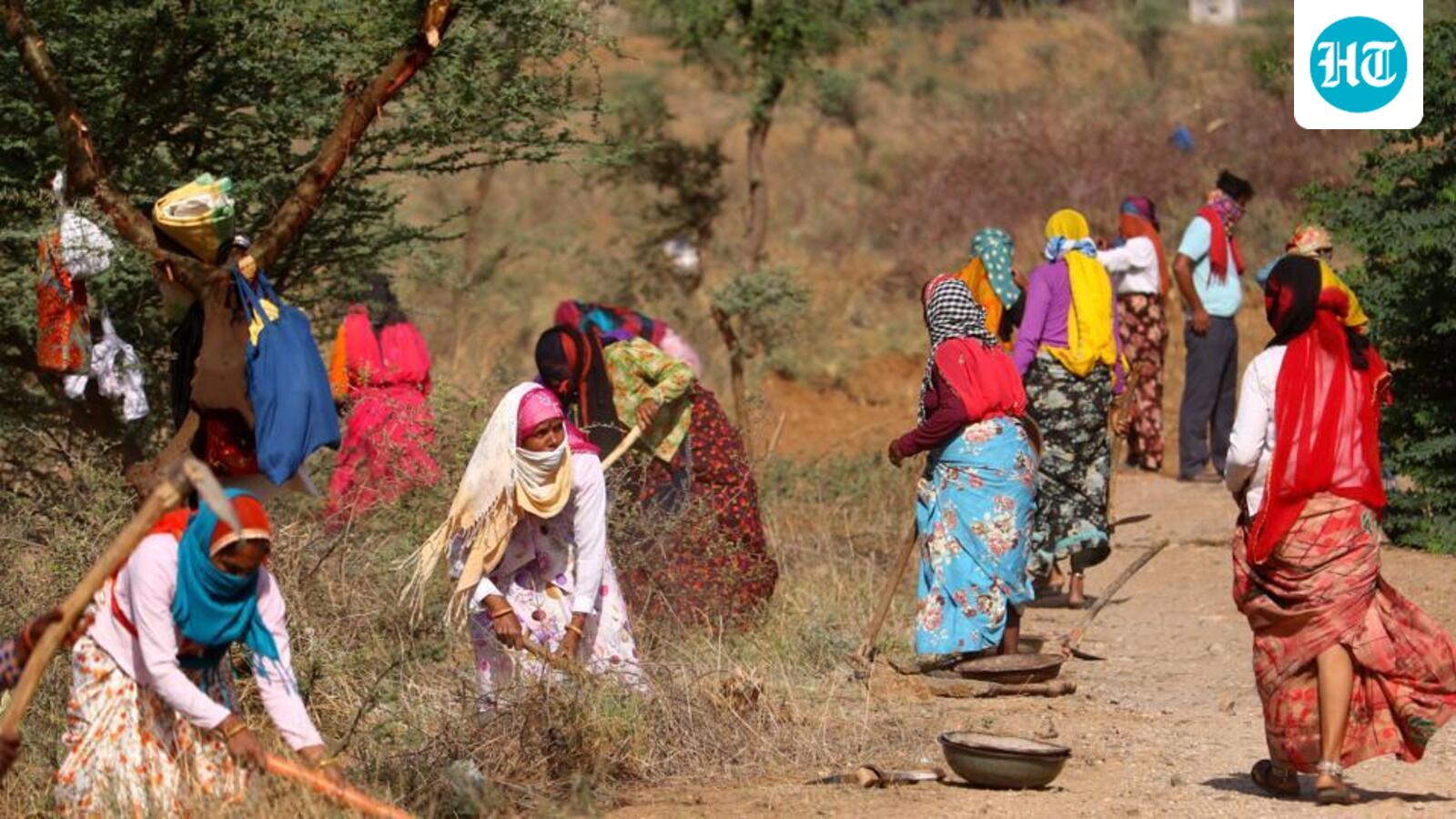
The Narendra Modi government's decision to replace the Mahatma Gandhi National Rural Employment Guarantee Scheme (MGNREGS) with the Viksit Bharat - Guarantee for Rozgar and Ajeevika Mission (Gramin) has sparked a mix of reactions from experts and critics. The move marks a significant shift away from the employment guarantee promised by the MGNREGS, which was introduced in 2006 as a response to the 'India Shining' campaign's perceived neglect of rural India's welfare.
In the early 2000s, India's economic landscape was marked by widespread distress, particularly in rural areas. The Atal Bihari Vajpayee-led government's defeat in 2004 led to a new government, which was dependent on communist parties for support. This led to a wider alliance between people's movements, economists, and the Congress party to push for welfare initiatives in the country. The MGNREGS and the National Food Security Act (NFSA) were key outcomes of this alliance.
While the MGNREGS was initially hailed as a revolutionary measure, its actual impact on the ground has been smaller than its rhetoric. However, it has provided a floor for rural wages and a support system for the weakest sections of Indian workers. The scheme's efficacy has been debated by economists, students, and activists, who have worked alongside MGNREGS workers to assess its impact.
In recent years, India's economic regime has undergone significant changes. The government has introduced various welfare provisions, including cash transfer schemes, which have expanded the food safety net and offered more support to workers. The existing economic regime in India is more pragmatic than dogmatic neoliberal, with a greater emphasis on preserving political capital.
The lack of organic political traction for the MGNREGS is not surprising, given that its workers are among the most vulnerable in society and often take up jobs under the scheme to seek relief from duress. The scheme's dilution may not lead to widespread protests, as India's poor now have a federal platter of palliatives.
The decision to replace the MGNREGS with a new scheme raises questions about the future of welfare initiatives in India. The increased welfare offerings do not offer 'Development with Dignity,' as advocated by heterodox economists. India must sustain its growth to higher levels to avoid getting trapped in a lower-middle income trap.
The challenge for progressives is to think beyond the MGNREGS and its moment of radical change in 2004. They must deploy a more critical lens on the post-2004 period in Indian political economy and consider the dialectics between political legitimacy, capital, and labour. This requires a more nuanced understanding of the complexities of India's economic and political landscape.