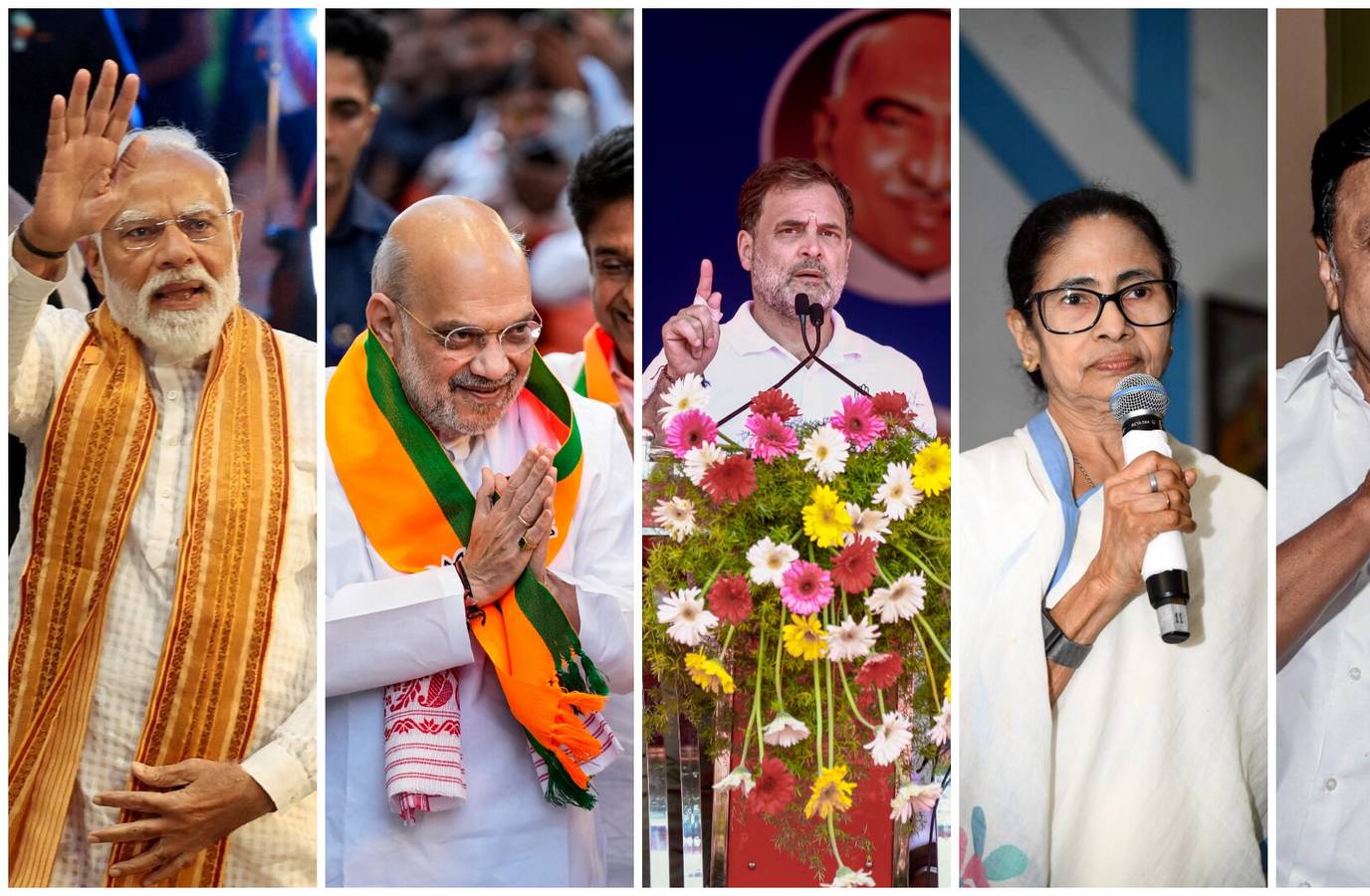
The high-stakes assembly elections held last month and the results they bore on Monday, May 4, managed to reshape India's regional politics as we know it. While the saffron tide in West Bengal took over as the Bharatiya Janata Party bagged a historic landslide victory, Tamil Nadu put its might behind actor-turned-politician debutant Vijay, and the Congress-led United Democratic Front managed to upend Pinarayi Vijayan-led Left Democratic Front in Kerala.
The election saw two chief ministers, all Opposition and regional leaders, lose not just their states but also their place in respective assemblies, with Assam's Himanta Sarma and Puducherry's N. Rangasamy, and Kerala's Pinarayi Vijayan being exceptions.
Prime Minister Narendra Modi's personal investment in the campaign paid rich dividends, and his party's victory in West Bengal has surpassed its performance in every major state where assembly polls have been held since. Under Modi, the BJP retooled its electoral machinery after its sub-par showing and showed that it can do both coalition politics in a complex state in Bihar, and win on its own in an equally complex but more volatile state of Bengal.
The victories on Monday (the BJP also won Assam, and the NDA, Puducherry) steady his hand, making sure that running a coalition government will not chip away at his unique governance style. It makes him the first sitting prime minister to have won West Bengal since Jawaharlal Nehru.
Amit Shah's quiet meeting at a hotel in Salt Lake, where he set the faction-riven state unit in order, paid off, and he sensed that anti-incumbency was simmering and spent a month in Kolkata micromanaging the campaign.
Rahul Gandhi must be a relatively relieved man, but danger bells are ringing, as the Congress has now lost the state of Assam thrice on the trot, and in Tamil Nadu, one of his oldest allies, the DMK, was defeated by an upstart who captured the imagination of young people.
Mamata Banerjee is facing the toughest test of her career, as the formidable coalition she built with welfare and her personal charisma has disintegrated, and Muslims fragmented at the precise time communal resentment, aspiration, and demographic anxieties united the Hindu voter behind the BJP.
MK Stalin's climb to power must count among the longest, but he might come to regret elevating Udhayanidhi as minister and deputy CM, and the DMK's weakness against incumbency and entrenched corruption among lower-rung leaders amplified its generational problem.
Himanta Biswa Sarma delivered in spades, and his administrative record, welfare push, and anti-migrant pitch helped the NDA hit a century, making him among the tallest BJP chief ministers with a rapidly growing national profile.