Soviet Union Collapses as 11 Republics Forge New Commonwealth
Leaders of all the republics, except Georgia, agreed on three key documents that would serve as the basis for the new Euro-Asian Commonwealth | India News
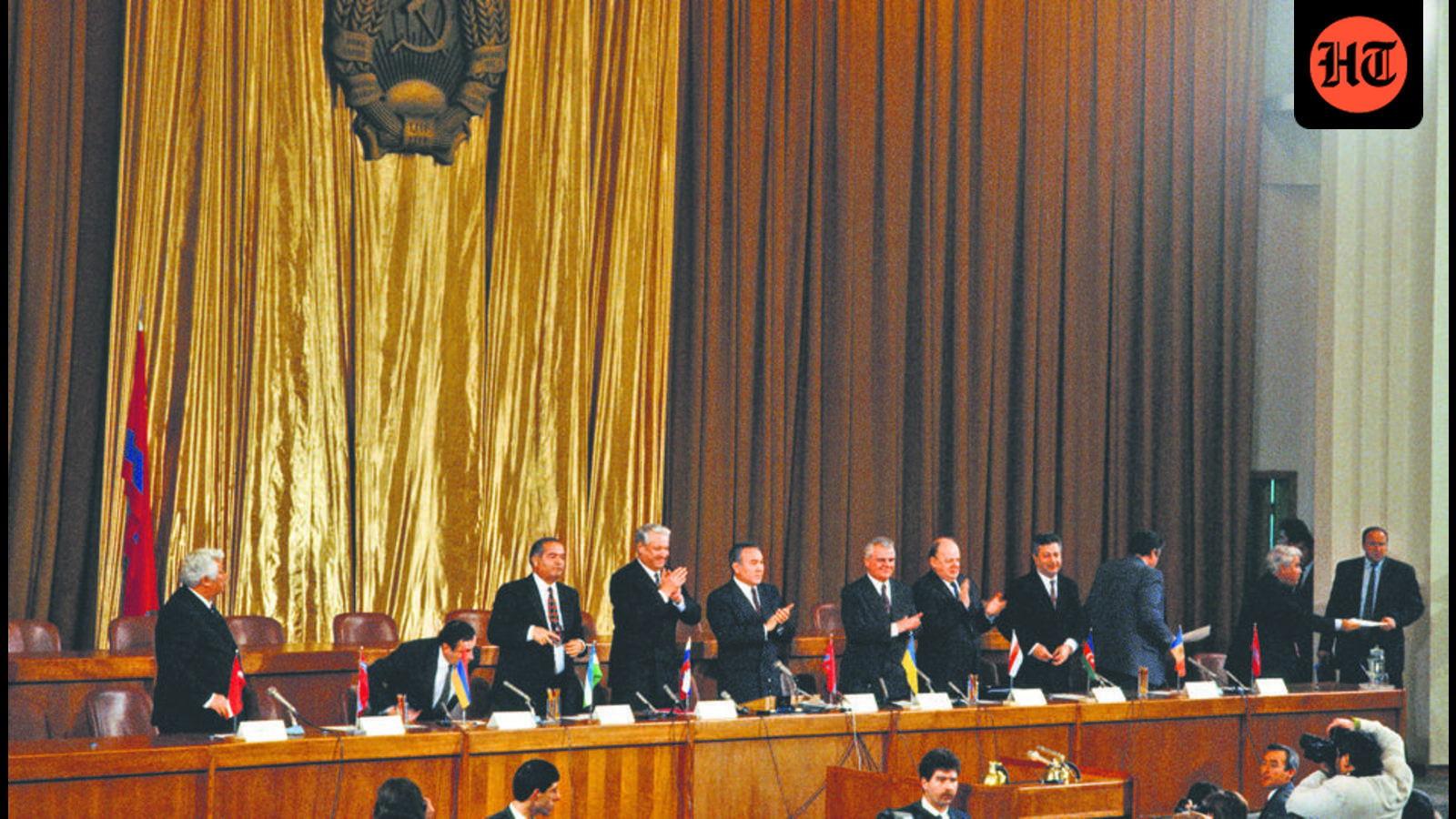
In a historic move, leaders of 11 Soviet Republics gathered in Alma Ata, Kazakhstan, on December 21 to sign agreements marking the end of the Soviet Union. The newly formed Commonwealth of Independent States (CIS) was established, with Russia taking the USSR's place in the UN Security Council.
The CIS agreement was reached after five hours of talks, with Russian President Boris Yeltsin expressing satisfaction with the outcome. The leaders of the 11 republics, excluding Georgia, signed three key documents: the Alma-Ata Declaration recognizing their independence and current borders, and two other agreements outlining the temporary military command and the structure of the CIS.
The decision to remove Mikhail Gorbachev from power was also made, with Yevgeny Shaposhnikov being appointed commander-in-chief of the armed forces. Gorbachev would, however, be allowed to resign with dignity and would receive necessary facilities for his well-being.
Yeltsin voiced optimism, stating that this would be the first time since the 1917 Bolshevik Revolution that a head of state had retired peacefully. The 11 republics, including Russia, Ukraine, and Kazakhstan, have agreed to work together towards a single nuclear command and to coordinate their military efforts.
The creation of the CIS marks a significant shift in the world order, with the Soviet Union ceasing to exist. The new Commonwealth faces challenges, but the rapid agreement on the CIS documents is seen as a promising start.